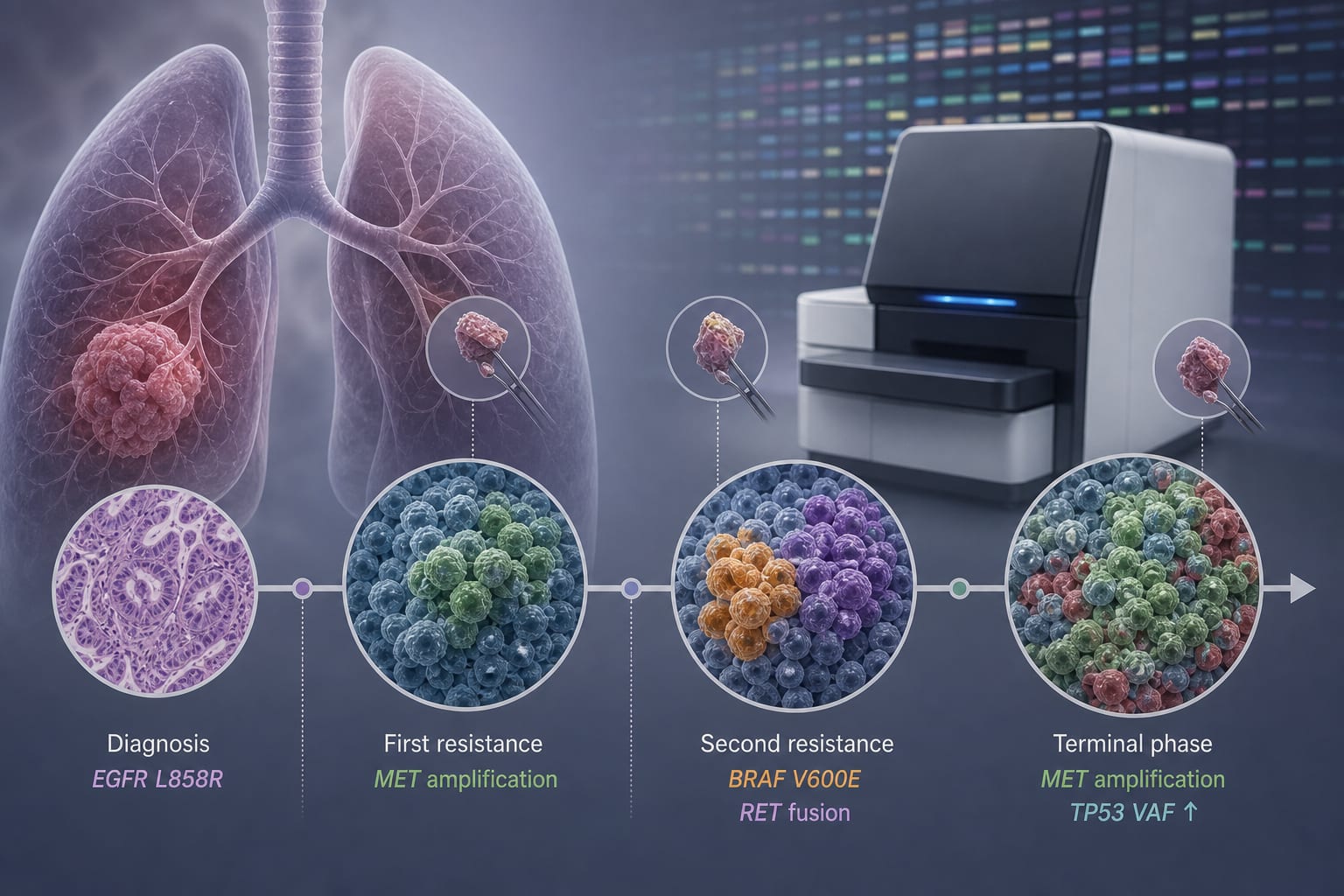
To report on a case of acquired resistance in a patient with EGFR L858R-mutant lung adenocarcinoma and to explore the sequential development of bypass resistance mechanisms.
Approach:
Patient Case: A 62-year-old man with stage IIB lung adenocarcinoma underwent surgical resection followed by adjuvant aumolertinib. Serial sampling and dynamic next-generation sequencing (NGS) were utilized to track resistance evolution.
Key Findings:
MET amplification emerged first, followed by concurrent detection of BRAF V600E mutation and RET fusion.
The patient experienced 11 months of progression-free survival with aumolertinib plus savolitinib.
Subsequent treatment with selpercatinib and chemotherapy resulted in only transient disease stabilization.
The progressive elevation of TP53 variant allele frequency was associated with the emergence of resistance mechanisms.
Limitations:
The findings are based on a single patient case, limiting generalizability.
Further validation is required to assess the prognostic value of TP53 variant allele frequency in guiding treatment.
Conclusion:
Dynamic NGS can inform individualized treatment strategies by tracking the evolution of resistant clones in real time.