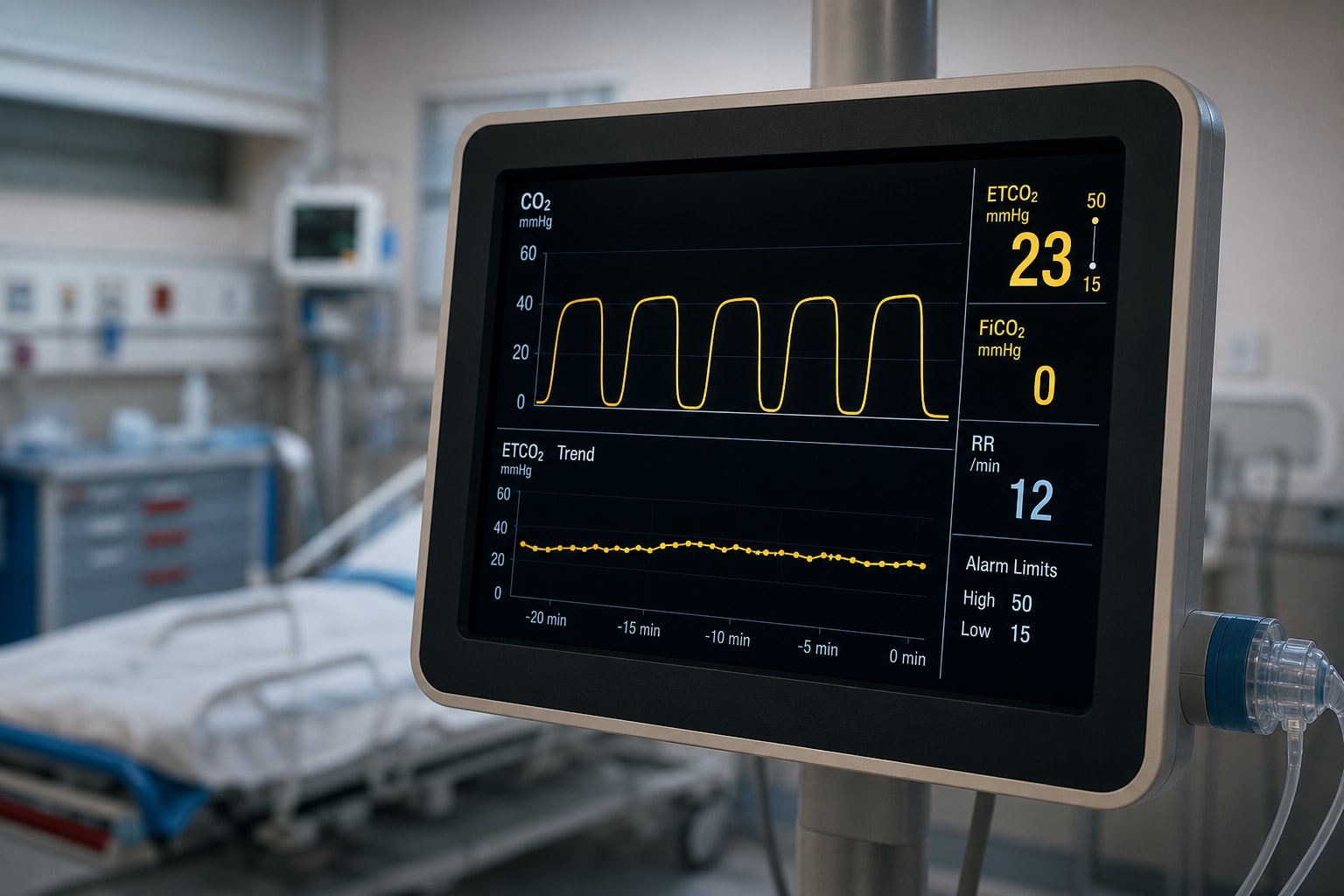
To characterize trends and hospital-level variation in end-tidal carbon dioxide (EtCO2) use for airway confirmation and monitoring during in-hospital cardiac arrest, focusing on specific applications and outcomes.
Key Findings:
92.6% of in-hospital cardiac arrests with a new airway were confirmed with EtCO2 from 2019 to 2023, indicating high adherence to guidelines.
35.3% of in-hospital cardiac arrests with either a new or prior airway had EtCO2 applied for CPR monitoring during the same period, suggesting a need for improvement.
Little variation in hospital proportions for airway confirmation (median 94.0%), but high variation for CPR monitoring, indicating inconsistent practice.
Interpretation:
EtCO2 application is widely used for confirming airway placement during in-hospital cardiac arrest, but adherence to guidelines for CPR monitoring is inconsistent, which may impact patient outcomes.
Limitations:
The study is observational and descriptive, lacking prespecified hypotheses or comparative analyses, which may limit causal inferences.
Missing documentation of EtCO2 use for CPR monitoring was treated as non-use, potentially underestimating actual use and affecting the reliability of the findings.
Conclusion:
While EtCO2 is commonly used for airway confirmation, there are significant gaps in its use for CPR monitoring in accordance with guidelines, highlighting the need for improved adherence.