Synovial Fluid Cell Profiling Identifies Distinct Inflammatory Phenotypes in Late-Onset Rheumatoid Arthritis and Polymyalgia Rheumatica - Summary - MDSpire

Cellular Analysis of Synovial Fluid Reveals Unique Inflammatory Profiles in Late-Onset Rheumatoid Arthritis and Polymyalgia Rheumatica

  • By

  • Shigeru Tanaka

  • Takahiro Sugiyama

  • Shuhei Kameda

  • Tatsuro Takahashi

  • Masahiro Yasui

  • Yuki Hayashi

  • Tomoaki Ida

  • Yuhi Yoshida

  • Soichiro Kubota

  • Takashi Ito

  • Takahiro Kageyama

  • Daiki Nakagomi

  • Kei Ikeda

  • Shin-Ichiro Kagami

  • Hiroshi Nakajima

  • July 1, 2026

Share

Objective:

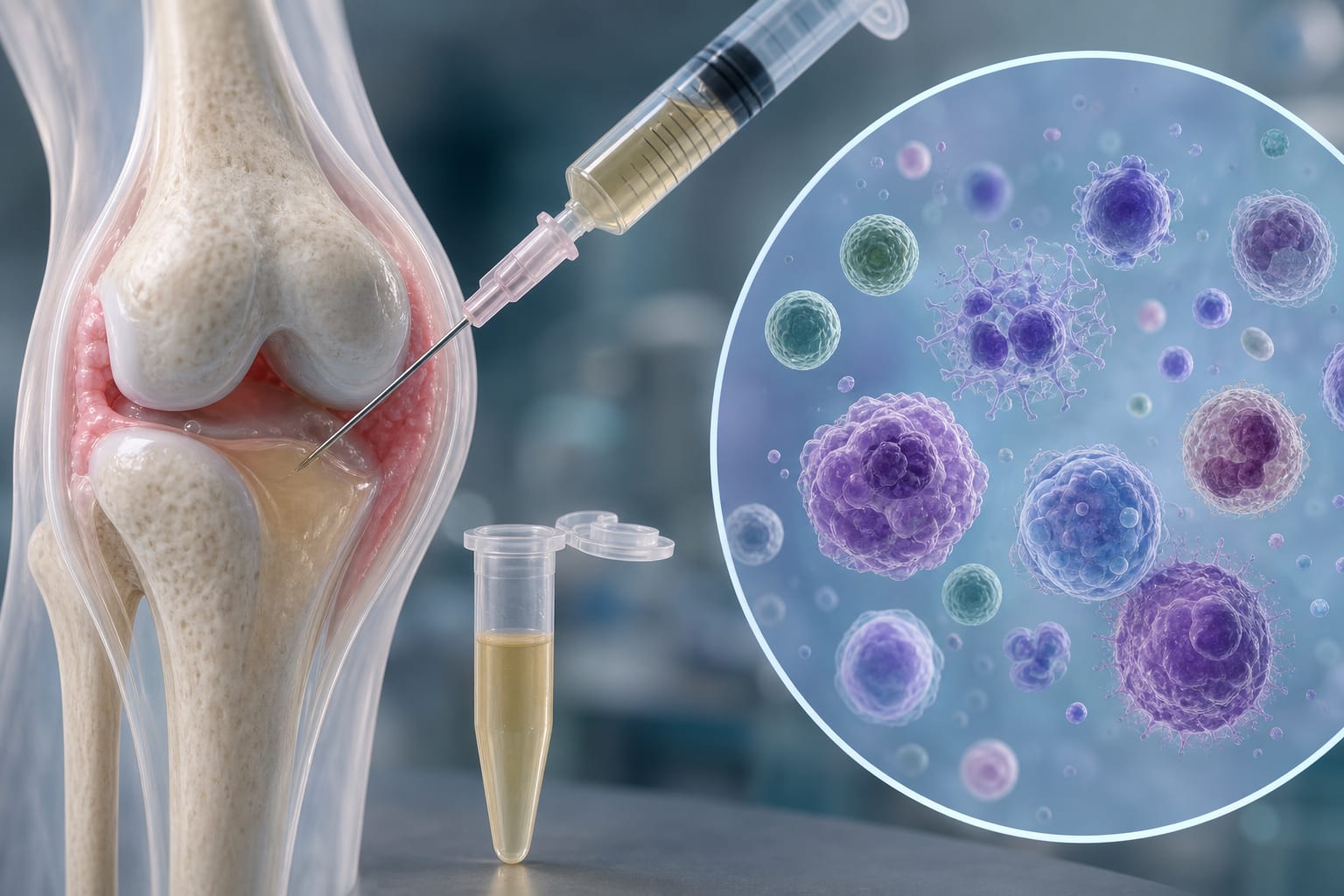
To characterize and compare the synovial fluid cellular profiles of ACPA-positive LORA, ACPA-negative LORA, and PMR, and to explore whether these profiles support biologically informed stratification of late-onset inflammatory arthritis.

Approach:
  • Patient Recruitment: Patients aged 60 years or older with confirmed active inflammation were recruited, fulfilling ACR/EULAR classification criteria for RA or PMR.
  • Sample Collection: Synovial fluid was aspirated from specific inflamed periarticular structures of the shoulder to ensure anatomical consistency.
  • Data Analysis: High-dimensional cytometry by time-of-flight (CyTOF) was employed to analyze immune cells in the synovial fluid.
Key Findings:
  • LORA presents distinct inflammatory profiles compared to PMR.
  • ACPA-negative LORA may share features with PMR, complicating differentiation.
  • Synovial fluid analysis provides more relevant pathophysiological insights than systemic biomarkers.
Interpretation:

Limitations:
  • The study included a small sample size of 21 patients.
  • Findings may not be generalizable beyond the East Asian population studied.
Conclusion:

Original Source(s)

Related Content