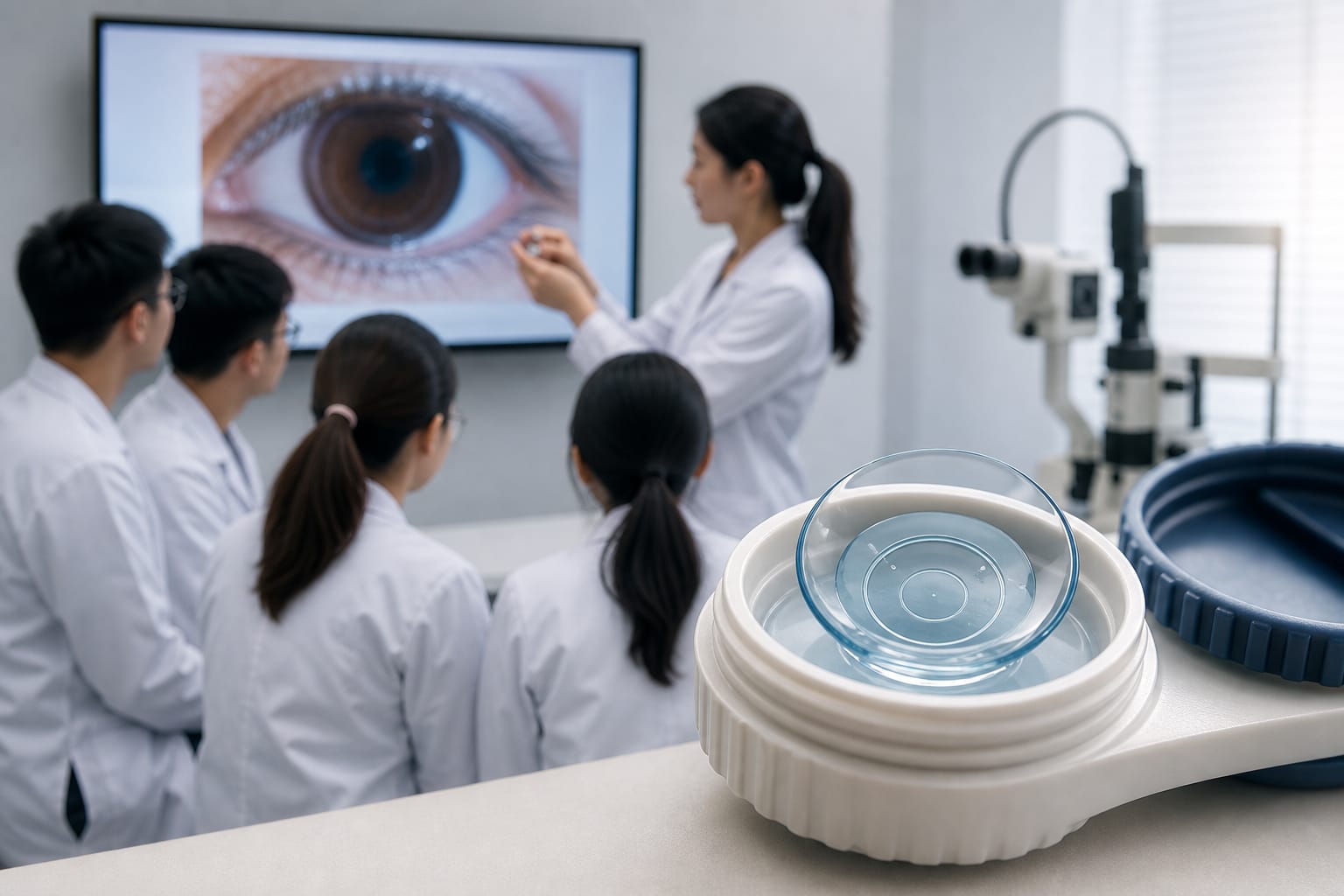
To evaluate the effectiveness of a modified Peyton's four-step method in teaching orthokeratology skills.
Key Findings:
The experimental group scored significantly higher in lens cleaning, lens wearing, trial wear evaluation, and total scores (P < 0.05).
No significant difference was found in determining lens parameters between the two groups (P > 0.05).
The experimental group reported higher satisfaction in teaching arrangement, methods, interactive feedback, and participation (P < 0.05).
Interpretation:
The modified Peyton's four-step teaching method effectively enhances the training of basic orthokeratology skills and increases student satisfaction compared to traditional methods.
Limitations:
The study was limited to a single institution and a specific cohort of students.
The assessment was conducted only one week after training, which may not reflect long-term retention of skills.
Conclusion:
The modified Peyton's four-step teaching method shows promise for broader application in teaching orthokeratology skills, given its positive impact on skill acquisition and student satisfaction.
Susan Gromacki, OD, MS, FAAO, FSLS, Dipl AAO, and Clark Chang, OD, FAAO, FSLS, reviewed the latest developments in diagnosis, imaging, contact lenses, corneal cross-linking (CXL), and surgical management for KC.