Epithelial–mesenchymal transition in cutaneous fibrosis disease: from mechanisms to therapy
-
By
-
ShaoXiang Yuan
-
Ziyi Luo
-
Nina Yang
-
Tao Xiong
-
YueZhong Chen
-
Xichao Jian
-
Yun Wang
-
Shune Xiao
-
Junzhe Chen
-
Chengliang Deng
-
June 9, 2026
-
Objective:
To provide insights into the regulatory mechanisms and treatment options for cutaneous fibrosis, focusing on epithelial–mesenchymal transition (EMT).
Key Findings:
- Cutaneous fibrosis results from chronic inflammation, tissue trauma, or autoimmune reactions, leading to abnormal ECM accumulation.
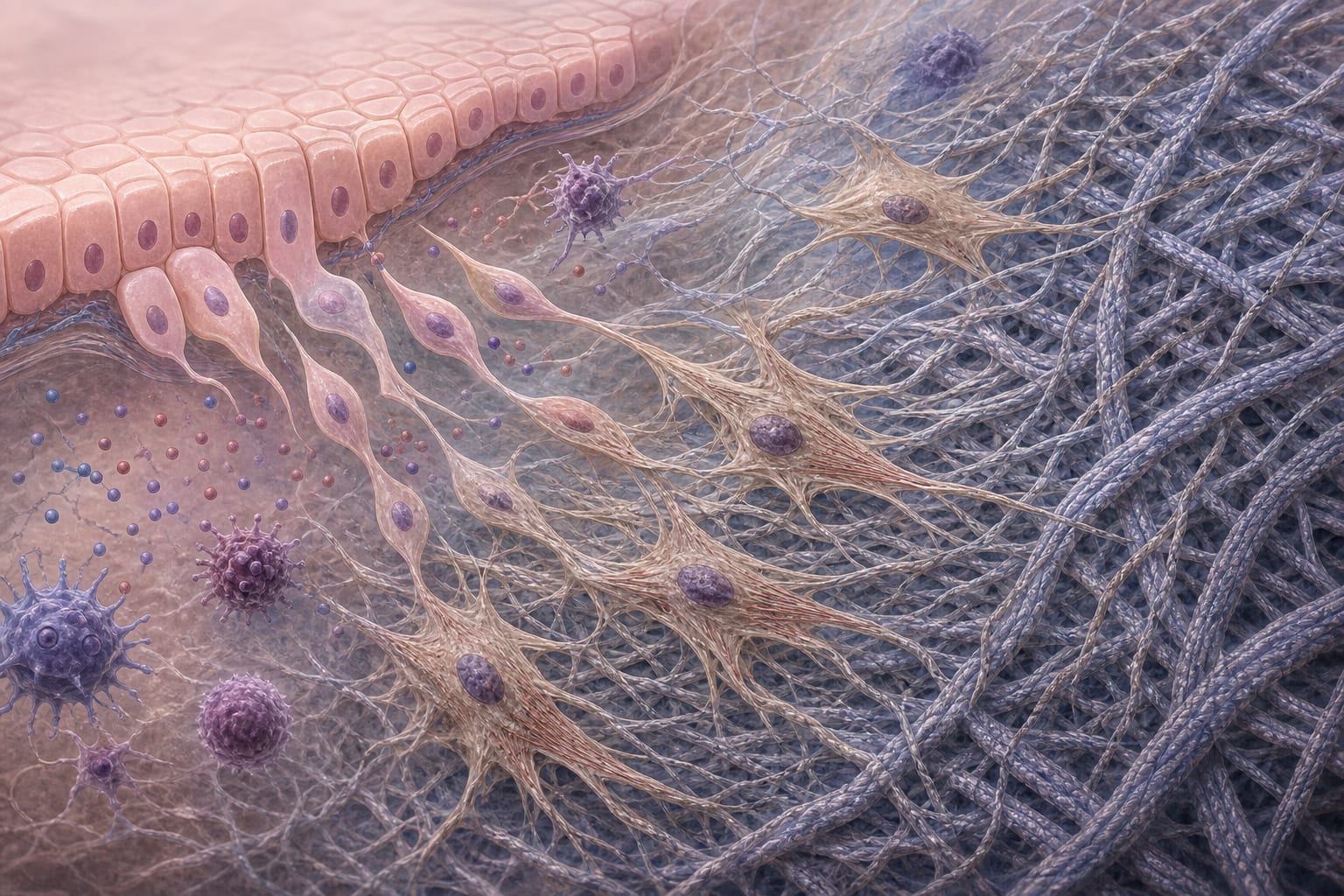
- EMT plays a critical role in the development of fibrotic disorders, potentially serving as a source of myofibroblasts.
- Three subtypes of EMT are identified: Type I (embryogenesis), Type II (tissue repair), and Type III (cancer progression).
- Basal keratinocytes can undergo EMT under fibrotic conditions, contributing to dermal fibrogenesis.
Interpretation:
The findings enhance understanding of the pathophysiology of cutaneous fibrosis.
Limitations:
- The quantitative contribution of EMT relative to resident fibroblasts in fibrogenesis remains unclear.
- Current therapeutic strategies for cutaneous fibrosis are largely inadequate.
Conclusion:
The review suggests that targeting EMT may be a potential therapeutic approach for treating cutaneous fibrosis.