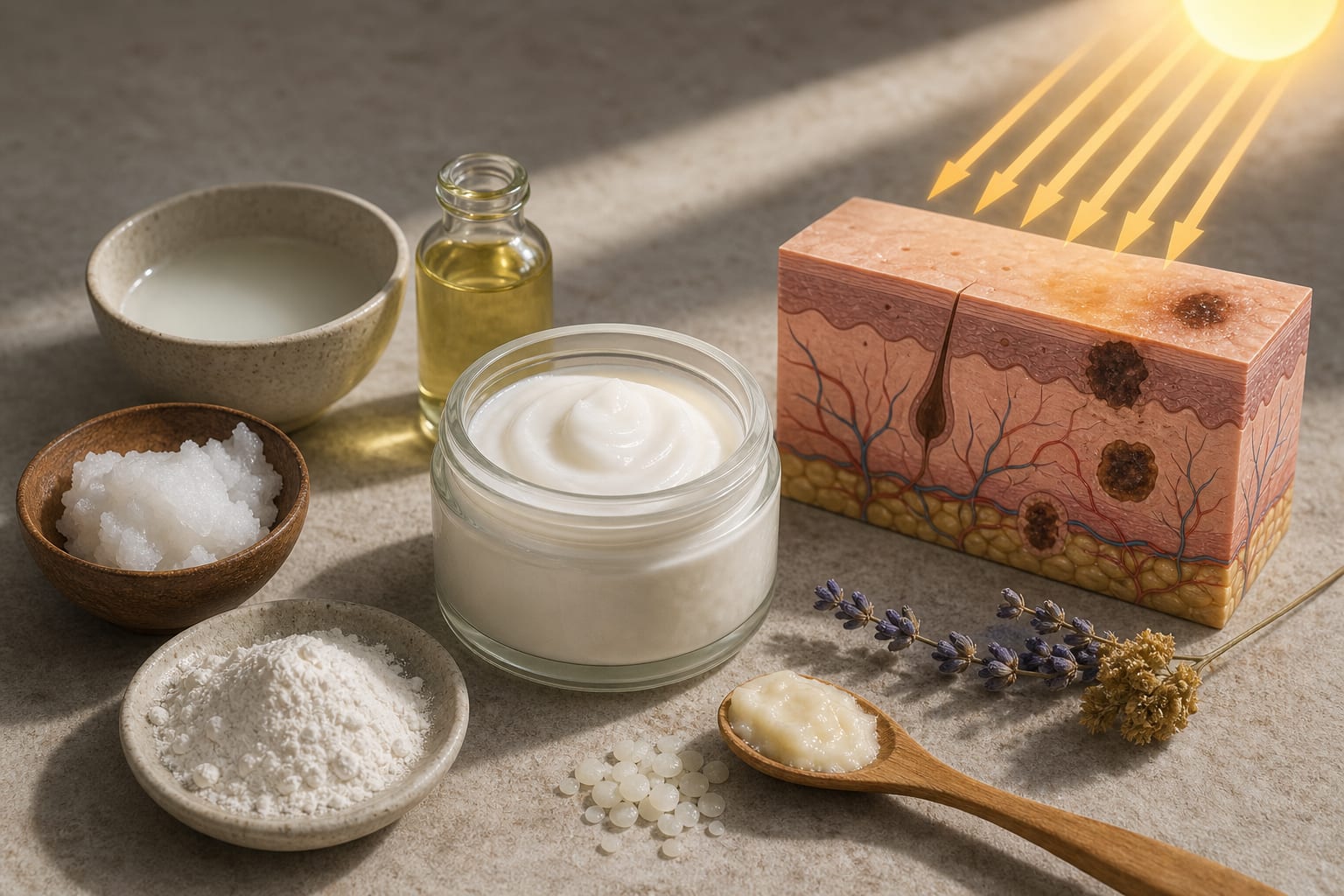
To analyze the rising popularity, ingredients, and efficacy of DIY sunscreen and highlight the potential risks associated with these non–FDA-approved, homemade sunscreen products.
Approach:
Literature Review: Articles were selected from peer-reviewed journals based on content, quality, and relevance. Searches were conducted using PubMed and Google Scholar with terms related to homemade and DIY sunscreens.
Social Media Analysis: Popular search engines, social media sites, blogs, and online forums discussing homemade sunscreens were also examined for nonscientific or non-peer-reviewed information.
Key Findings:
Skin cancer incidence continues to rise in the U.S., particularly for basal cell carcinoma (BCC) and squamous cell carcinoma (SCC).
DIY sunscreens are perceived as safer alternatives but lack scientific validation for their effectiveness against UV radiation.
The FDA does not regulate the term 'organic' in skincare, allowing misleading claims about DIY products.
Only 16 UV filters are approved for use in the U.S., compared to 29 in the EU, highlighting the rigorous testing commercial sunscreens undergo.
Homemade sunscreen recipes often misrepresent SPF values and lack formal approval, posing potential risks to users.
Interpretation:
The clean beauty movement may increase the risk of skin cancer due to the rejection of scientifically validated sunscreen products in favor of untested DIY alternatives.
Limitations:
The review may not encompass all available literature on DIY sunscreens.
Potential biases in the selection of articles and sources from social media may affect the comprehensiveness of the findings.
Conclusion:
The systematic review highlights the importance of using FDA-approved sunscreen products for consumer safety and the potential public health risks associated with DIY sunscreen practices.