Respiratory safety and resource utilization in ERCP: a comparative study of high-flow nasal oxygen, conventional mask, and general anesthesia in high-risk populations - Summary - MDSpire
Advertisement
Respiratory safety and resource utilization in ERCP: a comparative study of high-flow nasal oxygen, conventional mask, and general anesthesia in high-risk populations
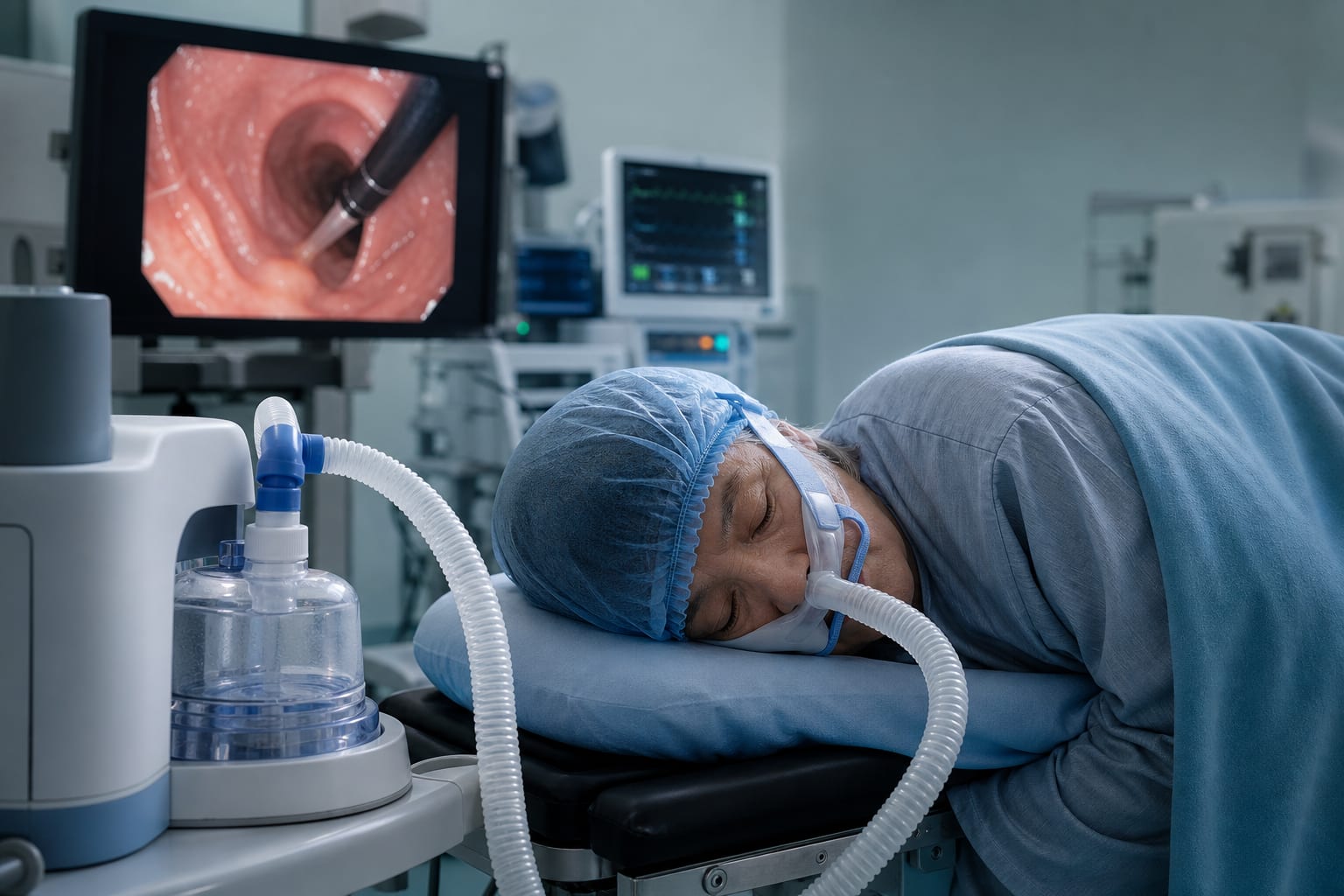
To compare the clinical efficacy and volumetric oxygen consumption of high-flow nasal oxygen (HFNO) with conventional simple mask (SM) oxygenation and general anesthesia (GA) during ERCP procedures, highlighting the importance of this comparison in high-risk patient groups.
Key Findings:
Desaturation occurred in 59.7% of SM patients versus 0% in both HFNO and GA groups (p < 0.001).
In elderly patients, desaturation reached 81% in SM versus 0% in HFNO and GA.
Minimum SpO₂ was significantly lower in SM (90%) compared to HFNO (99%) and GA (99%) (p < 0.001).
Airway interventions were required in 31.4% of SM patients, 5.4% of HFNO patients (p = 0.004).
Oxygen consumption was highest in HFNO (500 L) compared to SM (175 L) and GA (34.5 L) (p < 0.001).
Interpretation:
HFNO provided a high level of respiratory stability, matching the observed 0% desaturation rate of the GA group, even in high-risk populations.
Limitations:
Retrospective design may introduce selection bias, potentially affecting the reliability of the findings.
Single-center study limits generalizability, as results may not be applicable to other settings or populations.
Conclusion:
HFNO can achieve a safety profile that approximates the clinical outcomes of general anesthesia regarding oxygenation maintenance.
The clinical-stage cancer biotech raised $670 million in an upsized Nasdaq debut, with a further $75 million expected from a concurrent Regeneron private placement