Magnetic Resonance Imaging–Based Artificial Intelligence in Predicting Prostate Cancer Biochemical Recurrence: Systematic Review and Meta-Analysis - Summary - MDSpire
Advertisement
Magnetic Resonance Imaging–Based Artificial Intelligence in Predicting Prostate Cancer Biochemical Recurrence: Systematic Review and Meta-Analysis
To review and analyze the role of artificial intelligence in predicting biochemical recurrence (BCR) of prostate cancer using MRI.
Approach:
Introduction to Prostate Cancer: Prostate cancer (PCa) is a prevalent malignancy among men worldwide, with a rising incidence. In 2025, approximately 313,780 new cases of prostate cancer and 35,770 deaths are expected in the United States alone.
Current Detection Methods: Current clinical detection of PCa relies on PSA testing, imaging techniques, and biopsies, which have limitations in specificity and reliability.
Role of AI in Diagnosis: AI has emerged as a promising tool in PCa diagnosis, outperforming traditional methodologies in processing complex datasets and improving predictive accuracy.
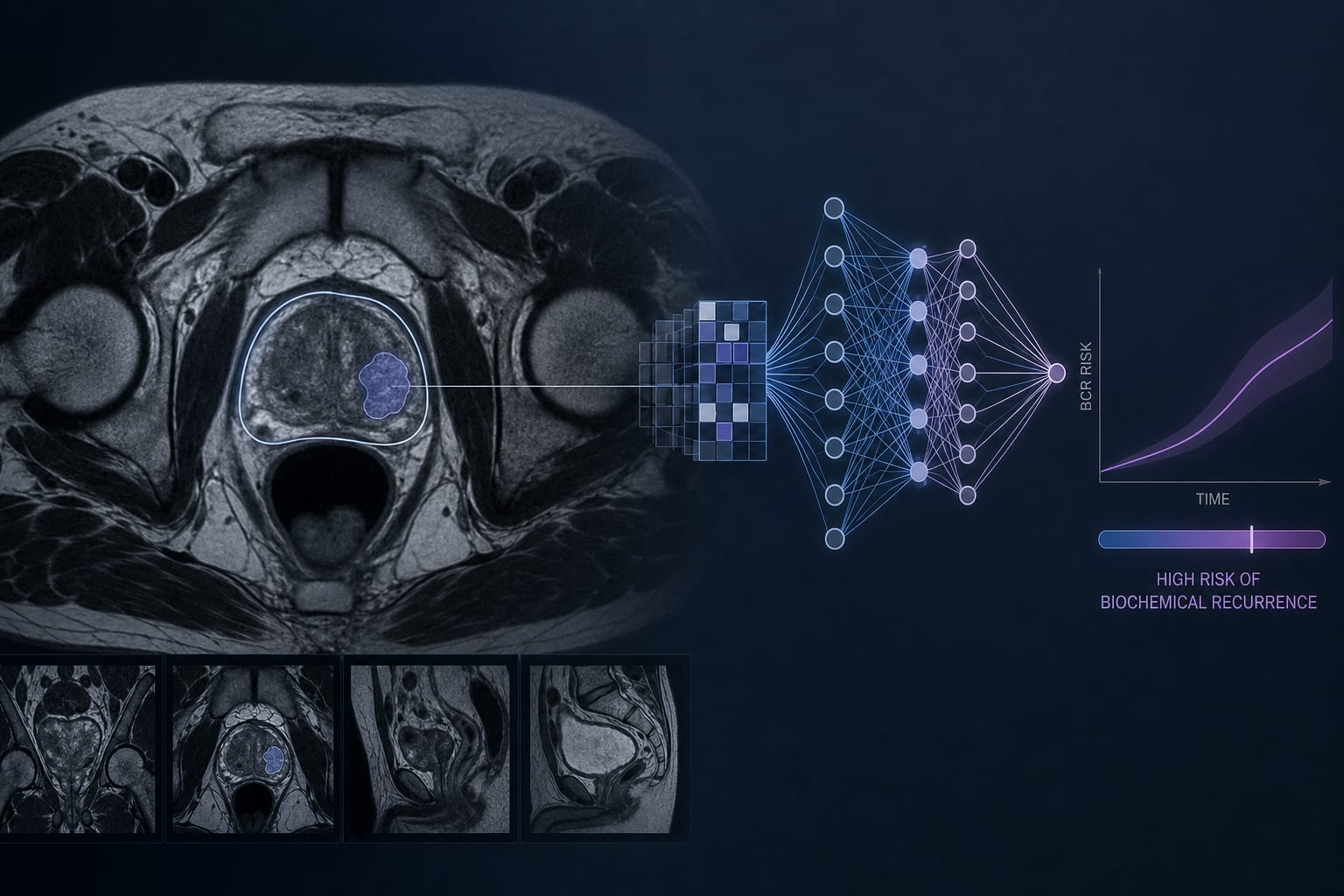
MRI-based AI Models: MRI-based AI models integrating radiomics and deep learning have shown potential in predicting BCR after prostatectomy or other treatments.
Key Findings:
AI models demonstrate improved predictive accuracy for BCR compared to traditional methods, as shown in various studies.
MRI-based AI models have shown robust AUC values in validation cohorts.
Current studies face limitations including small sample sizes and lack of multicenter validation.
Interpretation:
While AI shows promise in enhancing the prediction of BCR in prostate cancer, further validation and exploration of its clinical applicability are necessary.
Limitations:
Most studies are retrospective and exploratory.
Limited sample sizes and multicenter external validation.
Concerns regarding intermodel variability and overfitting.
Conclusion:
AI-based MRI models could significantly aid in BCR risk stratification and decision-making in prostate cancer management, pending further validation.