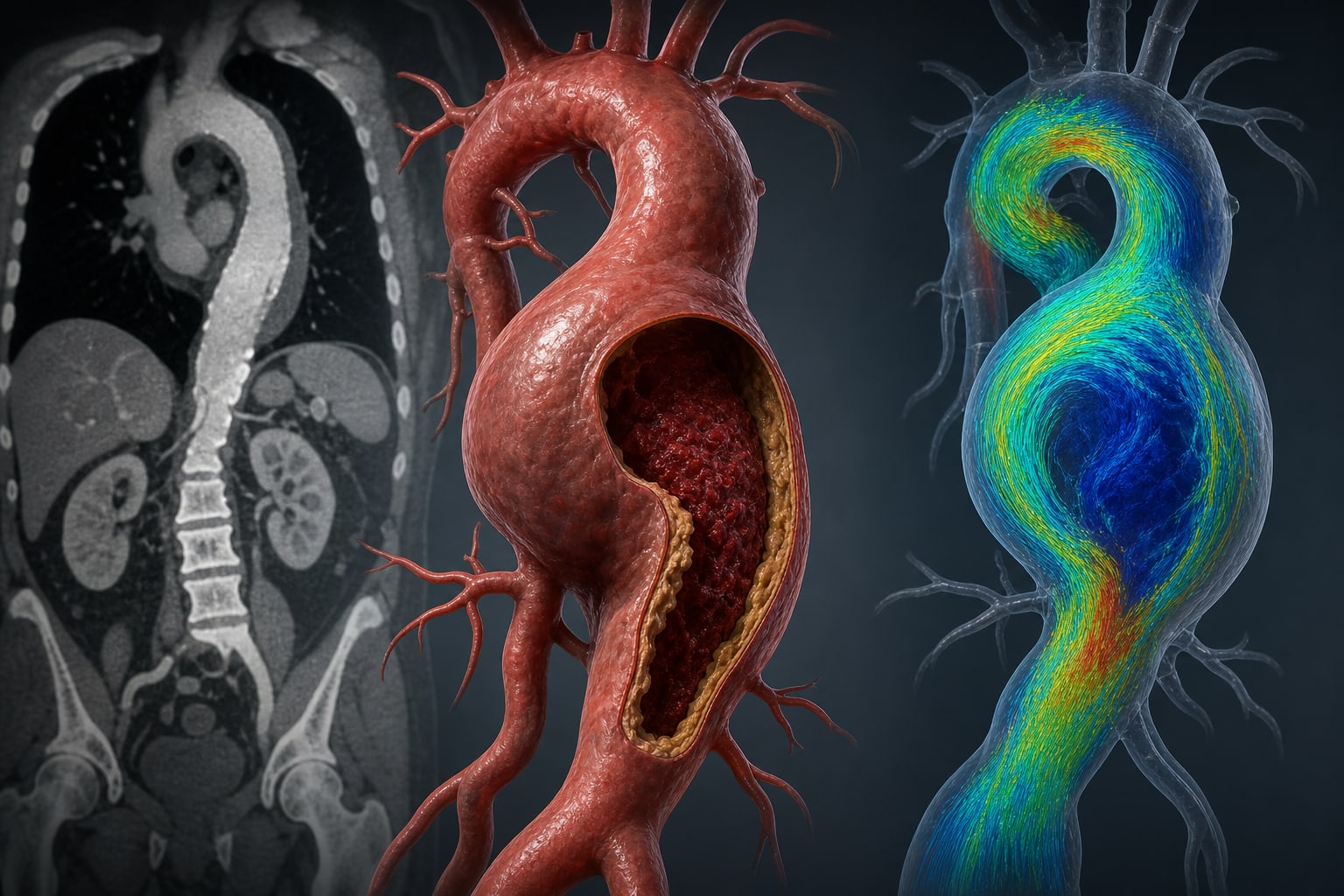
To perform patient-specific hemodynamic simulations of thoracoabdominal aortic aneurysm (TAAA) models and evaluate the potential for intraluminal thrombus (ILT) formation.
Approach:
Patient-specific modeling: Computed Tomography Angiography data from 12 TAAA patients were reconstructed into models, grouped by ILT presence.
Blood stasis assessment: Old blood volume fraction (OBVF) and convergence time were used to evaluate thrombotic potential and blood stasis.
Key Findings:
In the ILT group, normalized OBVF was 76.66% ± 12.38% and convergence time was 42.58 ± 13.29 s.
In the non-ILT group, normalized OBVF was 21.42% ± 3.39% and convergence time was 10.93 ± 5.96 s.
Interpretation:
The blood stasis model provides a new approach for diagnosing and treating ILT in TAAA, offering insights that differ from traditional wall shear stress parameters.
Conclusion:
The blood stasis model can assist in understanding ILT in TAAA.