Global landscape analysis of antibody-drug conjugate clinical trials for prostatic neoplasms: current status, opportunities and challenges - Summary - MDSpire
Advertisement
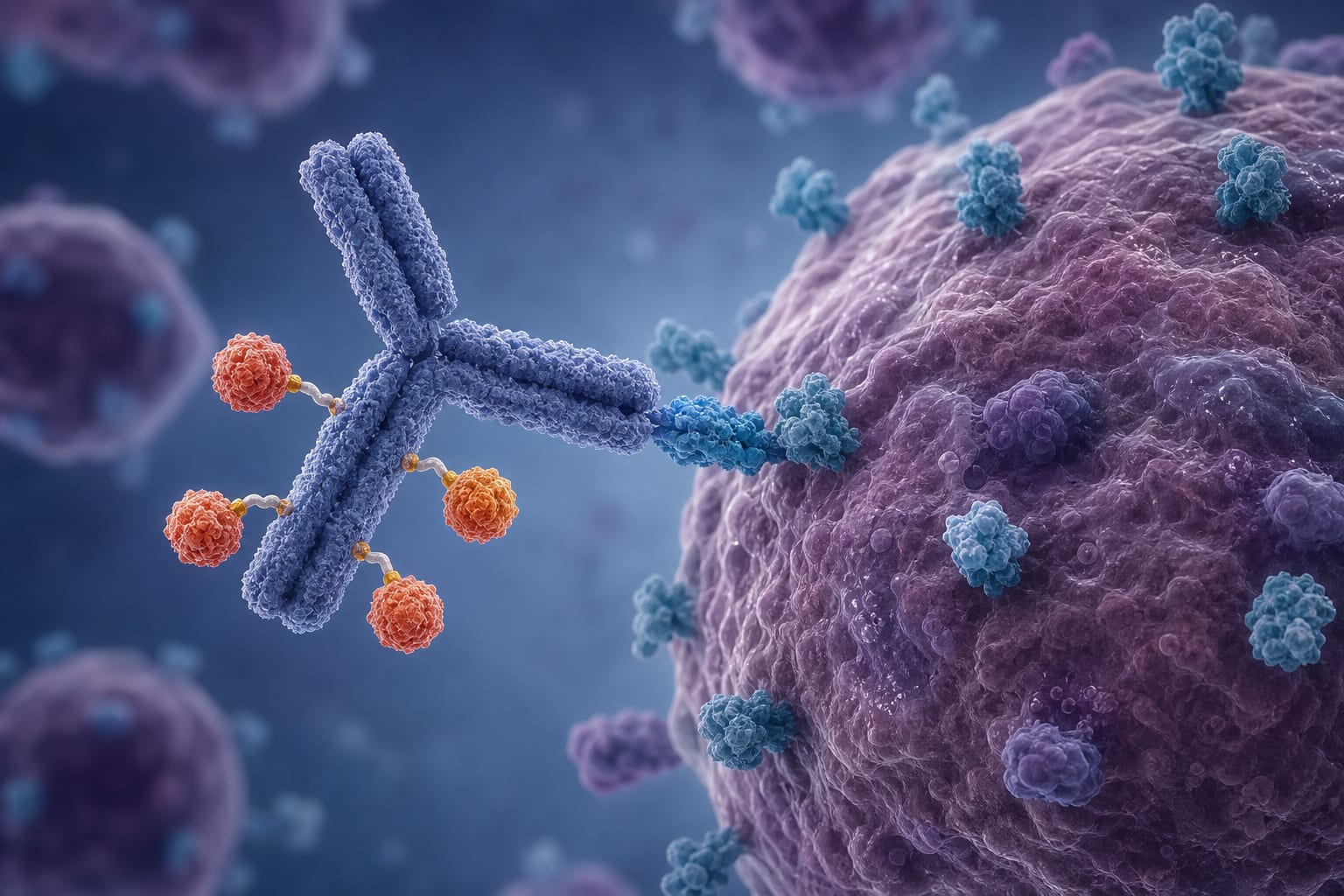
Global landscape analysis of antibody-drug conjugate clinical trials for prostatic neoplasms: current status, opportunities and challenges
To delineate the current landscape of ADC clinical trials for prostatic malignancies, elucidate existing development trends, and identify translational prospects and deficiencies, emphasizing the significance of these findings for future research.
Key Findings:
66 ADC trials launched from 2023 to 2025, with 76.3% being early exploratory trials (Phase I/I-II).
51.7% of trials are ongoing, while 21.2% have been completed.
68.1% of platforms used protease-cleavable linkers, with Val-Cit being the most prevalent.
52.1% of trials utilized TOP1-based payloads, indicating a trend towards this design.
35 different antigens targeted, with B7-H3 (20.2%) and TROP2 (11.8%) being notable alongside PSMA (9.2%).
Primary endpoints focused on safety and dose-finding metrics, with limited representation of time-to-event outcomes.
Interpretation:
The ADC clinical trial landscape for prostate cancer is rapidly evolving, with a focus on early-phase trials and a diverse range of targets and payloads. However, the notable lack of mature time-to-event data is critical for assessing long-term efficacy and should be addressed in future studies.
Limitations:
The study did not conduct a formal trial-level risk-of-bias evaluation or meta-analysis, which may limit the robustness of the findings.
Limited representation of progression-free survival and overall survival data in the trials, which are essential for evaluating treatment effectiveness.
Conclusion:
The study highlights the dynamic nature of ADC trials in prostate cancer, emphasizing the need for continued exploration of diverse targets and improved data on long-term outcomes to enhance clinical application.