To summarize how hypoxia drives tumor immune escape and discuss therapeutic strategies targeting the hypoxia–metabolism–immune axis.
Approach:
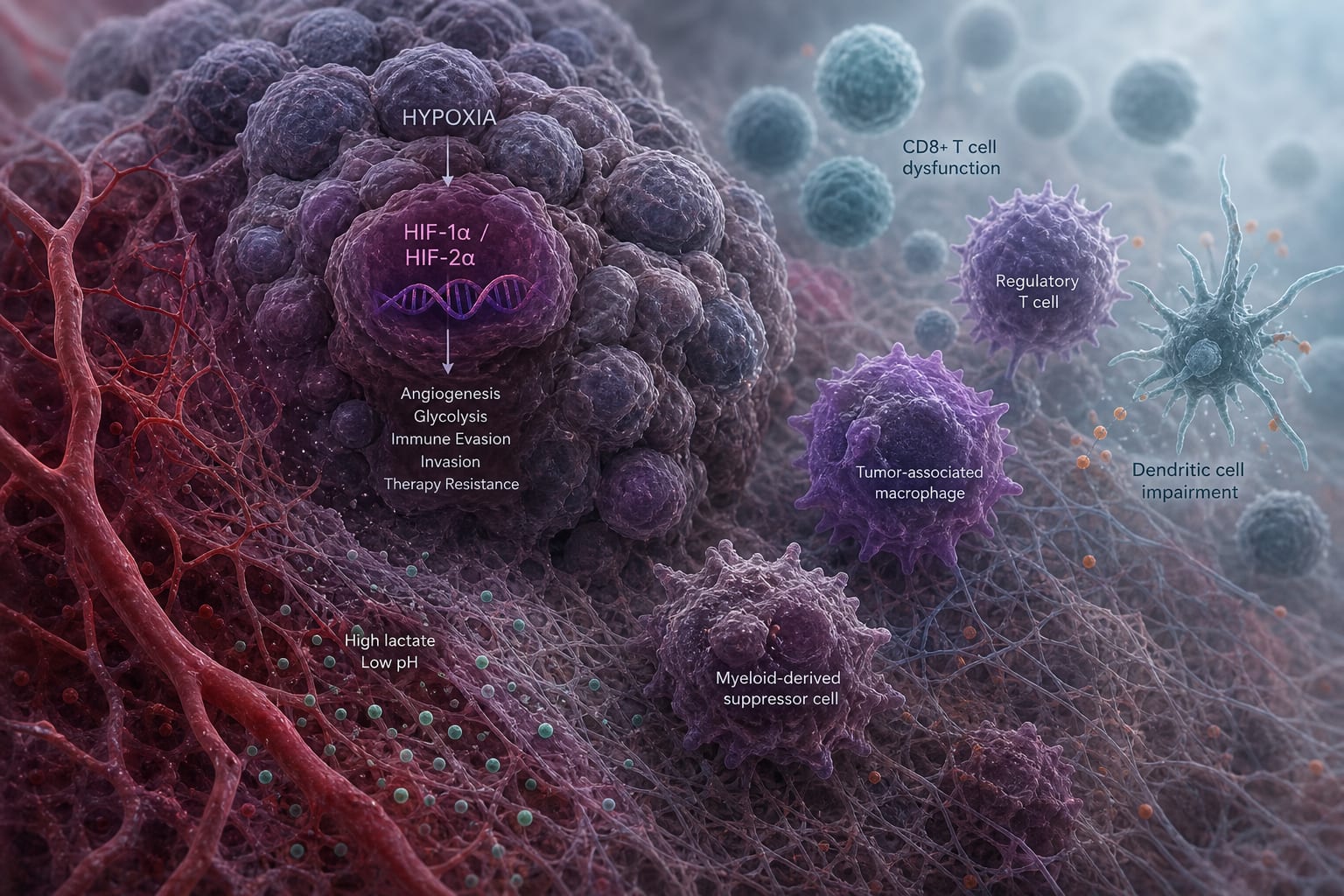
Hypoxia and Tumor Immune Microenvironment: Examines how hypoxia affects immune cell function and promotes an immunosuppressive microenvironment.
HIF Signaling Mechanisms: Describes the role of hypoxia-inducible factors (HIF-1α and HIF-2α) in regulating immune-related genes and metabolic changes.
RNA Modifications: Explores the role of RNA modifications (m6A and ac4C) in linking hypoxia signaling with immune checkpoint regulation.
Therapeutic Strategies: Discusses the need for rational combinations of therapies targeting hypoxia-related pathways to improve antitumor immunity.
Key Findings:
Hypoxia leads to immune evasion by suppressing CD8+ T cells and promoting regulatory T cells and myeloid-derived suppressor cells.
HIF signaling drives metabolic changes that create a hostile environment for immune cells.
RNA modifications provide a post-transcriptional regulatory layer linking hypoxia to immune escape mechanisms.
Single-agent therapies targeting hypoxia are often insufficient due to overlapping escape mechanisms in tumors.
Interpretation:
Hypoxia reshapes the tumor immune microenvironment, leading to reduced efficacy of immunotherapy through various interconnected mechanisms.
Limitations:
Limited causal evidence linking RNA modifications to hypoxia-driven immune escape.
Context-dependent roles of HIF signaling in different immune cell types remain unresolved.
Variable outcomes of hypoxia-targeted interventions across different tumor contexts.
Conclusion:
Future therapies should integrate hypoxia modulation with immunotherapy and metabolic interventions to enhance treatment efficacy.