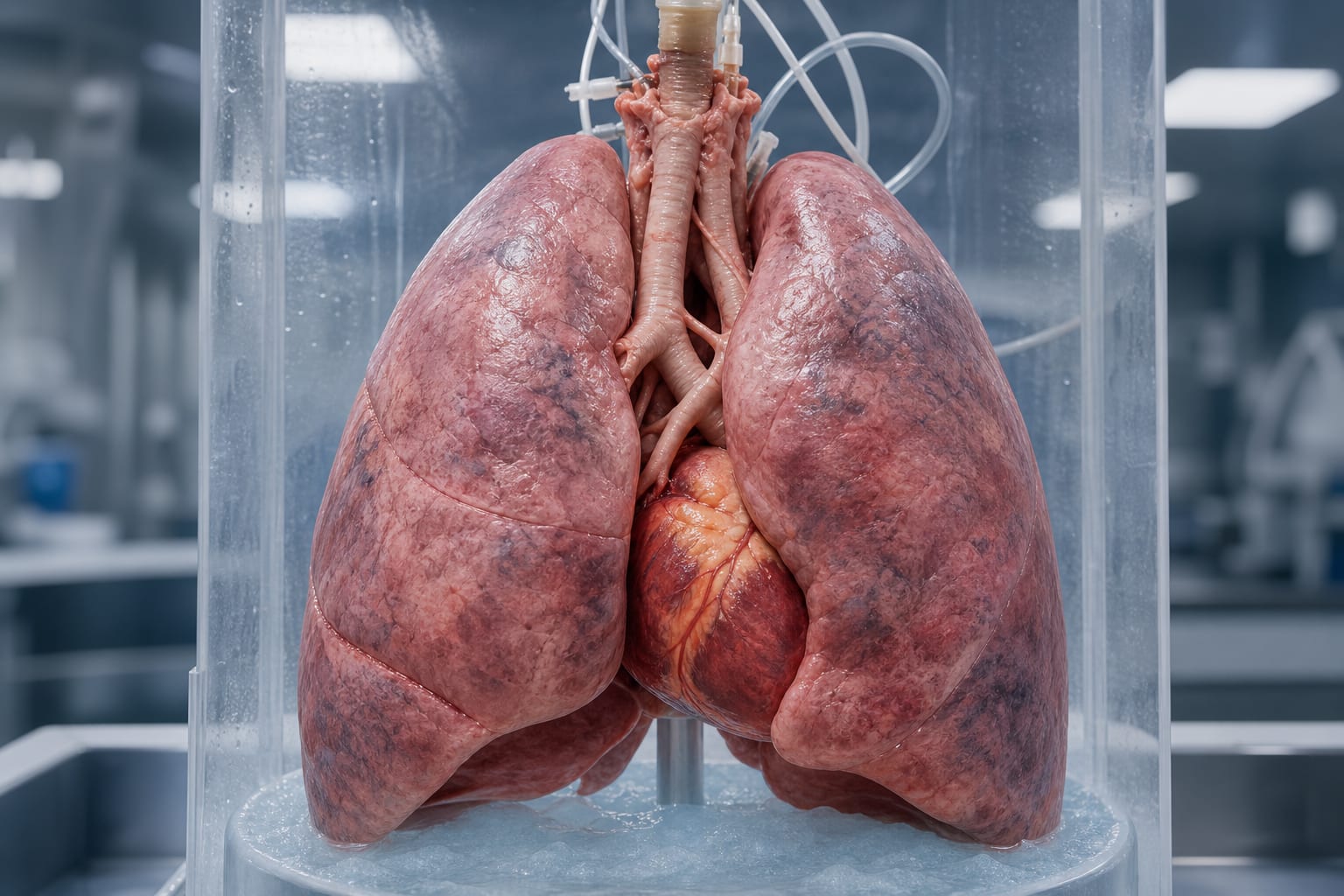
To evaluate early and mid-term outcomes after lung transplantation using lungs from polytrauma donors (PD) compared with non-polytrauma donors (NPD).
Approach:
Key Findings:
PDs were younger and more frequently male, with a higher prevalence of pulmonary contusions.
Early postoperative outcomes, including PGD, ICU stay, and perioperative complications, were comparable between groups.
At 6 months, overall survival was higher in the PD group (91.7% vs. 75.3%, p = 0.048).
After PSM, no significant differences were observed in survival (p = 0.66), perioperative outcomes, or pulmonary function.
Interpretation:
Lung transplantation using grafts from polytrauma donors is not associated with worse perioperative or mid-term outcomes. After adjustment for baseline differences, outcomes were comparable to those from non-polytrauma donors.
Limitations:
Retrospective design may introduce bias.
Exclusion of donors after circulatory death and those who died during surgery may limit generalizability.
Conclusion:
Outcomes from lung transplantation using polytrauma donor grafts support their safe and selective use to expand the donor pool.