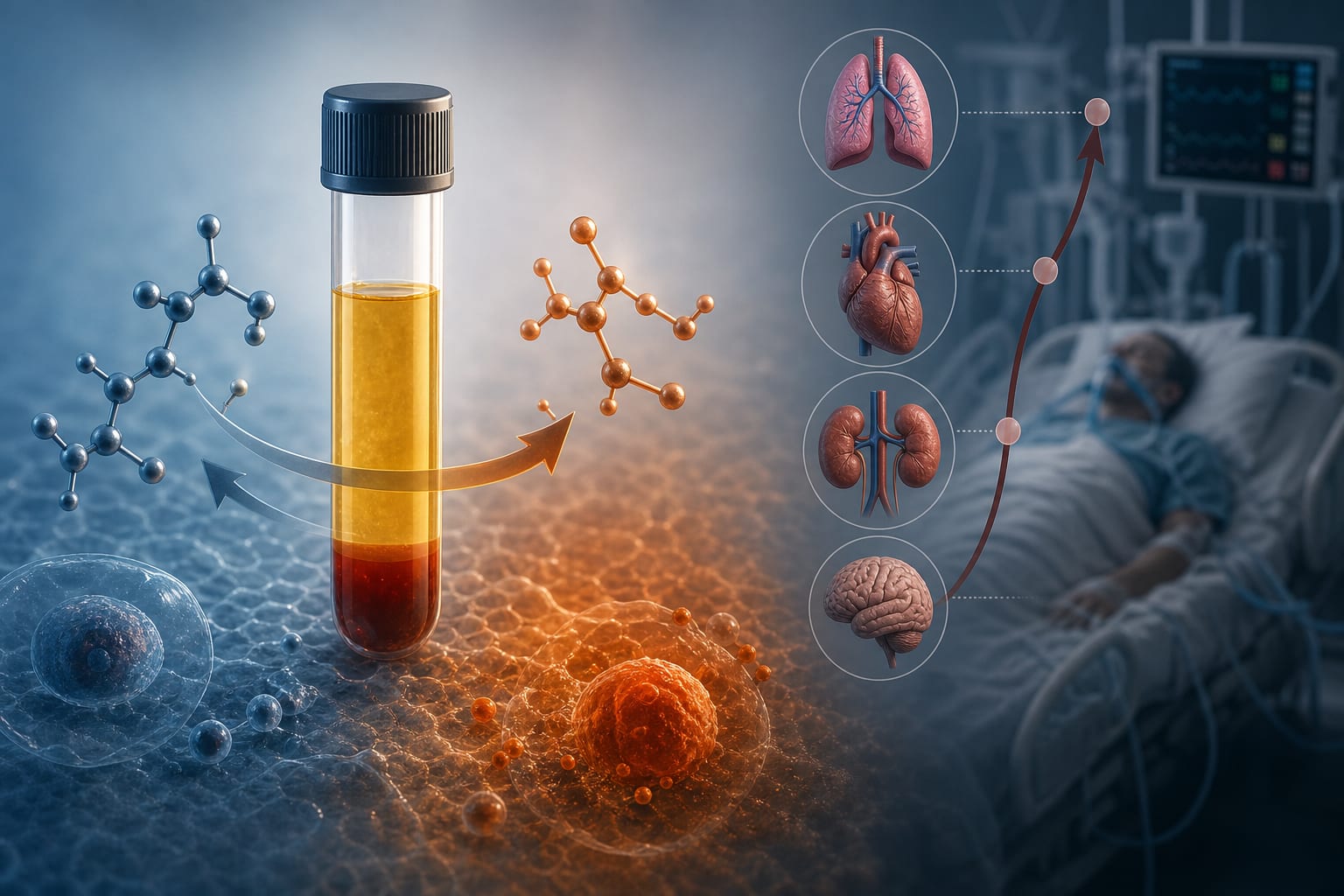
To evaluate the biological interpretation of elevated FRAP levels in critically ill patients and its implications as a prognostic biomarker.
Approach:
Study Evaluation: Analysis of the study by Cobo-Zubia et al. regarding plasma FRAP levels in postoperative critically ill patients.
Biological Interpretation: Discussion on the dual interpretation of elevated FRAP as either a compensatory antioxidant response or a marker of metabolic derangement.
Key Findings:
Elevated FRAP levels are associated with shock severity, endothelial dysfunction, and increased 90-day mortality.
FRAP showed discriminative performance comparable to APACHE II and remained independently associated with mortality after multivariable adjustment.
Increased FRAP may reflect the accumulation of reducing metabolites due to organ dysfunction rather than enhanced antioxidant reserve.
Interpretation:
The interpretation of elevated FRAP levels as a beneficial antioxidant adaptation versus a marker of metabolic derangement requires further investigation.
Limitations:
The FRAP assay cannot distinguish between antioxidant capacity and the accumulation of reducing metabolites.
Further studies are needed to clarify the biological significance of elevated FRAP in critically ill patients.
Conclusion:
Future investigations should combine FRAP with specific markers of oxidative injury and conduct serial measurements to enhance understanding of its role in critical illness.