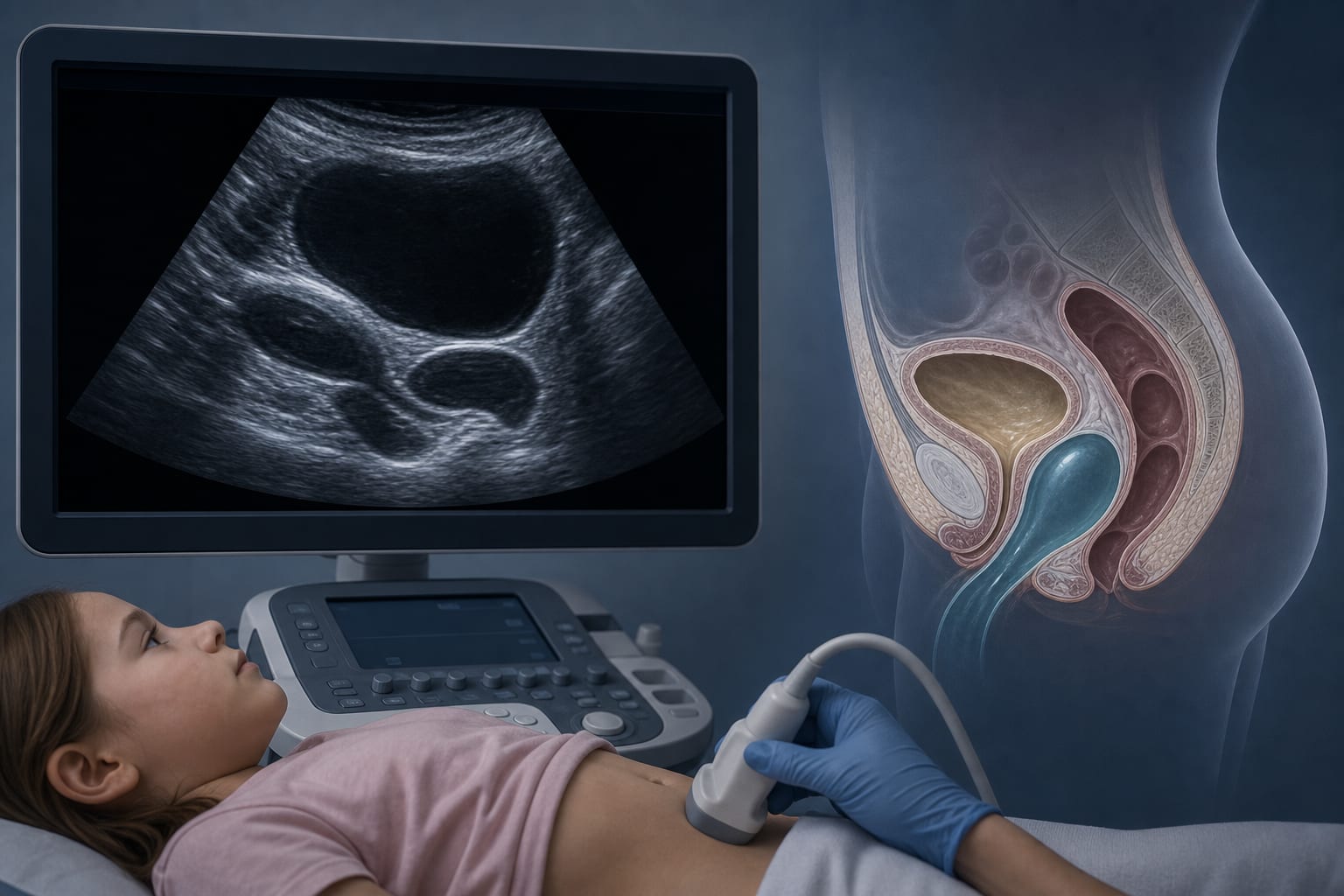
To report a case of vesicovaginal reflux (VVR) in an 8-year-old girl and review existing literature on the condition, highlighting its clinical significance.
Key Findings:
VVR is often underrecognized and can be mistaken for anatomical abnormalities, necessitating careful differential diagnosis.
The diagnosis should be considered when transient fluid collection is observed in the vagina on ultrasound.
Behavioral therapy focusing on voiding posture and toileting habits is the primary treatment.
Interpretation:
VVR is a functional voiding disorder that can cause urinary incontinence, particularly in children, and requires careful diagnosis to differentiate from anatomical issues, which can lead to mismanagement.
Limitations:
The incidence of VVR is likely underreported due to low diagnostic rates, which can impact treatment approaches.
Existing literature on VVR is limited, making comprehensive understanding challenging and highlighting the need for further research.
Conclusion:
VVR should be considered in cases of urinary incontinence in children, and proper behavioral interventions can lead to symptom resolution, underscoring the importance of awareness among healthcare providers.