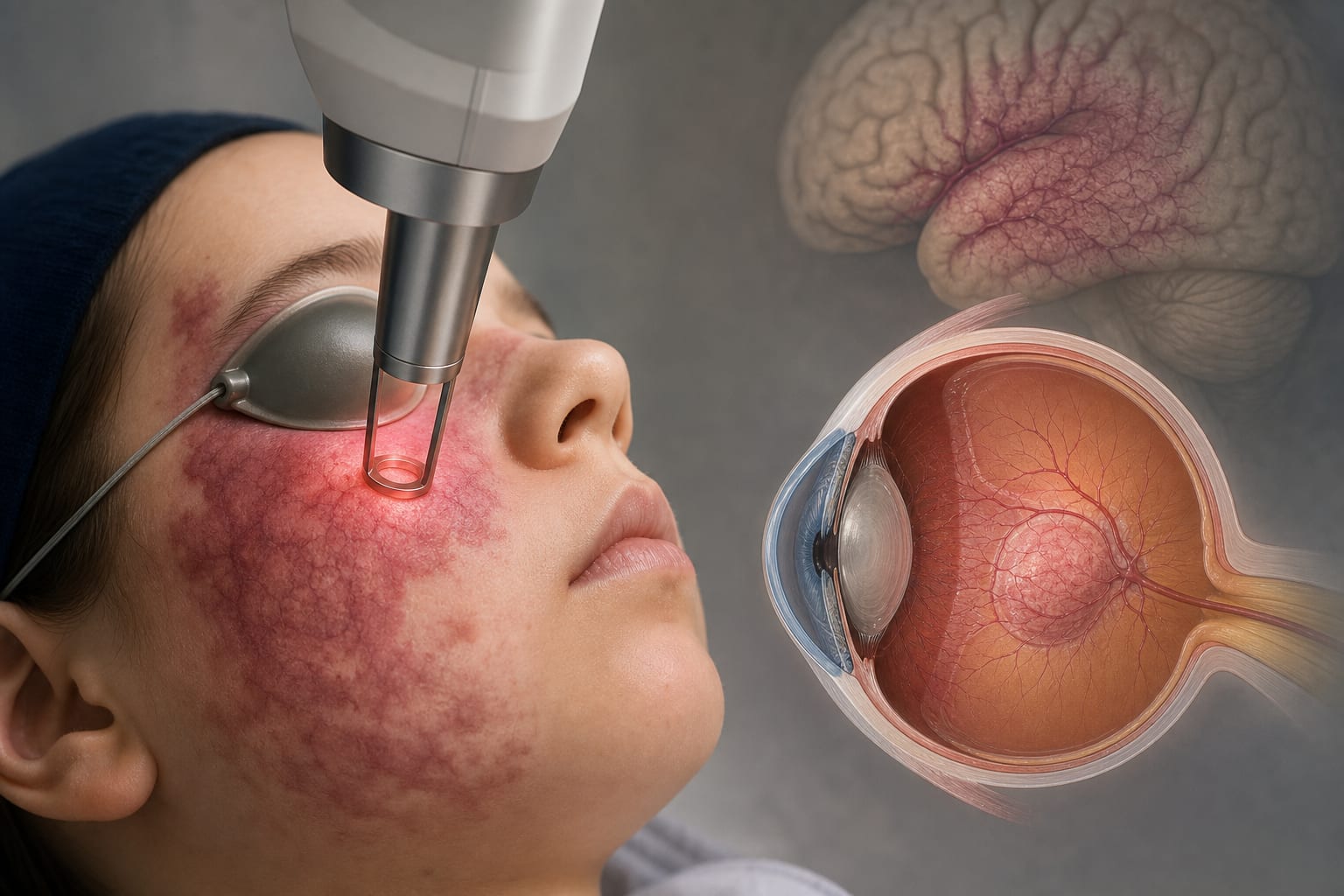
To evaluate the impact of laser treatment for port-wine stains on ocular manifestations in Sturge-Weber Syndrome, considering clinical outcomes and biological mechanisms.
Approach:
Literature Review: A narrative literature review was conducted using PubMed and Google Scholar to evaluate the effects of laser treatment on ocular manifestations in SWS.
Key Findings:
Pulsed dye laser (PDL) therapy is effective in reducing the size and appearance of port-wine stains.
PDL therapy may improve ocular vascular dynamics, potentially reducing intraocular pressure and ameliorating choroidal hemangiomas.
Mechanistic insights suggest laser therapy may enhance skin barrier function and modulate sebaceous gland activity, indirectly affecting ocular health.
Current evidence evaluating the relationship between laser treatment and ocular outcomes is limited and heterogeneous, primarily consisting of retrospective studies and observational cohorts.
Interpretation:
The review emphasizes the importance of multidisciplinary care and the need for standardized treatment protocols.
Limitations:
Existing studies are primarily retrospective, observational, and heterogeneous in design.
Current evidence is insufficient to establish causality between laser therapy and ocular outcomes.
Conclusion:
The review highlights the importance of integrated dermatologic and ophthalmologic care for patients with SWS.
Application of newly proposed GRAPPA and EULAR criteria in a longitudinal cohort identified progressively smaller groups of patients with early psoriatic arthritis who experienced persistently worse patient-reported outcomes.