Rural-urban differences and association of sexual autonomy with uptake of breast and cervical cancer screening services among women of reproductive age in Ghana - Summary - MDSpire
Advertisement
Rural-urban differences and association of sexual autonomy with uptake of breast and cervical cancer screening services among women of reproductive age in Ghana
To examine the association between sexual autonomy and uptake of breast cancer (BC) and cervical cancer (CC) screening services among Ghanaian women in rural and urban areas.
Approach:
Data Analysis: Analyzed data from a weighted sample of 8,044 women aged 15–49 years from the 2022 Ghana Demographic and Health Survey (GDHS) using descriptive statistics, chi-square tests, and multivariable logistic regression.
Key Findings:
Women with sexual autonomy were more likely to screen for BC (AOR = 2.10, 95% CI: 1.68–2.63) and CC (AOR = 1.95, 95% CI: 1.32–2.88).
Sexually autonomous women in urban areas had higher odds of BC screening (AOR = 2.16, 95% CI: 1.57–2.98) compared to rural areas (AOR = 1.92, 95% CI: 1.40–2.63).
Sexual autonomy was a significant predictor of CC screening only in urban areas (AOR = 2.06, 95% CI: 1.22–3.48).
Interpretation:
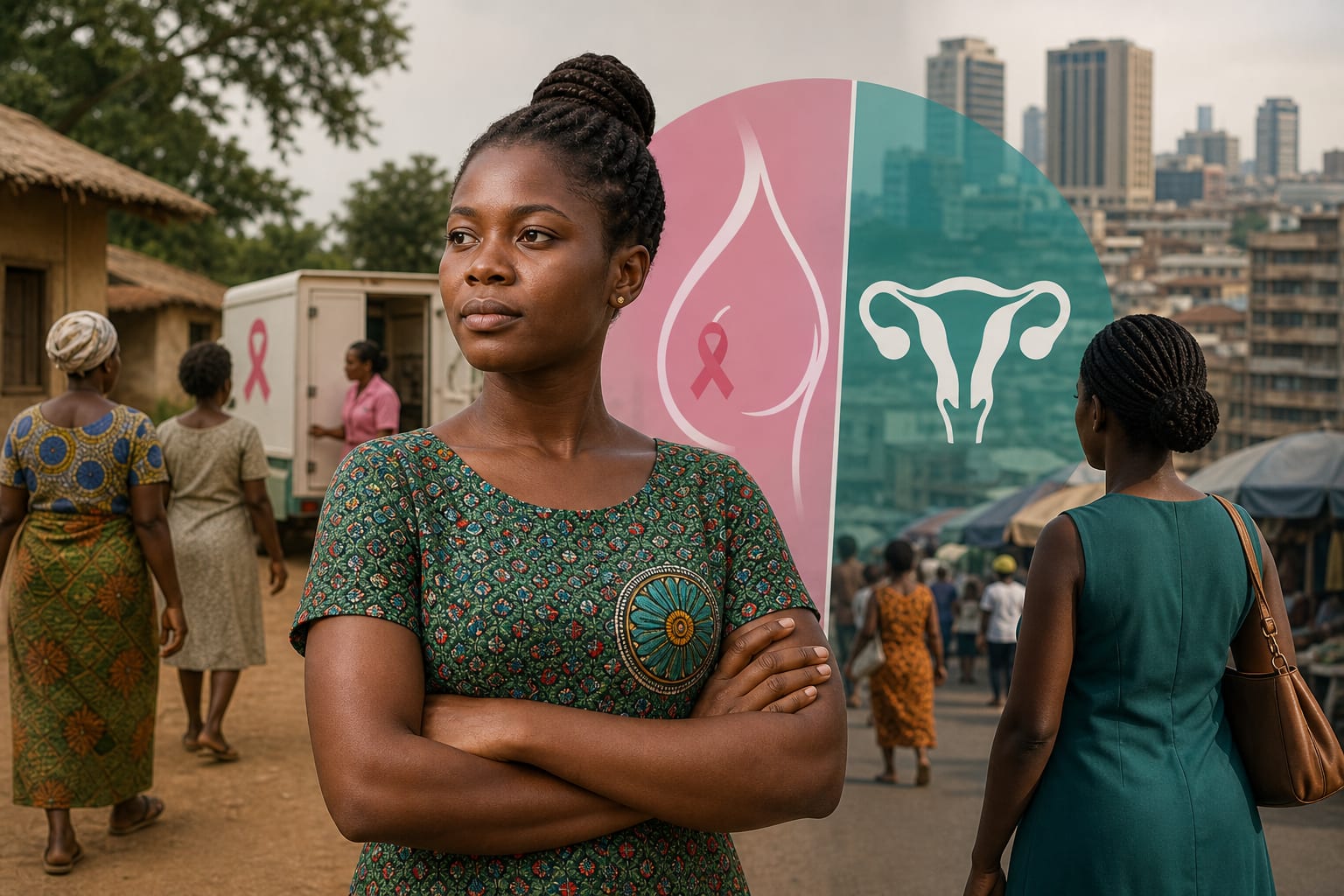
The study reveals rural-urban differences in the relationship between sexual autonomy and cancer screening uptake, indicating structural inequalities in women's empowerment and access to services.
Limitations:
Self-reported screening data may be subject to recall bias.
Responses to sexual autonomy questions may reflect social desirability.
Conclusion:
The findings suggest that addressing sexual autonomy and location-specific barriers may be important for improving screening uptake, particularly in rural areas.