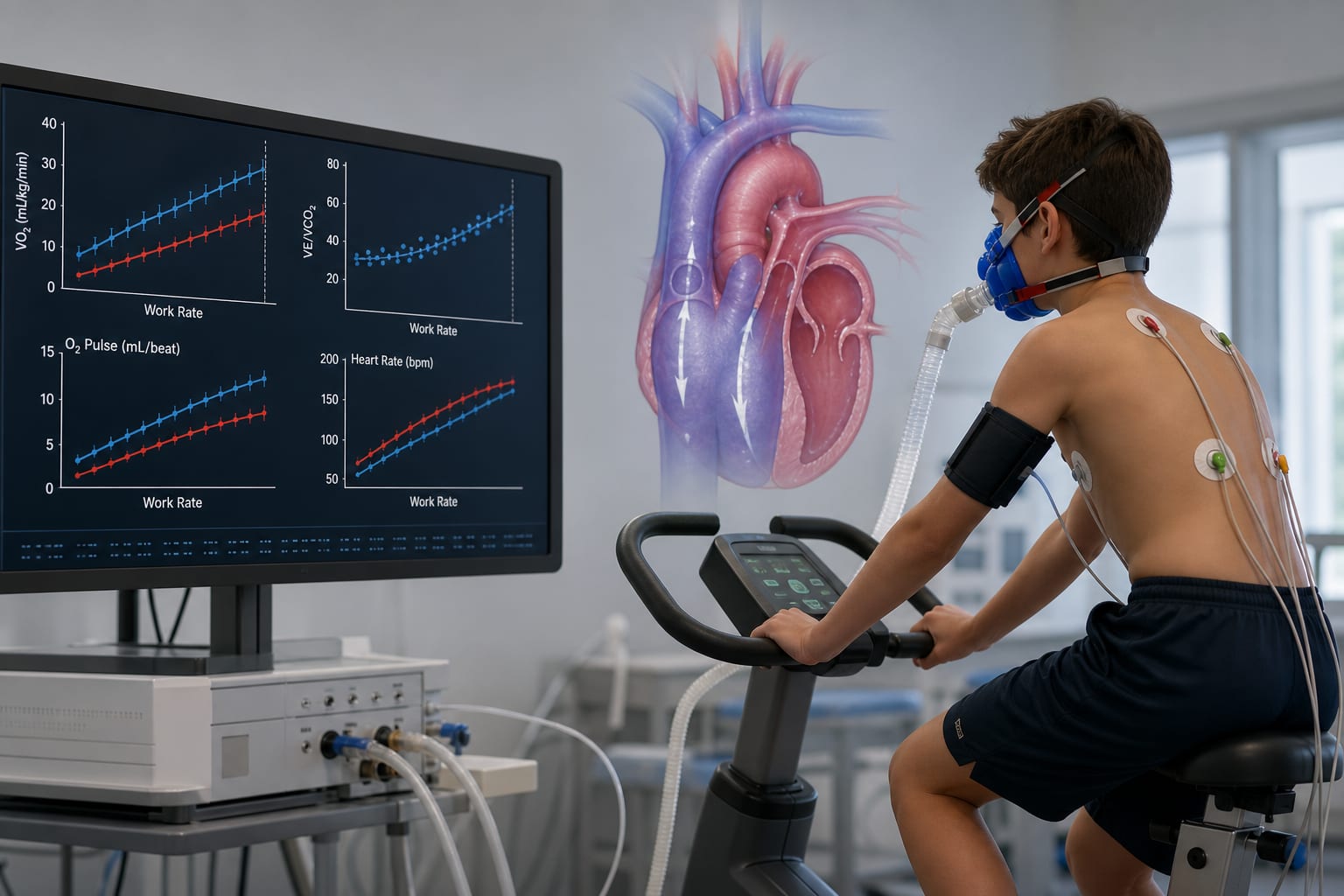
To demonstrate the clinical value of a combined analysis of peak and submaximal cardiopulmonary exercise testing (CPET) parameters in understanding exercise performance limitations in Fontan patients compared to age-matched controls, emphasizing its potential impact on clinical practice.
Key Findings:
Fontan patients exhibit 60 to 70% of peak exercise capacity compared to age-matched controls, indicating significant limitations.
Limited increase in ventricular filling during exercise is a primary factor for reduced exercise capacity in Fontan patients, highlighting a critical area for intervention.
Submaximal exercise metrics provide additional insights into exercise performance not typically discussed in clinical practice, suggesting a need for broader assessment strategies.
Interpretation:
The study highlights the importance of both peak and submaximal exercise metrics in understanding the mechanisms behind reduced exercise capacity in Fontan patients, which could inform tailored rehabilitation strategies.
Limitations:
Retrospective design may introduce selection bias, potentially affecting the generalizability of the findings.
The study only includes asymptomatic Fontan patients, which may not represent the entire population, limiting the applicability of results to symptomatic individuals.
Conclusion:
Combining peak and submaximal CPET parameters can enhance understanding of exercise limitations in Fontan patients, paving the way for improved clinical assessments and interventions.
In a multicenter registry study, genetic diagnoses were associated with substantially lower cognitive, language, and motor scores; while birth weight, surgical timing, hospitalization burden, and caregiver education were also associated with outcomes.