Therapeutic effect of modified meridian-guided acupoint pressing on lumbar facet joint osteoarthritis: an integrated microbiomics and metabolomics analysis - Summary - MDSpire
Advertisement
Therapeutic effect of modified meridian-guided acupoint pressing on lumbar facet joint osteoarthritis: an integrated microbiomics and metabolomics analysis
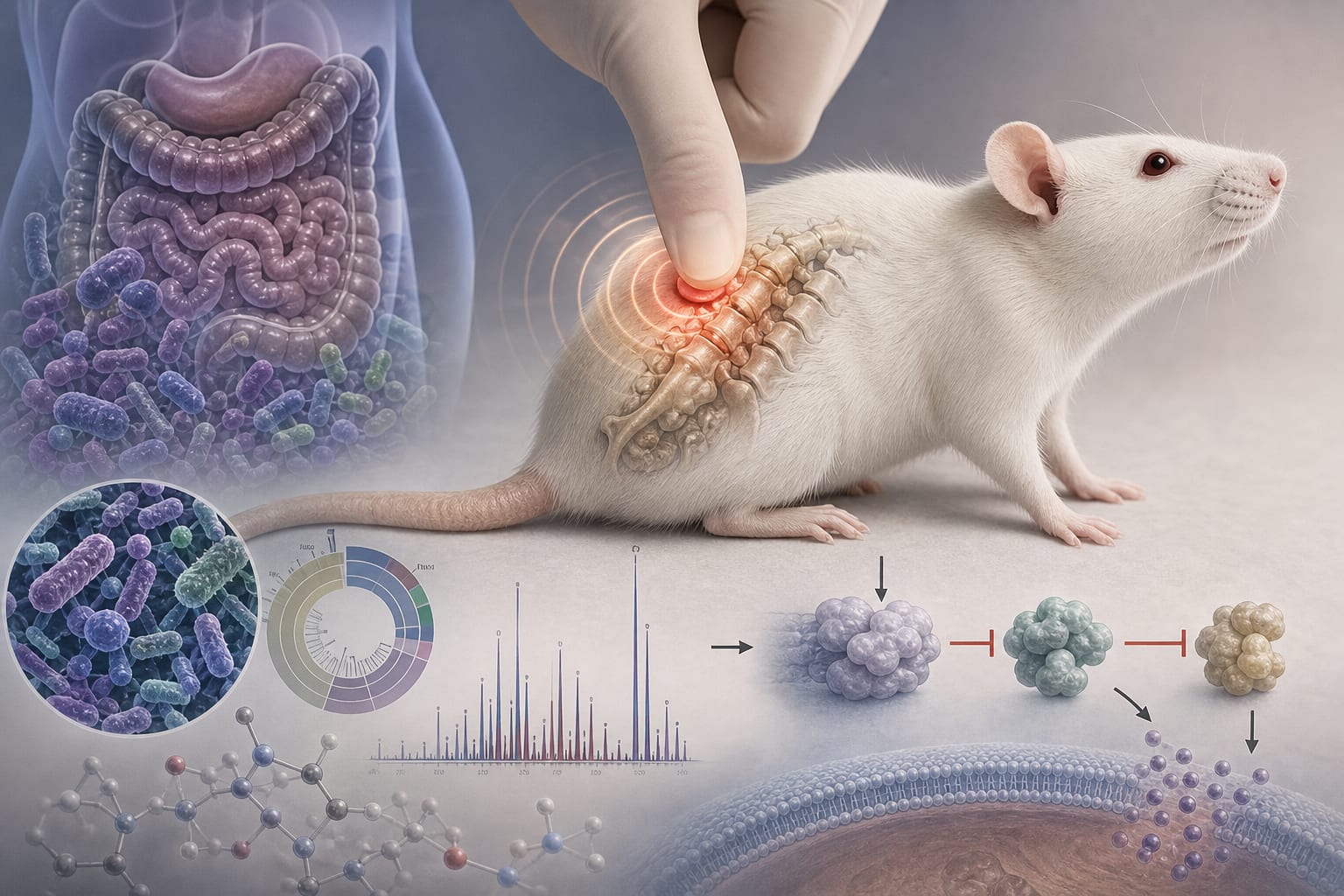
To investigate the therapeutic efficacy of Modified Meridian-Guided Acupoint Pressing (MMGAP) in lumbar facet joint osteoarthritis (LFJ OA) and explore its underlying mechanisms through integrated microbiomics and metabolomics.
Approach:
Study Design: Animal model study using urokinase-induced LFJ OA in SD rats with MMGAP intervention, fecal microbiota transplantation (FMT), and mTORC1 inhibitor (rapamycin) validation.
Analytical Methods: Histological, molecular, 16S rRNA sequencing, and UPLC-MS/MS metabolomic analyses were conducted to assess outcomes.
Key Findings:
MMGAP significantly reduced inflammatory cell infiltration in lumbar muscles/facet joints.
Downregulated serum IL-1β and TNF-α levels (p < 0.05) and TRPV1 protein expression by over 40%.
Reshaped gut microbiota with significant increases in Observed Species, Shannon and Chao1 indices (p < 0.05).
Altered serum metabolomic profiles, enriching the mTOR signaling pathway.
FMT from MMGAP-treated rats replicated therapeutic effects.
Rapamycin mimicked MMGAP's anti-inflammatory and analgesic actions.
Interpretation:
MMGAP alleviates LFJ OA through gut microbiota reshaping, serum metabolomic reprogramming, and mTORC1 pathway inhibition.
Limitations:
Study conducted in an animal model, limiting direct applicability to humans.
Further research needed to fully elucidate the mechanisms involved.
Conclusion:
These preclinical findings support the potential of MMGAP as a non-invasive intervention for degenerative joint diseases.