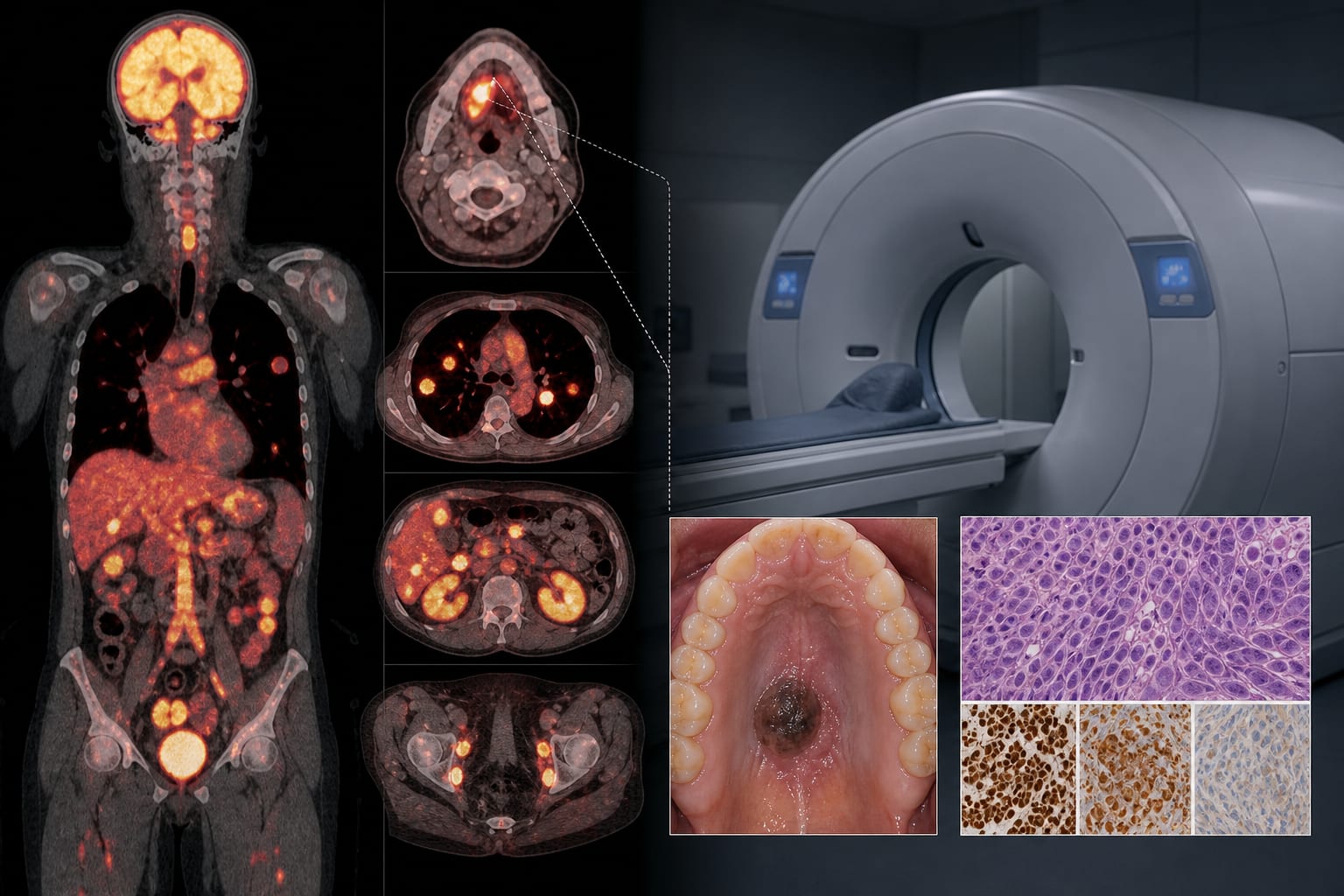
Case Report: Melanoma of the hard palate presenting initially with gastrointestinal symptoms: the diagnostic pivotal role of 18F-FDG PET/CT - Summary - MDSpire
To report a unique case of mucosal melanoma of the hard palate, a rare and aggressive malignancy, presenting with gastrointestinal symptoms and to highlight the diagnostic value of 18F-FDG PET/CT.
Approach:
Patient Presentation: A 60-year-old male presented with chronic gastrointestinal discomfort and underwent various imaging studies.
Diagnostic Imaging: A whole-body 18F-FDG PET/CT scan revealed a hypermetabolic primary lesion in the hard palate and extensive metastases.
Histopathological Analysis: Biopsies confirmed the diagnosis of oral melanoma with metastases to the liver, stomach, and bones.
Key Findings:
Mucosal melanoma is rare and aggressive, often diagnosed at advanced stages due to non-specific symptoms.
18F-FDG PET/CT is highly sensitive in detecting occult primary mucosal melanomas.
The patient presented with gastrointestinal symptoms rather than typical oral symptoms, leading to diagnostic delays.
Interpretation:
This case highlights the importance of comprehensive examinations and the utility of advanced imaging techniques in diagnosing rare malignancies.
Limitations:
The study is based on a single case report, limiting generalizability.
The patient's advanced disease at diagnosis may not represent typical presentations of mucosal melanoma.
Conclusion:
The findings emphasize the critical role of 18F-FDG PET/CT in the early diagnosis and staging of mucosal melanoma.