DNA (cytosine-5)-methyltransferase 3A (Dnmt3a) mutations limit normal and autoreactive CD4+ T follicular helper responses and attenuate T cell-driven joint inflammation - Summary - MDSpire
Conexiant’s news site is now MDSpire News. Learn more
Advertisement
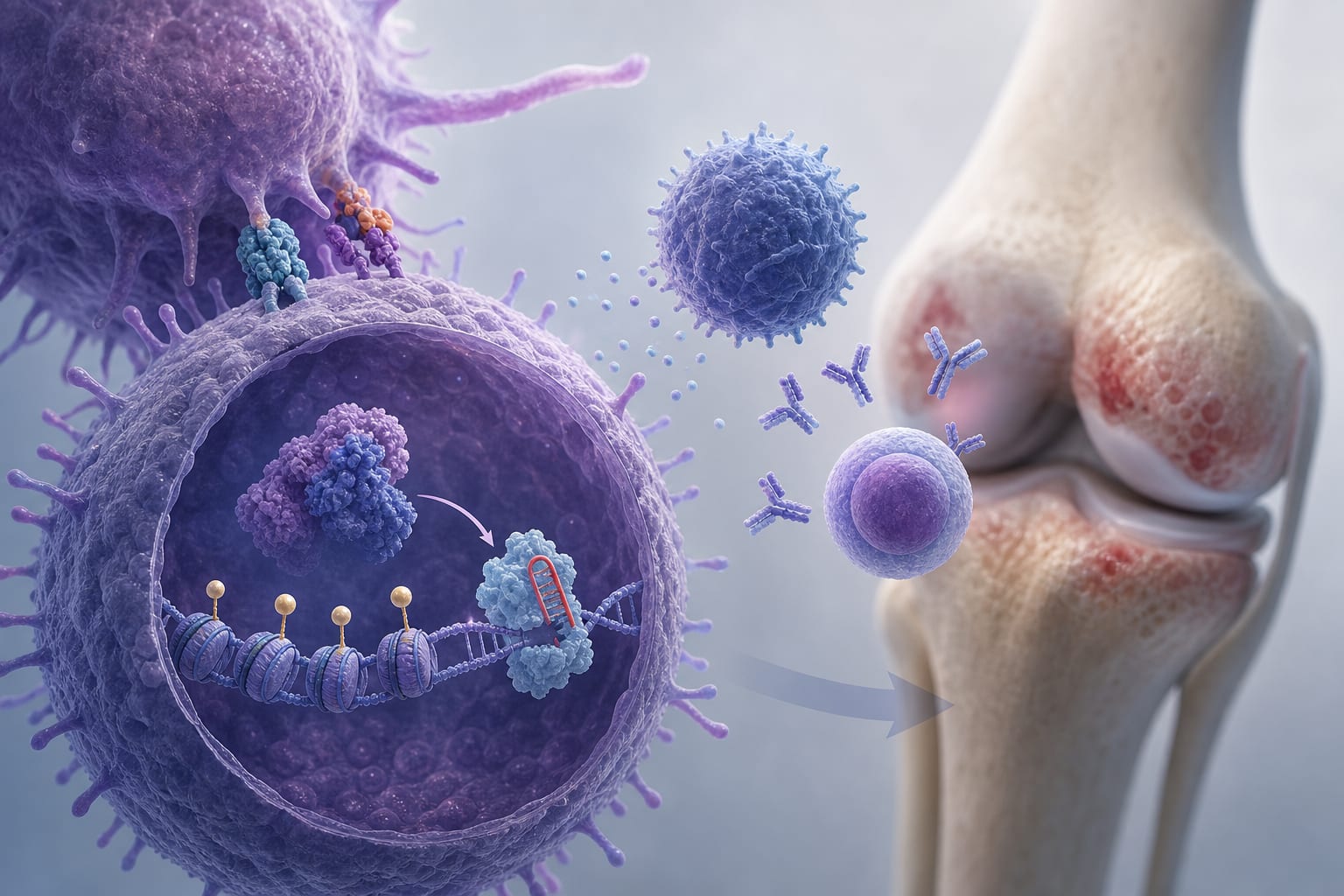
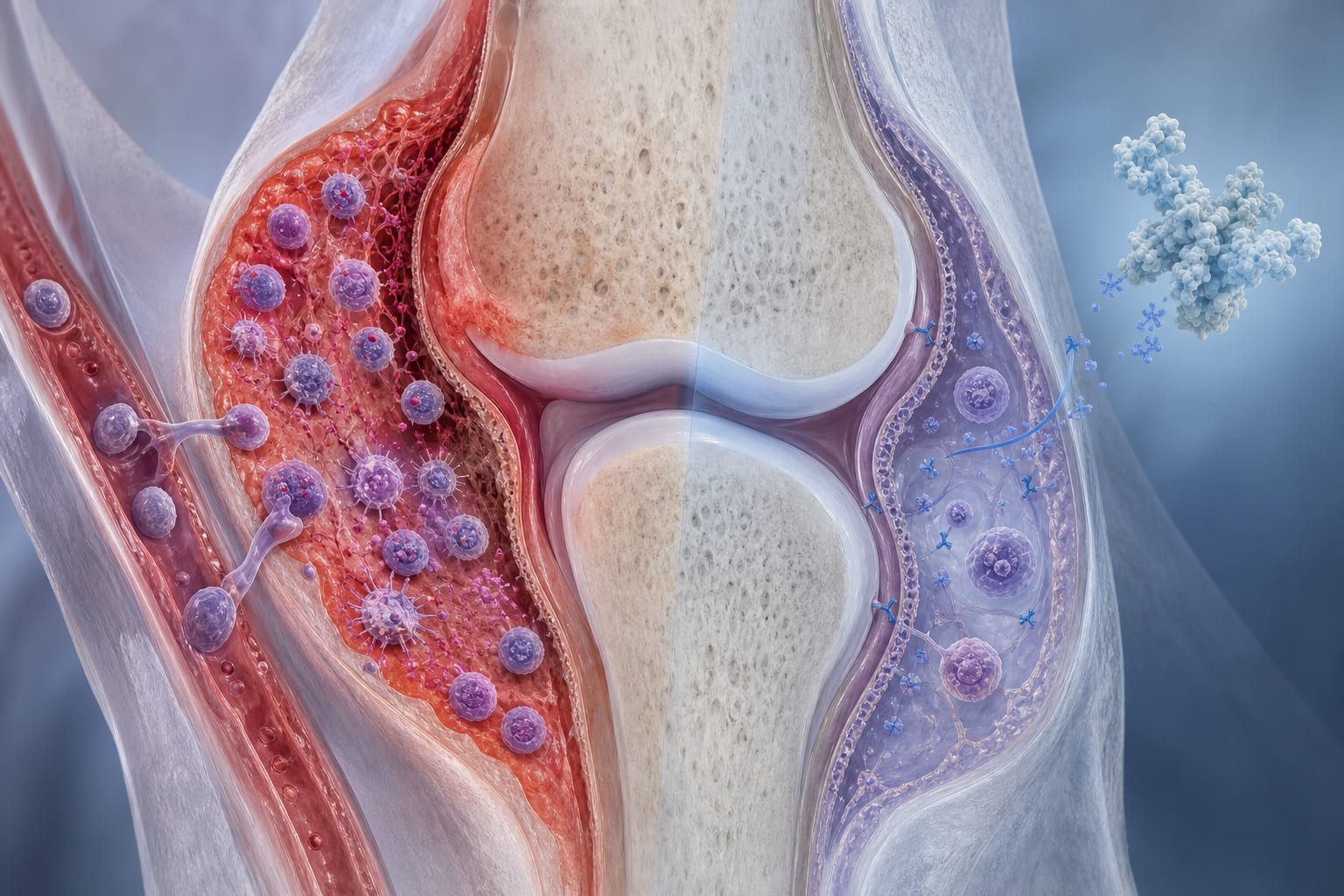
Mutations in DNA (cytosine-5)-methyltransferase 3A (Dnmt3a) impair both typical and autoreactive CD4+ T follicular helper cell functions and reduce T cell-mediated joint inflammation
To test whether Dnmt3a mutations enhance the pathogenicity of autoreactive CD4+ T cells in rheumatoid arthritis (RA).
Approach:
Model: Utilized the KRN+ TCR-transgenic transfer model of autoimmune arthritis to assess the impact of Dnmt3a mutations.
Methods: Employed CRISPR-Cas9 or Cd4cre-mediated recombination to introduce Dnmt3a mutations, and evaluated Tfh responses, antibody production, and joint inflammation through competitive bone marrow chimeras and immunization with sheep red blood cells.
Key Findings:
Loss of DNMT3A function in CD4+ T cells reduced Tfh responses and IgG production in the context of autoimmune arthritis.
Mice with Dnmt3a-mutant autoreactive CD4+ T cells showed significantly attenuated joint inflammation compared to controls.
Reduced systemic IL-6 and autoantibody levels were observed in the KRN+ transfer model with Dnmt3a mutations.
Interpretation:
Dnmt3a is essential for Tfh responses in both immunization-driven and autoreactive conditions, while loss of Dnmt3a function limits autoreactive inflammation.
Limitations:
The study primarily focuses on Tfh-dependent responses and may not encompass other T cell functions or hematopoietic lineages.
Conclusion:
Dnmt3a mutations in CD4+ T cells limit autoreactive inflammation.
by Yunbing Shen, Sanjaykumar Boddul, Zhaojun Li, Zsolt Kasza, Marlene Schülein, Bruno Raposo, Karine Chemin, Per-Johan Jakobsson, Alexander Espinosa, Lars Klareskog, Fredrik Wermeling
Investigational inhibitor was not associated with treatment-related serious adverse events and produced biomarker changes consistent with pathway inhibition in healthy volunteers.