Fetal sex shapes maternal immune adaptation: placental extracellular vesicles differentially reprogram the phenotype, metabolism, and function of circulating monocytes - Summary - MDSpire
Advertisement
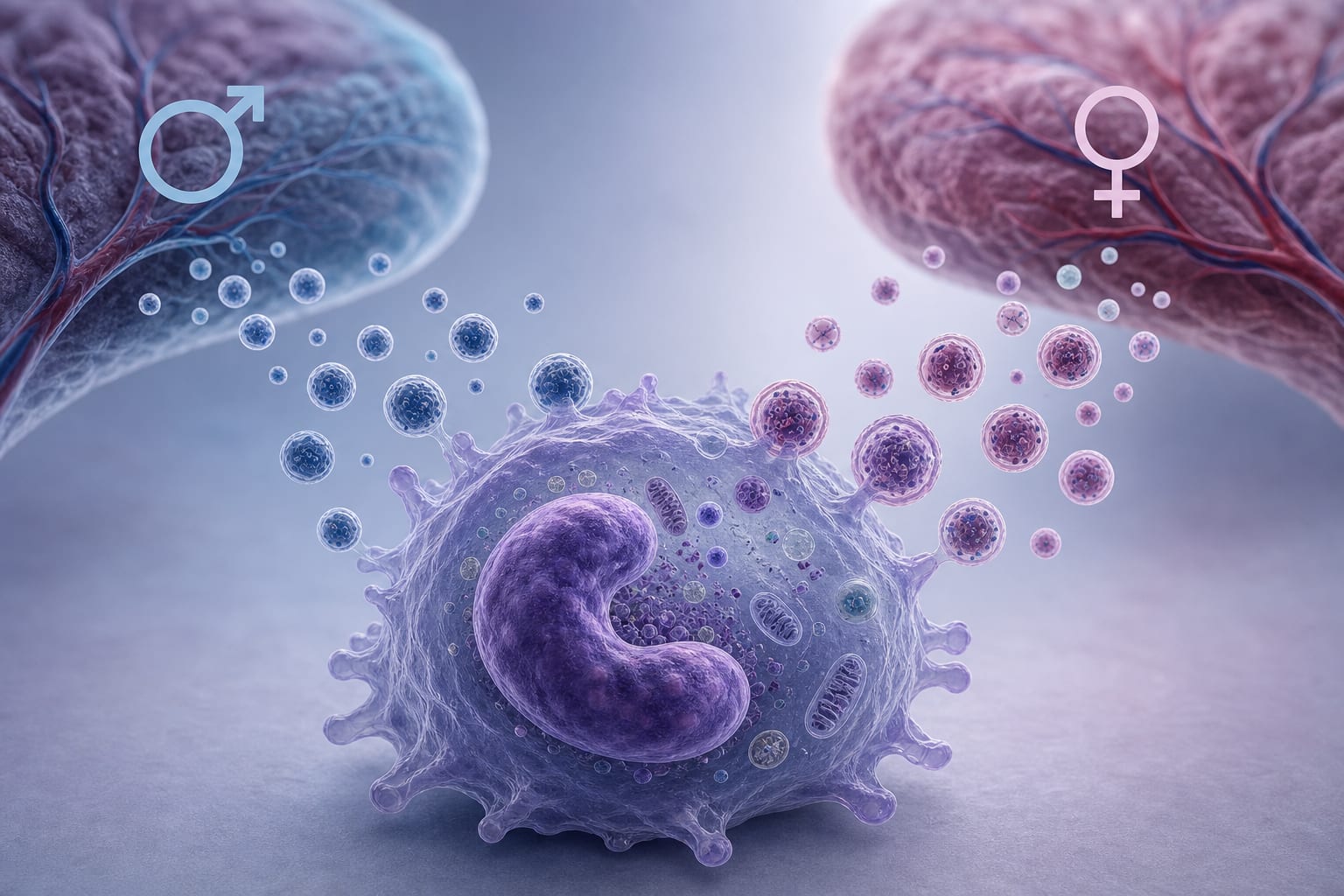
Maternal Immune Response Influenced by Fetal Sex: Distinct Effects of Placental Extracellular Vesicles on the Phenotype, Metabolism, and Function of Circulating Monocytes
To investigate whether placental extracellular vesicles (pEVs) derived from term placentas induce sex-dependent changes in the phenotype, metabolism, and function of human monocytes.
Approach:
Sample Collection: pEVs were isolated from 13 term uncomplicated placentas (6 male-derived, 7 female-derived) and characterized for size, concentration, and molecular cargo using complementary approaches.
Key Findings:
F-pEVs reduced CD11b and CD11c expression while increasing CD14, CD39, and IL-10 production.
M-pEVs increased CD14 expression and enhanced IL-1β secretion.
Both pEV populations increased IL-10 and CXCL8 release and promoted a shift toward classical monocytes (CD14+CD16-).
M-pEVs promoted lactate and reactive oxygen species production, while F-pEVs enhanced lactate production, fatty acid uptake, and mitochondrial activity without increasing ROS.
Both pEV populations increased efferocytosis with distinct sensitivity to metabolic inhibitors.
Interpretation:
Limitations:
The study only included term uncomplicated placentas and may not represent all pregnancies.
The sample size for both placental and monocyte donors was limited.
Conclusion:
This study provides evidence that human placental extracellular vesicles derived from male and female fetuses differentially reprogram circulating monocytes at the phenotypic, metabolic, and functional levels.
by Julieta Avalos, Florencia Sabbione, Daiana Rios, Daniel H. Grasso, M. Noe Garcia, Franco Aguilera, Fatima Merech, Horacio Aiello, Cesar Meller, Rosanna Ramhorst, Vanesa Hauk, Soledad Gori, Claudia Pérez Leirós, Daiana M. Vota, Daniel E. Paparini