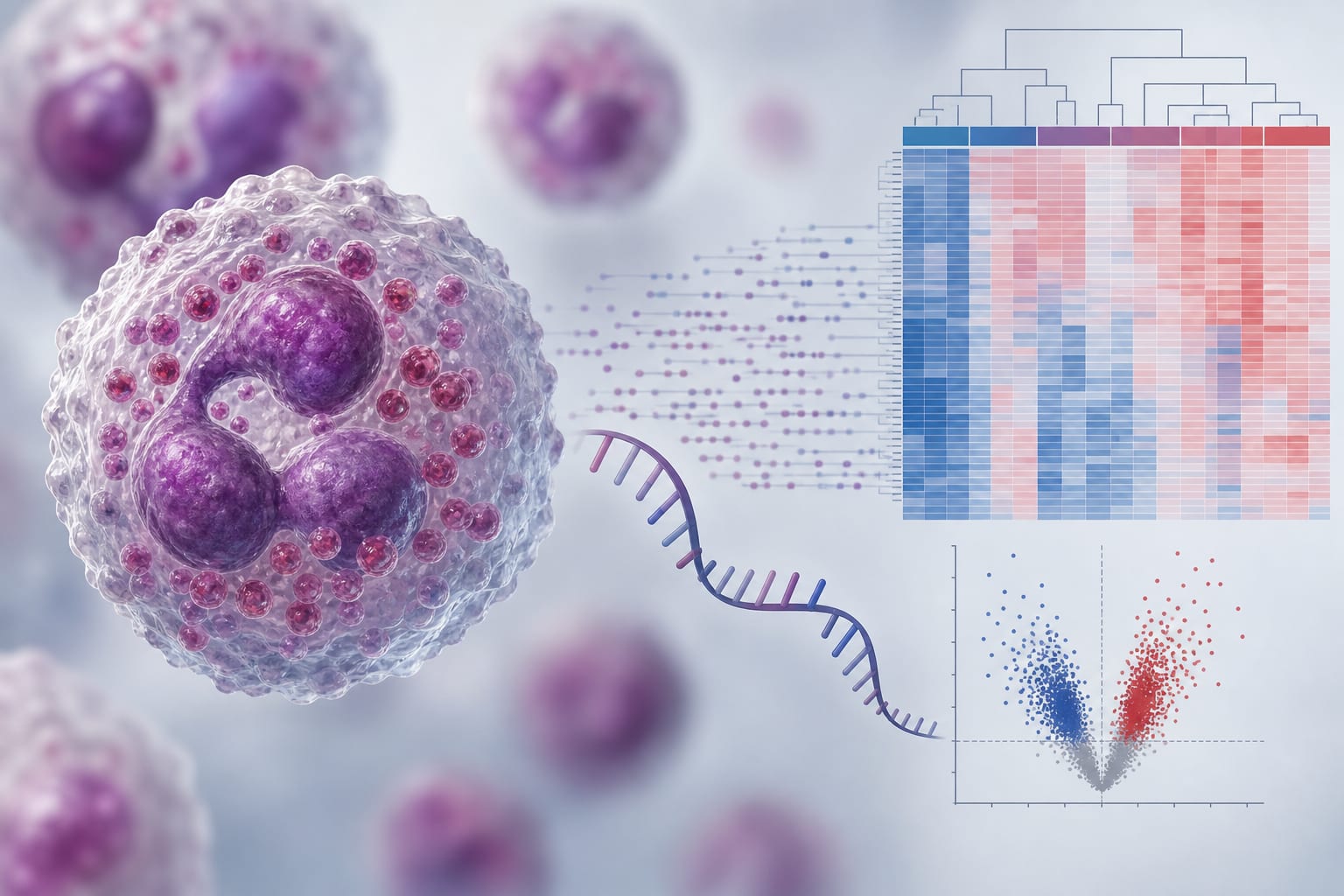
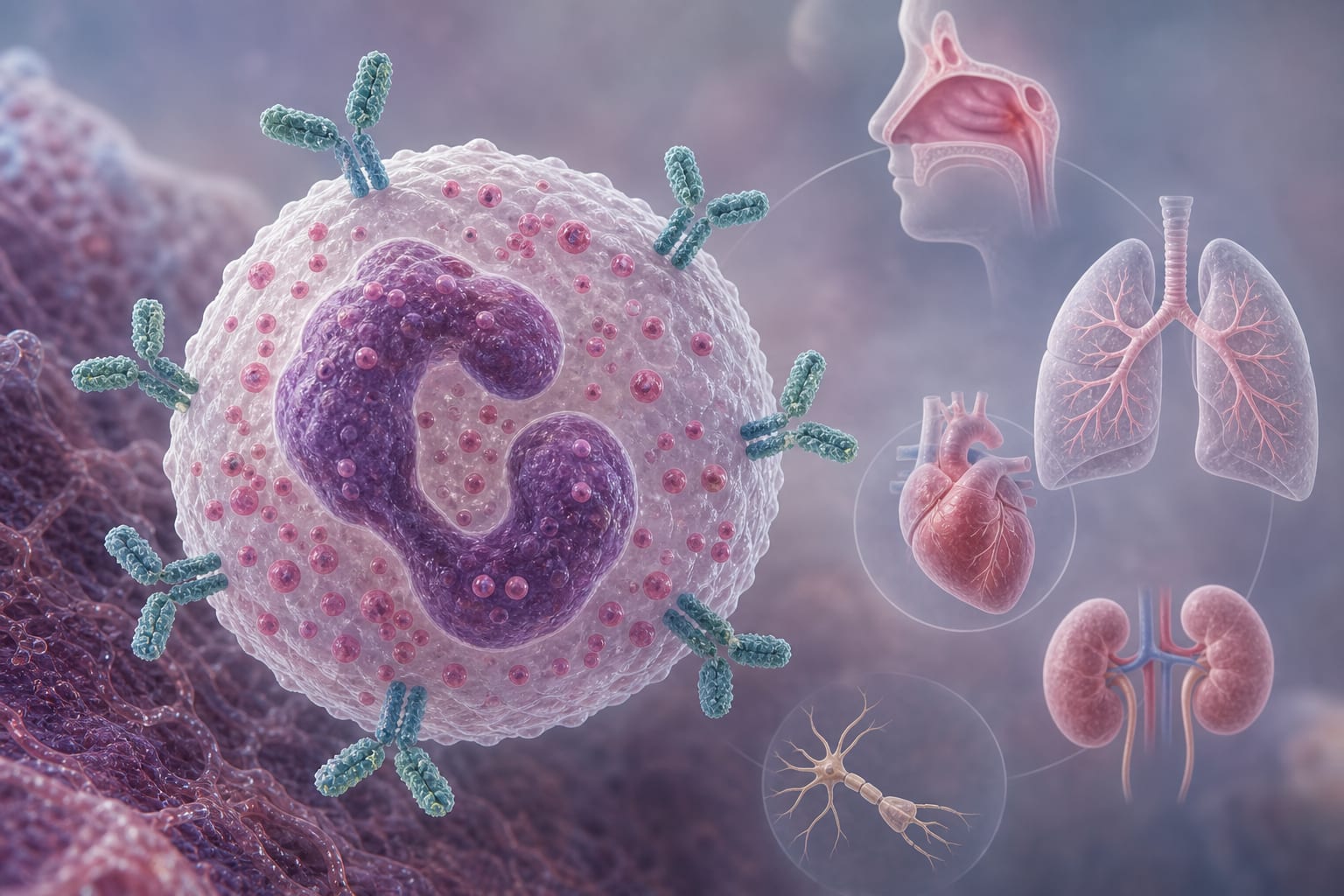
To evaluate the effects of mepolizumab therapy on the blood transcriptome in patients with severe eosinophilic asthma (SEA) and to determine whether changes in gene expression predict responsiveness to mepolizumab treatment in an exploratory context.
Key Findings:
At week 12, 149 genes had significant differential expression (FDR < 0.05) compared to baseline.
74 genes were downregulated at weeks 4, 8, and 12 compared to baseline, with no differences observed between post-baseline timepoints.
28 genes associated with response to therapy changed over time, and 56 protein-coding genes distinguished responders from nonresponders.
Nonresponders had a high enrichment of genes involved in signaling pathways, including cytokines and growth factors, indicating potential therapeutic targets.
Interpretation:
The study found limited global transcriptomic separation associated with mepolizumab use, suggesting that while some differential-expression and enrichment findings are preliminary, they may have implications for understanding treatment response.
Limitations:
The study had a small sample size of 14 patients, which may limit the generalizability of the findings.
No definitive mechanistic or predictive response signatures were identified, highlighting the need for further research.
Conclusion:
Future studies with larger cohorts and longer follow-up may provide additional insights into the pathophysiology of SEA and predicting response to mepolizumab treatment, addressing the limitations of this exploratory study.
by Mitchell Pitlick, Mrunal K. Dehankar, Chantal E. McCabe, Sergio E. Chiarella, Kathleen Bartemes, Kay A. Bachman, Chung-Il Wi, Young J. Juhn, Thanai Pongdee