Diagnostic value of contrast-enhanced ultrasound combined with other imaging techniques in differentiating benign and malignant thyroid nodules: a network meta-analysis - Summary - MDSpire
Conexiant’s news site is now MDSpire News. Learn more
Advertisement
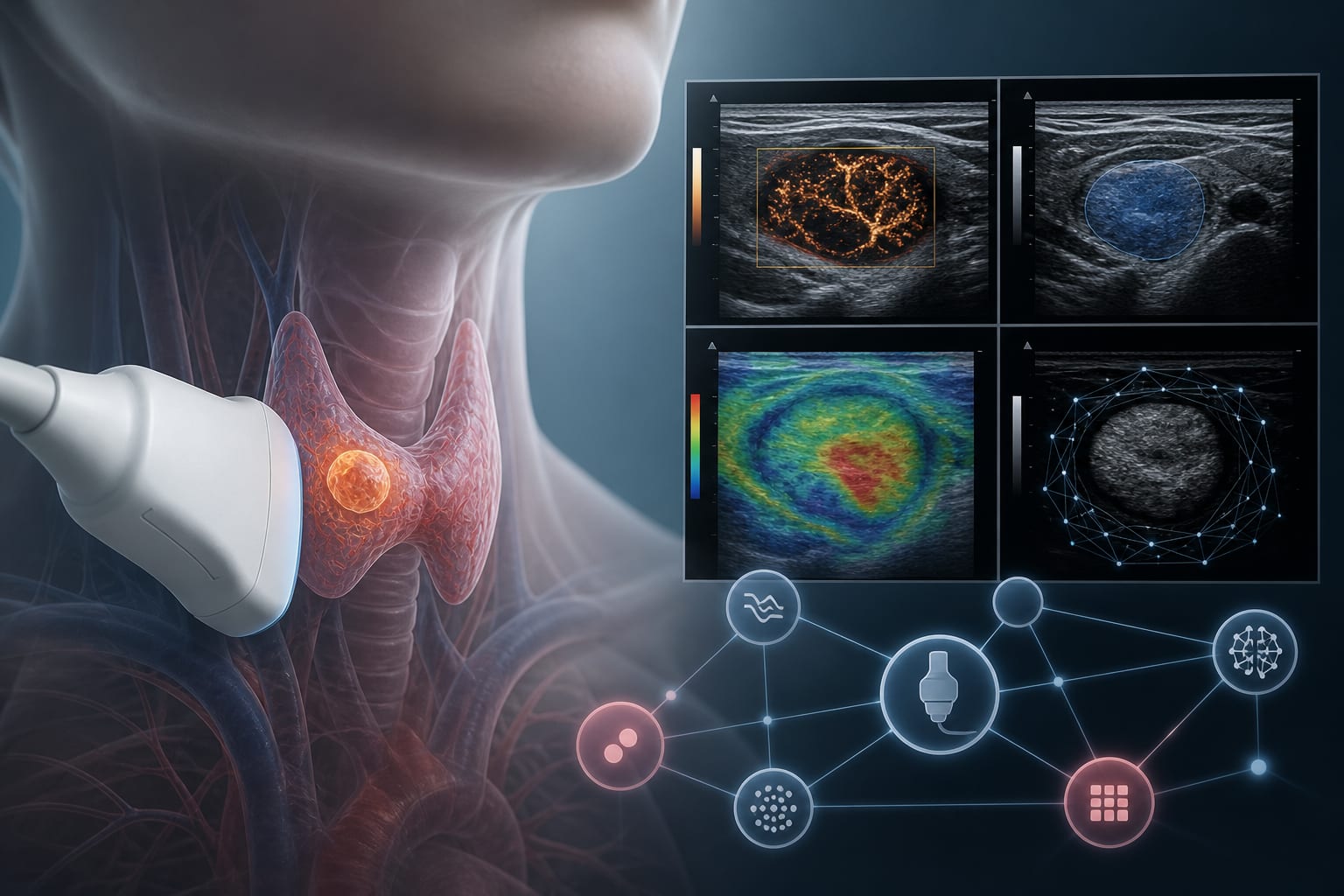
Evaluating the Diagnostic Efficacy of Contrast-Enhanced Ultrasound in Conjunction with Other Imaging Modalities for Distinguishing Benign from Malignant Thyroid Nodules: A Network Meta-Analysis
To evaluate the diagnostic value of contrast-enhanced ultrasound (CEUS) alone and in combination with other imaging techniques for differentiating benign from malignant thyroid nodules (TNs).
Approach:
Search Strategy: Systematic searches were conducted in PubMed, Web of Science, Embase, and Cochrane up to October 15, 2025, using a combination of medical subject headings and free-text terms related to thyroid nodules and CEUS.
Study Inclusion Criteria: Included studies involved patients suspected of having malignant TNs, utilized CEUS alone or in combination with other modalities, and used pathology as the gold standard for diagnosis.
Data Analysis: Study quality was assessed using QUADAS-2, and diagnostic accuracy was evaluated using R4.5.1 and ANOVA-based network meta-analysis.
Key Findings:
CEUS-ultrasound elastography (UE) demonstrated a pooled sensitivity of 0.92 (95% CI 0.88–0.95) and specificity of 0.83 (95% CI 0.75–0.89) for distinguishing benign from malignant TNs.
CEUS-artificial intelligence (AI) showed a pooled sensitivity of 0.95 (95% CI 0.91–0.98) and specificity of 0.81 (95% CI 0.68–0.91) for identifying high-risk TNs.
CEUS-conventional ultrasound (US) had a pooled sensitivity of 0.89 (95% CI 0.74–0.97) and specificity of 0.88 (95% CI 0.69–0.97) for identifying non-risk-stratified TNs.
Limitations:
Validation of subgroup findings in larger, diverse external cohorts is necessary.
The CEUS evaluation protocol for TNs has not been established.
Conclusion:
CEUS combined with other imaging techniques may improve the diagnostic accuracy for thyroid nodules.
Automated lesion measurements increased agreement on treatment response, although expert-generated proposals were accepted more often and required fewer adjustments.