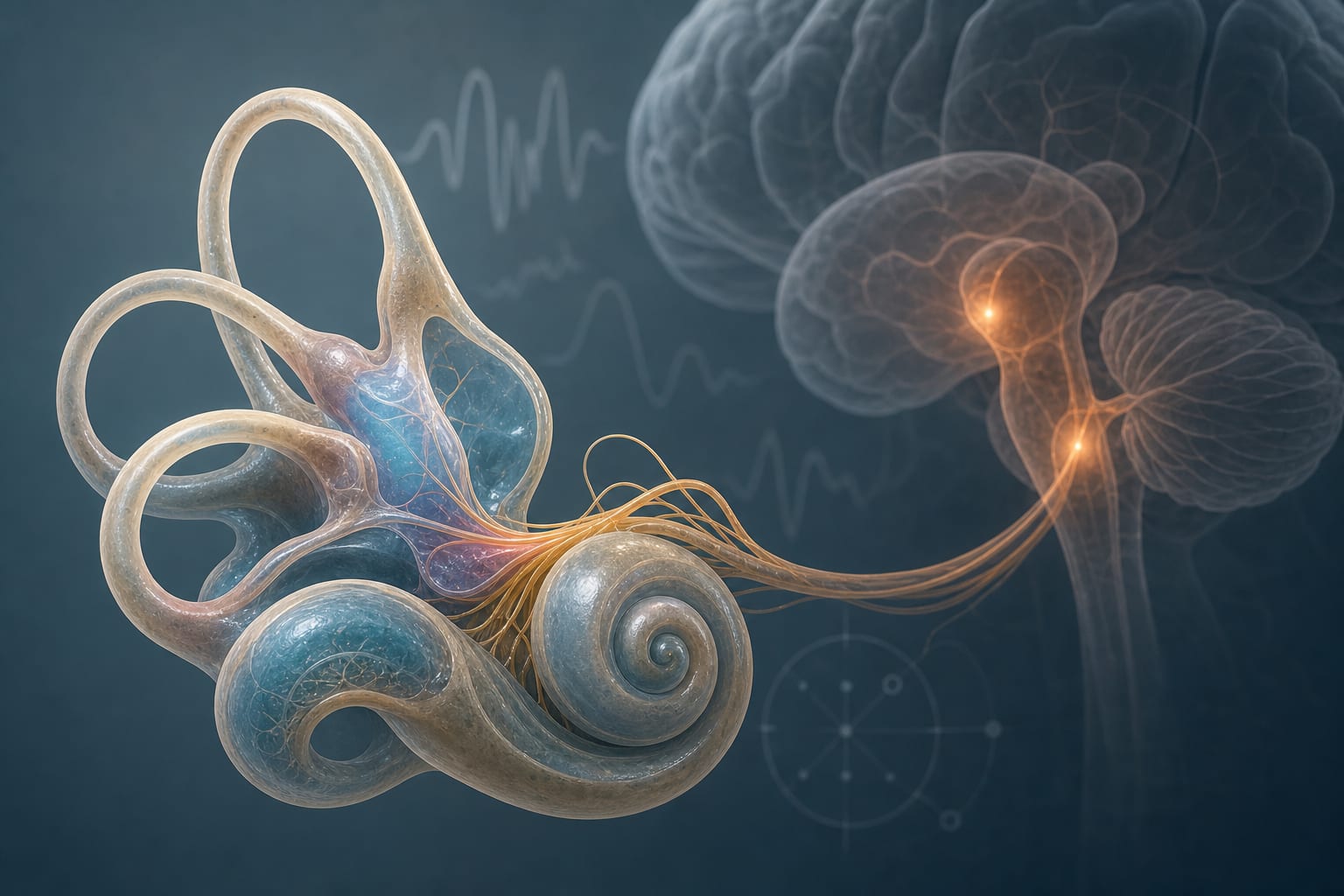
To discuss the current understanding of vestibular migraine, including its mechanisms, diagnostic challenges, and treatment approaches, highlighting its clinical significance.
Approach:
Key Findings:
Vestibular migraine is a common vestibular disorder with heterogeneous clinical presentations.
Current treatment strategies are not evidence-based due to unknown pathophysiology.
A diagnostic prediction model using multimodal data shows promise but requires further validation.
Menière's disease and vestibular migraine may share symptoms but are likely distinct disorders.
Cervical vestibular evoked myogenic potentials show potential as biomarkers but have limitations.
High prevalence of migraine in POTS patients suggests a need for awareness in clinical practice.
VR-based assessments indicate significant visual dependence in VM patients, impacting rehabilitation strategies.
Vestibular migraine affects behavioral adaptation and cognitive processes.
Interpretation:
The editorial highlights the complexity of vestibular migraine, emphasizing the need for improved diagnostic tools and understanding of its pathophysiology.
Limitations:
Lack of biomarkers for vestibular migraine limits diagnostic accuracy.
Current treatment strategies are not evidence-based due to unknown pathophysiology.
Need for larger, prospective trials to validate diagnostic models and treatment approaches.
Conclusion:
Further research is essential to enhance the understanding, diagnosis, and management of vestibular migraine, addressing current treatment gaps.