Clinical effect evaluation of postoperative complications of papillary thyroid carcinoma based on individualized intervention and prognostic analysis of precision nursing intervention - Summary - MDSpire
Advertisement
Clinical effect evaluation of postoperative complications of papillary thyroid carcinoma based on individualized intervention and prognostic analysis of precision nursing intervention
To explore the preventive effects of individualized interventions on postoperative complications in patients with papillary thyroid carcinoma and their impact on patient prognosis.
Approach:
Study Design: A retrospective analysis of 1,595 patients with papillary thyroid carcinoma who underwent radical thyroidectomy, divided into a study group (SG) receiving individualized interventions and a control group (CG) receiving routine care.
Key Findings:
The overall incidence of postoperative complications in the SG was significantly lower than in the CG (P < 0.001).
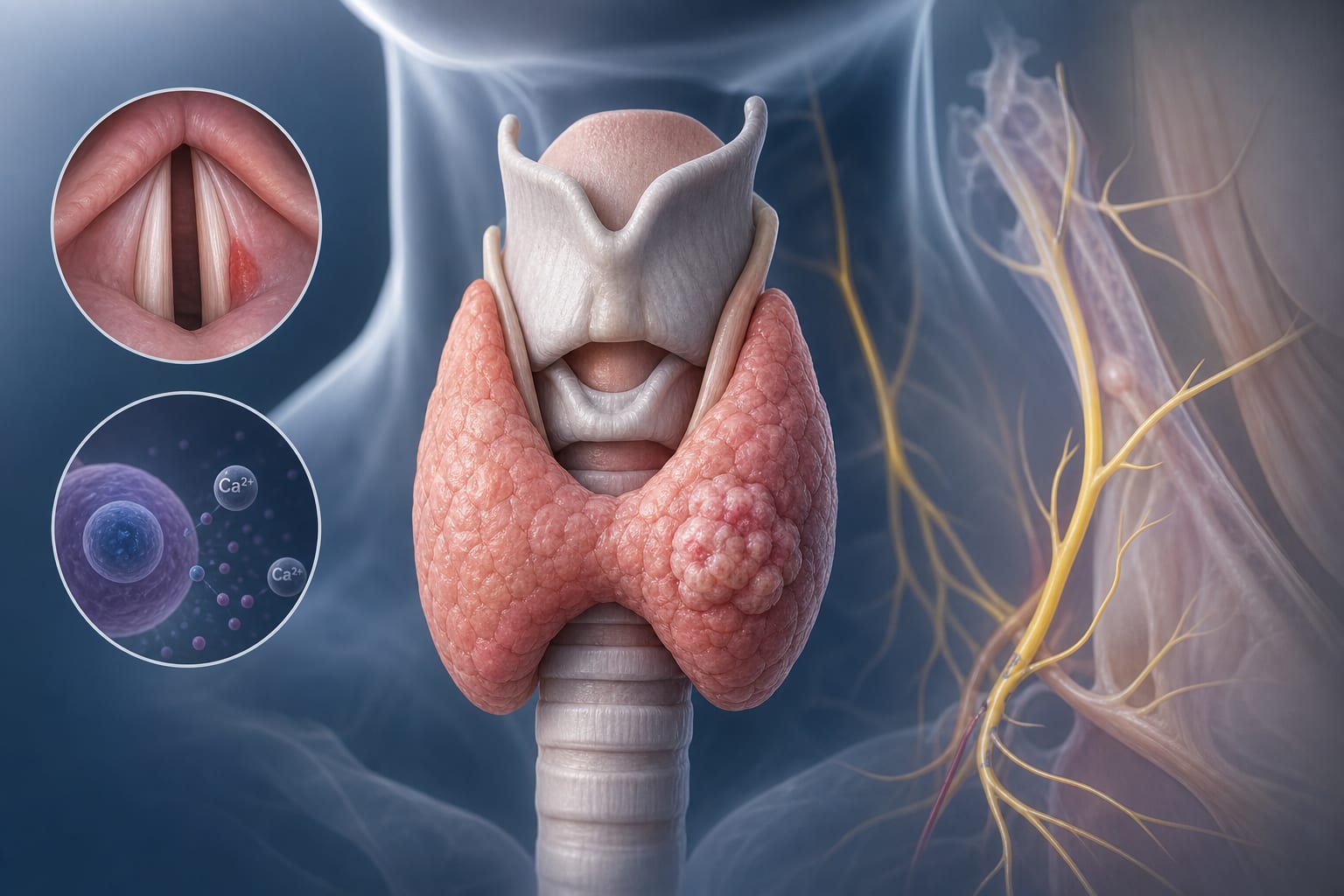
The SG had lower rates of transient recurrent laryngeal nerve injury (P = 0.010) and transient hypocalcemia (P = 0.007).
Patients in the SG reported lower VAS pain scores and achieved earlier ambulation, feeding, and extubation (P < 0.05).
The SG had shorter voice recovery time, shorter hospital stays, and higher swallowing function scores (P < 0.05).
At 6-month follow-up, the SG had significantly higher scores in thyroid symptoms, mental health, social life, and overall quality of life (P < 0.05).
At 1-year follow-up, the SG had a higher rate of complete voice recovery (P = 0.011) and normal calcium metabolism (P = 0.016), and a lower rate of readmission related to complications (P = 0.012).
Interpretation:
The implementation of a multidisciplinary perioperative nursing protocol is associated with reduced postoperative complications and improved recovery outcomes in patients with papillary thyroid carcinoma.
Limitations:
The study is retrospective and may be subject to biases inherent in such designs.
The requirement for informed consent was waived, which may affect the ethical considerations.
Conclusion:
The study supports the effectiveness of individualized nursing interventions in reducing postoperative complications and enhancing quality of life for patients with papillary thyroid carcinoma.