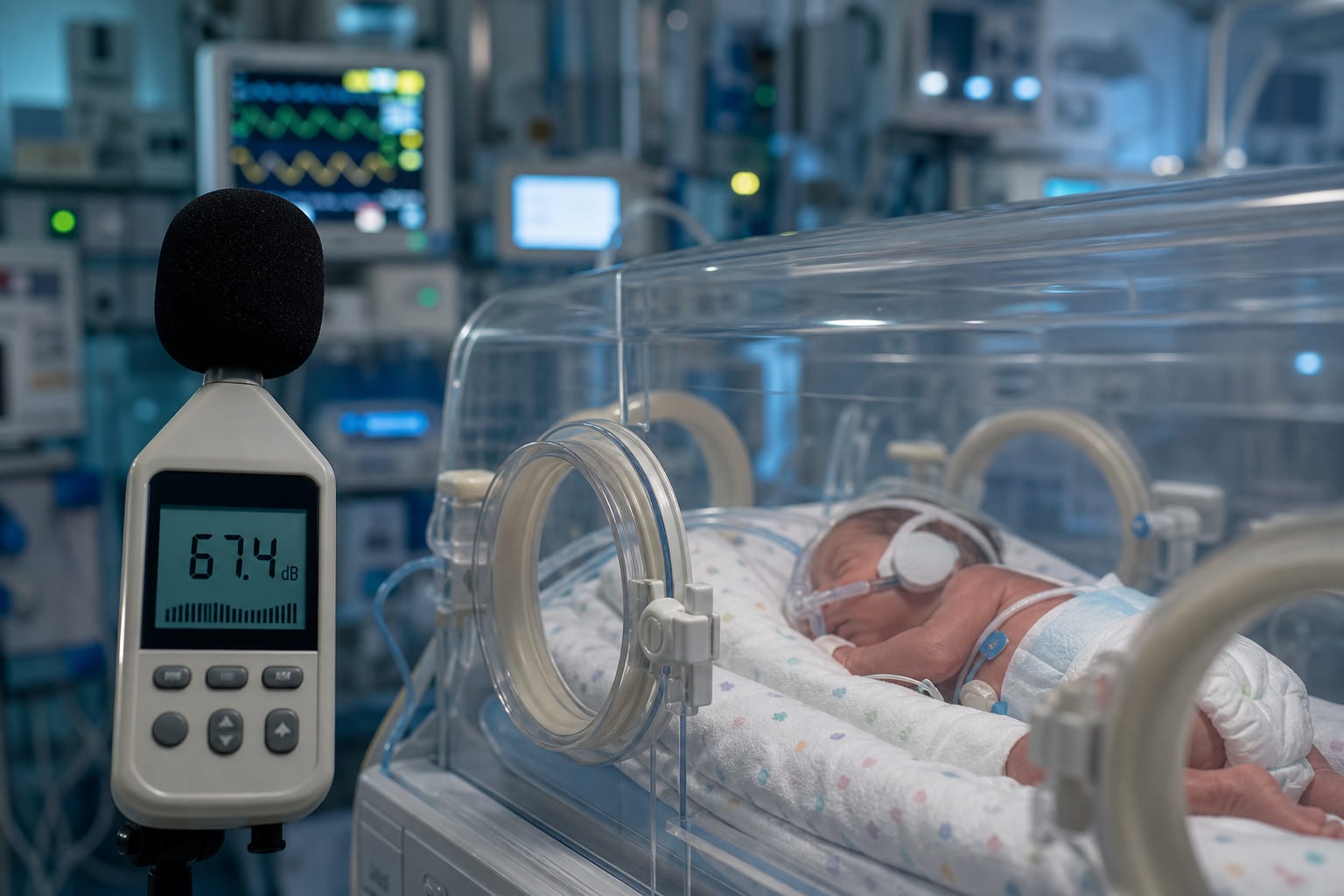
To identify, describe, and categorize noise sources in the NICU and examine their potential impact on preterm infants, emphasizing the significance of these impacts.
Approach:
Key Findings:
Most studies reported sound levels substantially above recommended limits, indicating a critical need for intervention.
Major noise contributors included alarms, staff conversations, and incubator-associated equipment, which could be targeted for reduction.
Respiratory support devices produced the highest internal noise levels, raising concerns about their use in sensitive environments.
Interventions yielded short-term improvements but rarely sustained reductions, highlighting the need for more effective strategies.
Interpretation:
NICU noise is a modifiable risk factor with significant developmental implications, necessitating further research on long-term effects.
Limitations:
Current evidence on long-term neurodevelopmental implications of early noise exposure remains heterogeneous and largely observational.
Incubators provide partial attenuation of environmental noise but do not fully protect infants, and excessive shielding may reduce meaningful auditory input.
Conclusion:
Future strategies should integrate environmental design, technological innovation, and infant-focused interventions to create safer acoustic conditions, emphasizing the importance of addressing noise pollution for developmental outcomes.
by Vito Giordano, Sophie Mandl, Lisa Bartha-Doering, Christoph Reuter, Matthias Bertsch, Brigitte Wildner, Sophie Stummer, Katrin Klebermass-Schrehof, Marcus Maeder, Angelika Berger, Philipp Deindl