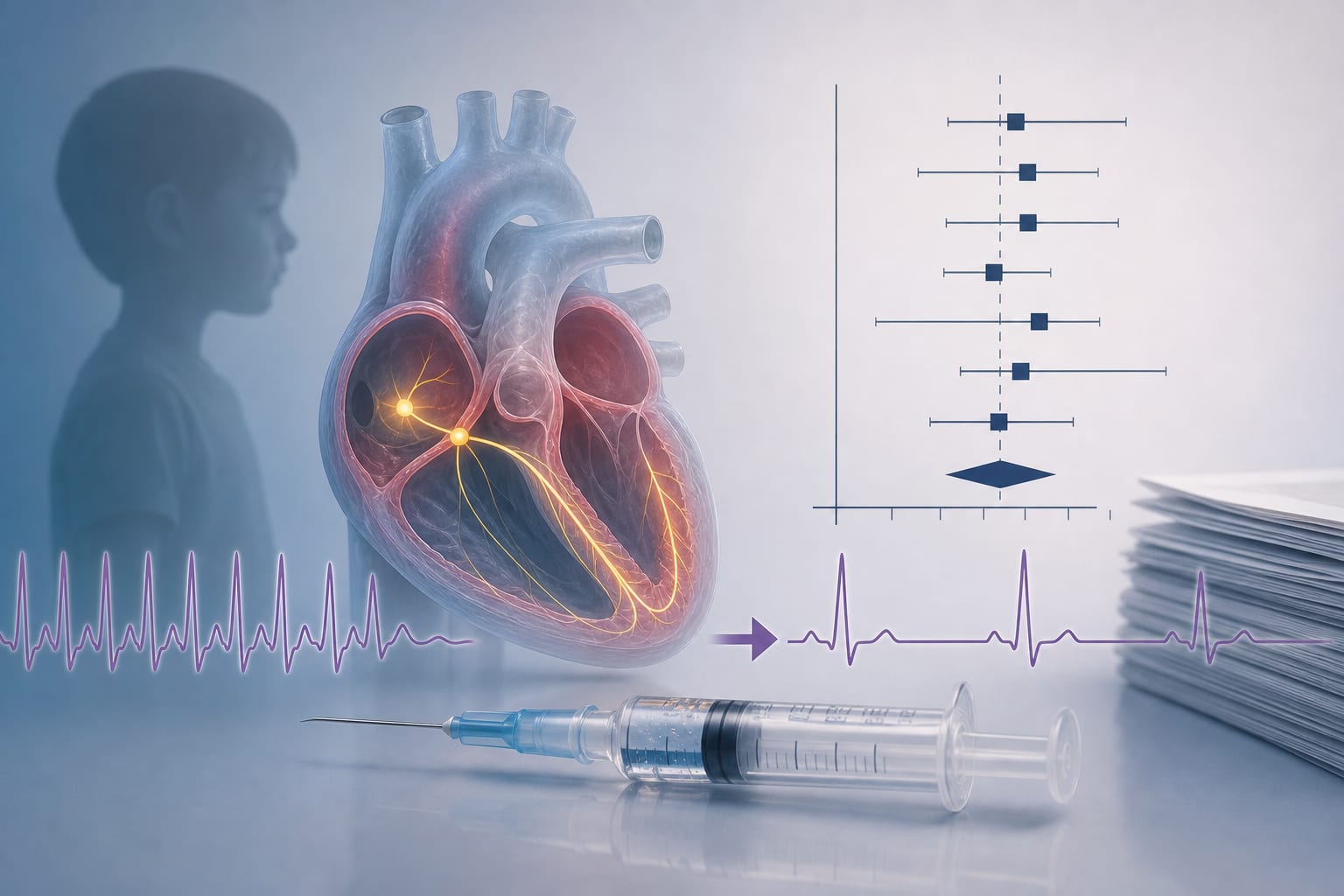
To evaluate existing pediatric FH diagnostic criteria and develop two novel diagnostic tools (FH-PeDS and ML-FH-PeDS) specifically for early detection of familial hypercholesterolemia in children.
Key Findings:
Only 47.4% of genetically confirmed FH cases were identified by all established criteria, highlighting the need for improved diagnostic tools.
FH-PeDS outperformed DLCN with an AUC of 0.897 vs. 0.857 (P < 0.01), indicating its superior diagnostic capability.
ML-FH-PeDS showed superior predictive power with an AUC of 0.932 in training and 0.904 in testing vs. 0.852 for DLCN (P < 0.01), suggesting it is a more reliable tool.
In the Portuguese cohort, ML-FH-PeDS maintained strong predictive performance (AUC 0.867 vs. 0.815 for DLCN; P < 0.01), demonstrating its robustness across different populations.
Interpretation:
Current FH diagnostic criteria are inadequate for children, and the newly developed FH-PeDS and ML-FH-PeDS tools significantly improve detection rates, which may lead to earlier diagnosis and intervention, ultimately reducing long-term cardiovascular risks.
Limitations:
Study limited to specific cohorts in Slovenia and Portugal, which may affect generalizability to other populations.
Reliance on clinical methods in settings where genetic testing is not feasible may limit the applicability of the findings.
Conclusion:
FH-PeDS and ML-FH-PeDS provide improved diagnostic tools for familial hypercholesterolemia in pediatric populations, potentially reducing long-term cardiovascular risks.
by Jan Kafol, Beatriz Miranda, Rok Sikonja, Jaka Sikonja, Albert Wiegman, Ana Margarida Medeiros, Ana Catarina Alves, Tomas Freiberger, Barbara A Hutten, Matej Mlinaric, Tadej Battelino, FH-PeDS Collaborators, Steve E Humphries, Mafalda Bourbon, Urh Groselj