Conexiant’s news site is now MDSpire News. Learn more
Advertisement
Case Study: The Development of Paradoxical Psoriasis During TNF-α Inhibition May Indicate Generalized Abscessing Staphyloderma – GASD Syndrome Associated with TNF Blockers
To review the clinical presentation of patients diagnosed with paradoxical psoriasis during TNF-α blockade and to investigate the underlying microbial causes of their skin lesions.
Key Findings:
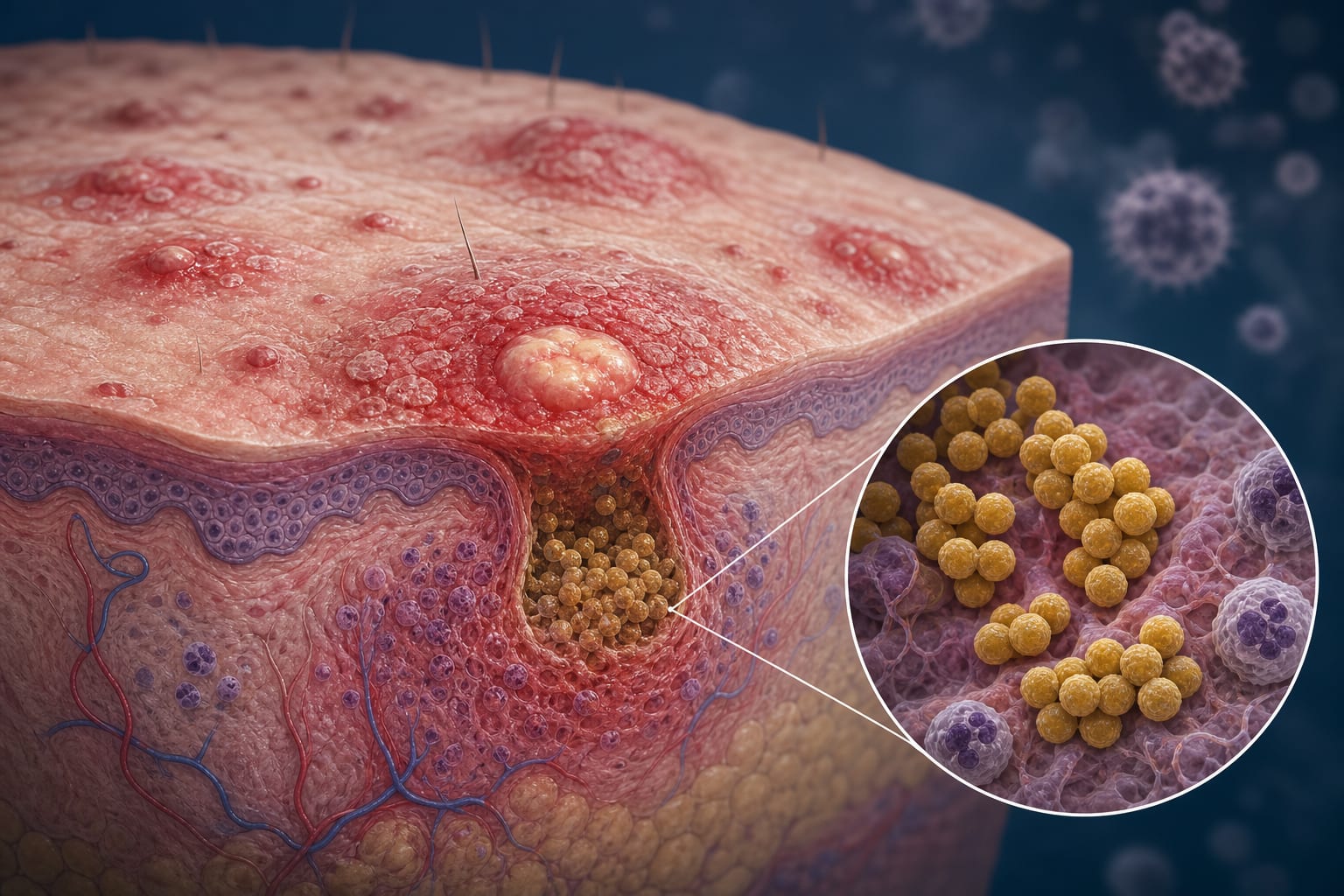
Patients initially diagnosed with paradoxical psoriasis were found to have generalized abscessing staphyloderma caused by Staphylococcus aureus, likely from nasal colonization.
Skin lesions included impetigo contagiosa, ecthyma, folliculitis decalvans, ostiofolliculitis, nummular microbial eczema, and abscessing furunculosis.
Topical antimicrobial therapy and systemic antibiotics resolved the cutaneous symptoms.
Interpretation:
Limitations:
The study is based on a small sample size of six patients, which may limit the generalizability of the findings.
The retrospective nature of the case review may introduce bias.
Conclusion:
The diagnosis of paradoxical psoriasis should be critically re-evaluated based on clinical and microbial findings.
Poorer dermatology-related quality of life was associated with greater mental health issues, while habitual probiotic intake showed no measurable relationship with these outcomes.