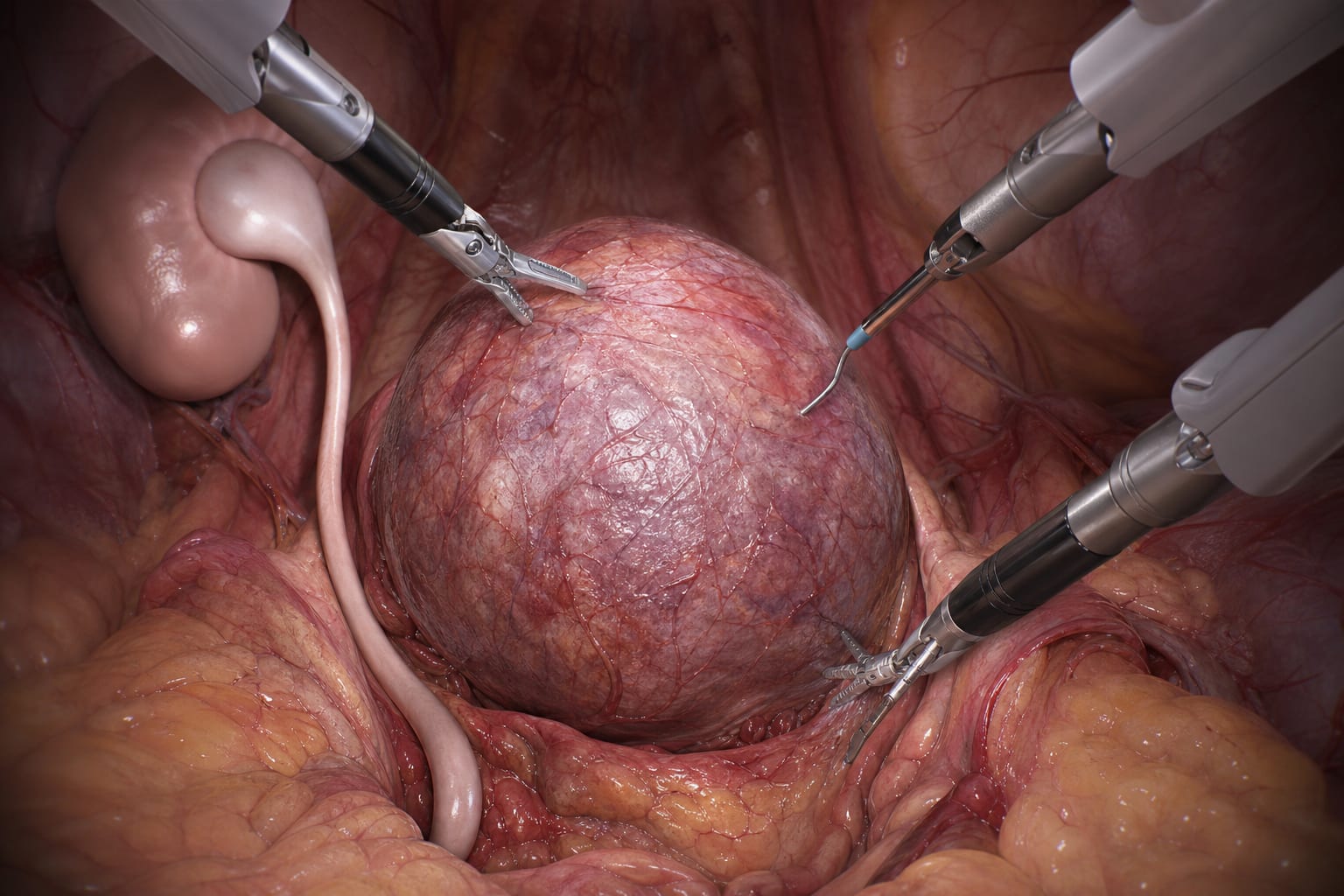
To report a case of giant pelvic solitary fibrous tumor (SFT) treated with robot-assisted laparoscopic resection and to review existing literature on this topic.
Approach:
Patient Presentation: A 34-year-old male with a giant pelvic SFT found incidentally during physical examination, complicated by left hydronephrosis and hydroureter.
Imaging and Diagnosis: Preoperative imaging revealed a large heterogeneous mass in the pelvic cavity, suggestive of SFT. Diagnosis was confirmed postoperatively through pathology and immunohistochemistry.
Surgical Procedure: Robot-assisted laparoscopic resection was performed, including simultaneous ureteral reimplantation due to severe adhesion between the tumor and the left ureter.
Key Findings:
Robot-assisted laparoscopic surgery facilitated meticulous dissection and achieved R0 resection.
Postoperative pathology confirmed the diagnosis of SFT with specific immunohistochemical markers.
The patient had a smooth recovery and was followed up for 12 months without tumor recurrence or complications.
Interpretation:
Robot-assisted laparoscopic surgery is a viable treatment option for selected patients with giant pelvic SFT, offering promising short-term clinical outcomes.
Limitations:
Limited long-term follow-up data to verify the long-term efficacy and safety of robot-assisted surgery for giant pelvic SFT.
Scarcity of reports on robot-assisted surgery for this specific tumor type, which may limit generalizability.
Conclusion:
Robot-assisted laparoscopic resection of giant pelvic SFT is feasible, but further long-term studies are required.