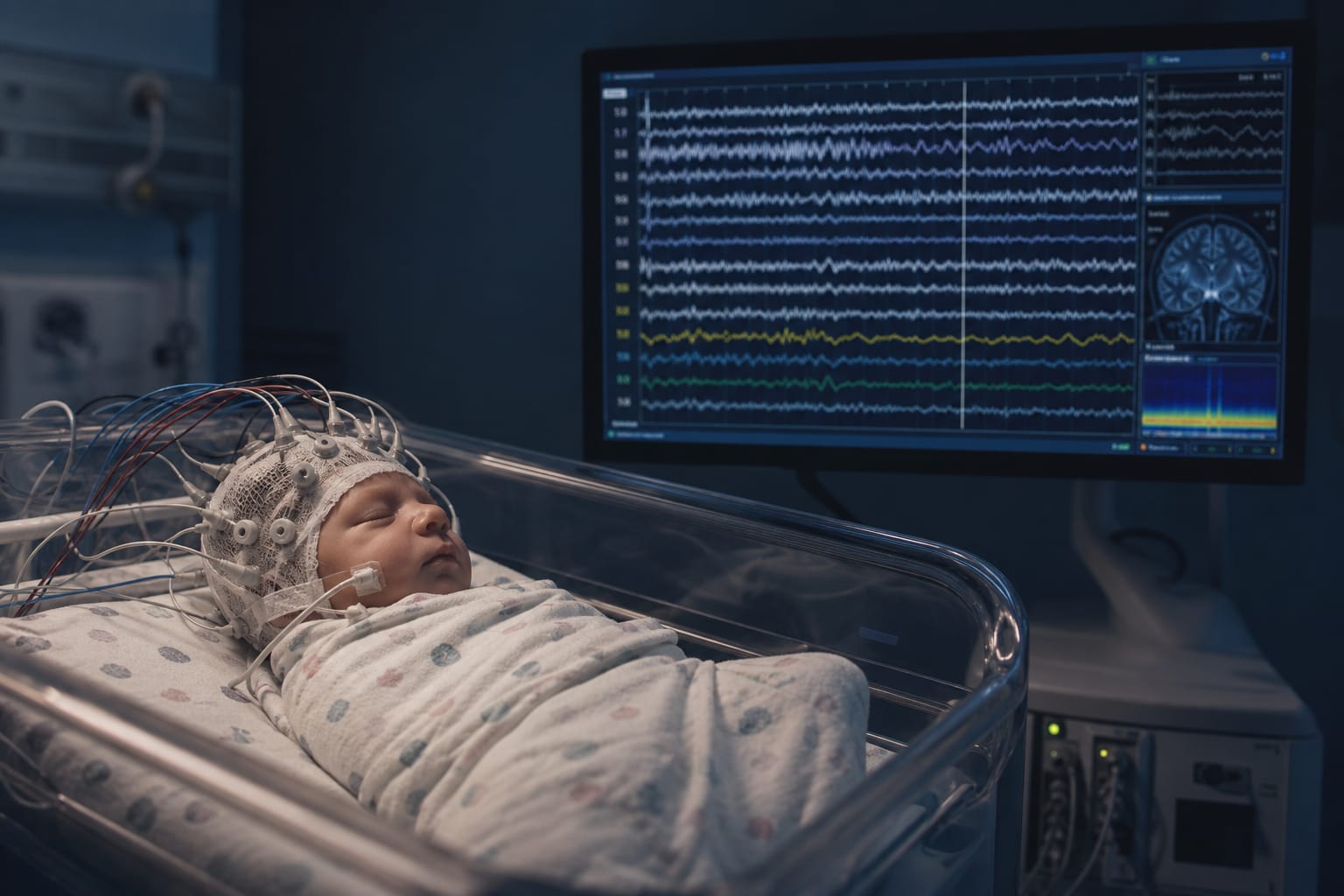
To address the controversies and uncertainties in the clinical management of neonatal status epilepticus (NSE).
Approach:
Introduction: Discusses the lack of a shared operational definition for NSE and its implications for clinical decision-making and research.
Unique Neonatal Brain: Highlights the distinct electrophysiological and biochemical features of the neonatal brain that contribute to seizure susceptibility.
Criteria and Features for NSE Definition: Examines the challenges in defining NSE, particularly regarding temporal criteria and the need for a cumulative seizure burden approach.
Key Findings:
Neonates have a unique brain physiology that increases seizure susceptibility and alters the efficacy of antiseizure medications.
There is no consensus on the temporal criteria for defining NSE, complicating clinical management.
Cumulative seizure burden may be a more relevant metric than single seizure duration in assessing NSE.
Interpretation:
The absence of universally accepted definitions and criteria for NSE hampers effective clinical management and research comparability.
Limitations:
Lack of preclinical and clinical evidence to establish clear temporal thresholds for NSE.
Difficulty in recreating animal models of neonatal seizures limits understanding of NSE.
Variability in neonatal populations affects the incidence and management of NSE.
Conclusion:
Further research is needed to establish clear definitions and criteria for NSE to improve clinical outcomes.