Exploring the Impact of Symptom Burden and Emotional Challenges in Pediatric Long COVID: An Exploratory Cross-Sectional Study
By
Rodríguez-Pérez, Mª Pilar
HUERTAS-HOYAS, ELISABET
León-Herrera, Sandra
Gómez Bravo, Raquel
García-Bravo, Cristina
Rodríguez-Rodríguez, Esther
Poveda-García, Ana
June 24, 2026
Objective: To assess the real-world impact of Pediatric Long COVID on functional independence and emotional functioning.
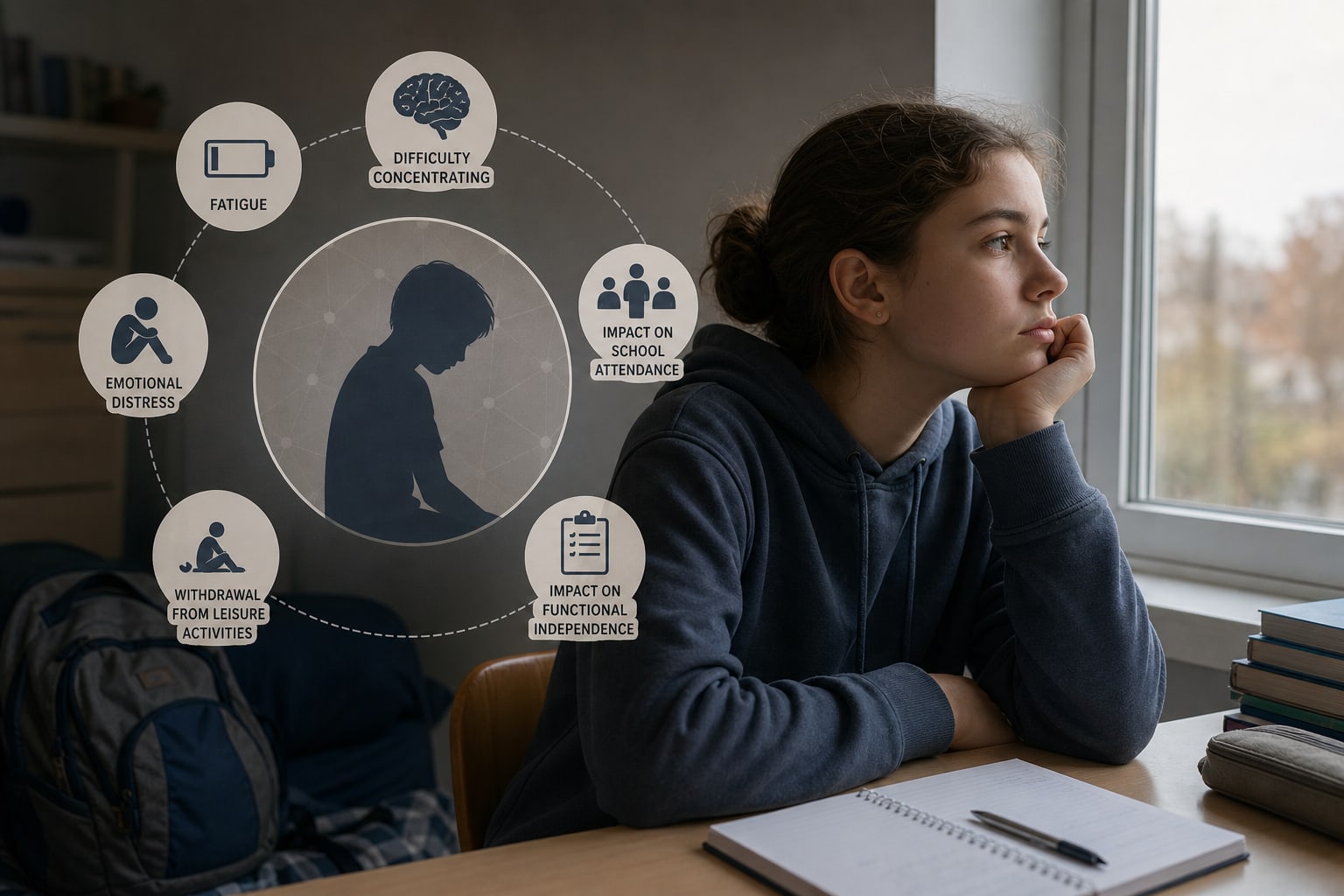
Approach: Study Design: A cross-sectional exploratory study involving 27 children and adolescents meeting WHO criteria for Long COVID.Assessment Tools: Functional independence was measured using the WeeFIM, while emotional functioning was assessed with the SDQ.Contextual Variables: Data on school attendance, grade repetition, and withdrawal from recreational activities were collected.Key Findings: High symptom burden reported: fatigue (81.5%), difficulty concentrating (63.0%), malaise (55.6%). 88.9% experienced symptoms for over 24 months. WeeFIM scores were near-ceiling across all domains (total: 114.56 ± 20.71/126). Only 18.5% attended school regularly, 11.1% had repeated an academic year, and 85.2% withdrew from activities. SDQ total scores were within the normal range (12.07 ± 5.04), but emotional symptoms were slightly elevated (5.59 ± 2.34). A significant negative correlation was found between SDQ total score and WeeFIM cognition (rho = −0.570, p = 0.0019). Interpretation: Children and adolescents with Long COVID face significant symptom burden and emotional difficulties.
Limitations: Preliminary findings from a convenience sample. Results should be interpreted with caution regarding generalizability. Conclusion: The study highlights the need for more comprehensive, context-sensitive assessment approaches in pediatric Long COVID practice.