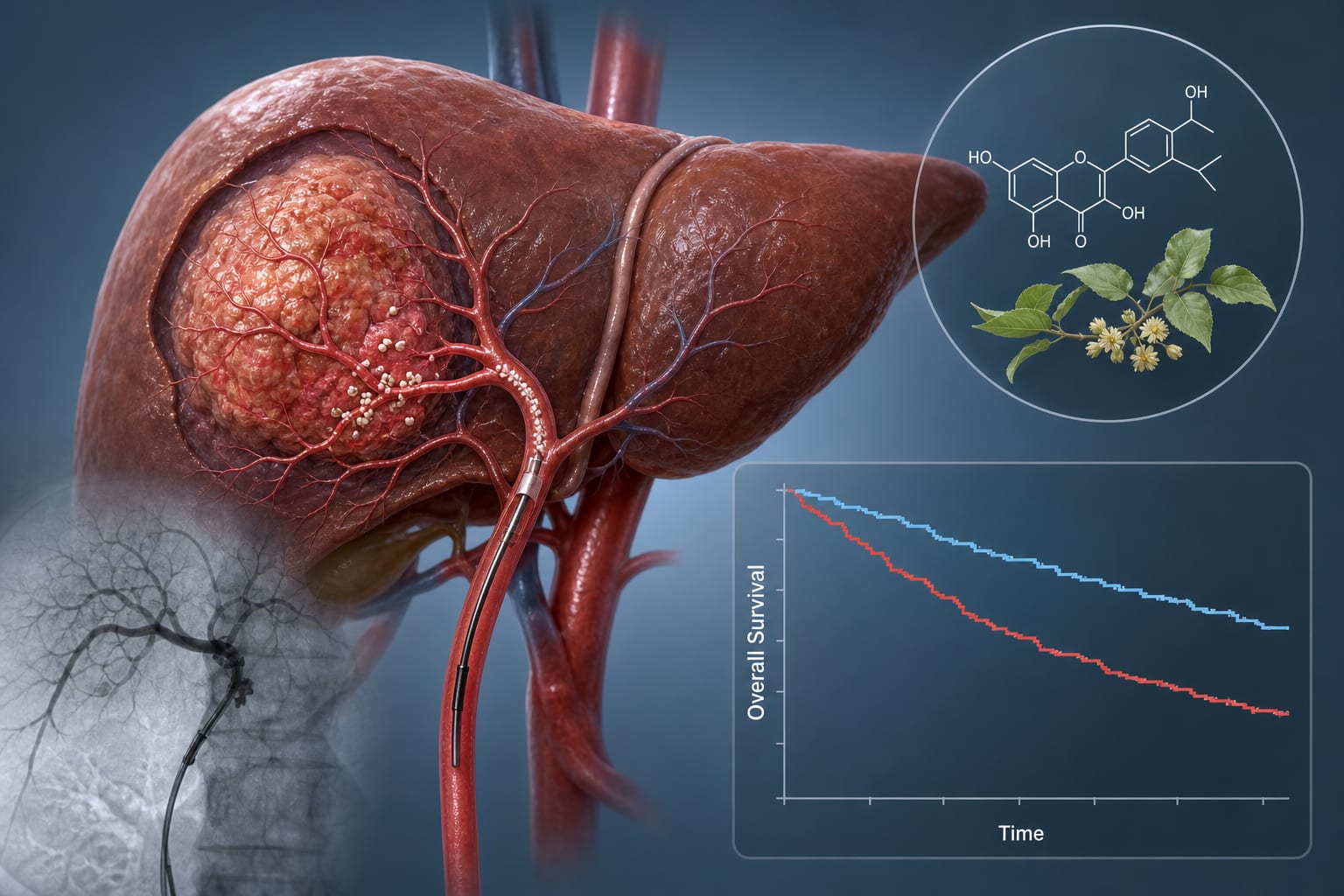
To compare survival outcomes of transarterial chemoembolization (TACE) plus Icaritin versus TACE alone in HCC patients with macrovascular invasion (MVI), highlighting the significance of MVI in prognosis.
Key Findings:
The Icaritin–TACE group showed longer median overall survival (16.3 vs. 13.3 months; P = 0.020), indicating a significant clinical benefit.
Progression-free survival was also longer in the Icaritin–TACE group (8.5 vs. 7.6 months; P = 0.006), suggesting improved disease management.
The disease control rate was higher in the Icaritin–TACE group (84.0% vs. 72.2%; P = 0.015), reflecting better treatment efficacy.
Independent predictors of overall survival included ECOG performance status, alpha-fetoprotein levels, number of lesions, and maximum lesion diameter, which are crucial for patient stratification.
Interpretation:
Icaritin combined with TACE improves overall survival, progression-free survival, and disease control rate compared to TACE alone in patients with MVI-associated HCC, suggesting a potential new standard of care.
Limitations:
The study was retrospective and not randomized, which may introduce selection bias.
Treatment allocation was based on clinical, patient-related, or access-related reasons, potentially affecting outcomes.
Conclusion:
Icaritin combined with TACE shows improved survival outcomes in advanced HCC patients with macrovascular invasion, warranting further research to validate these findings.