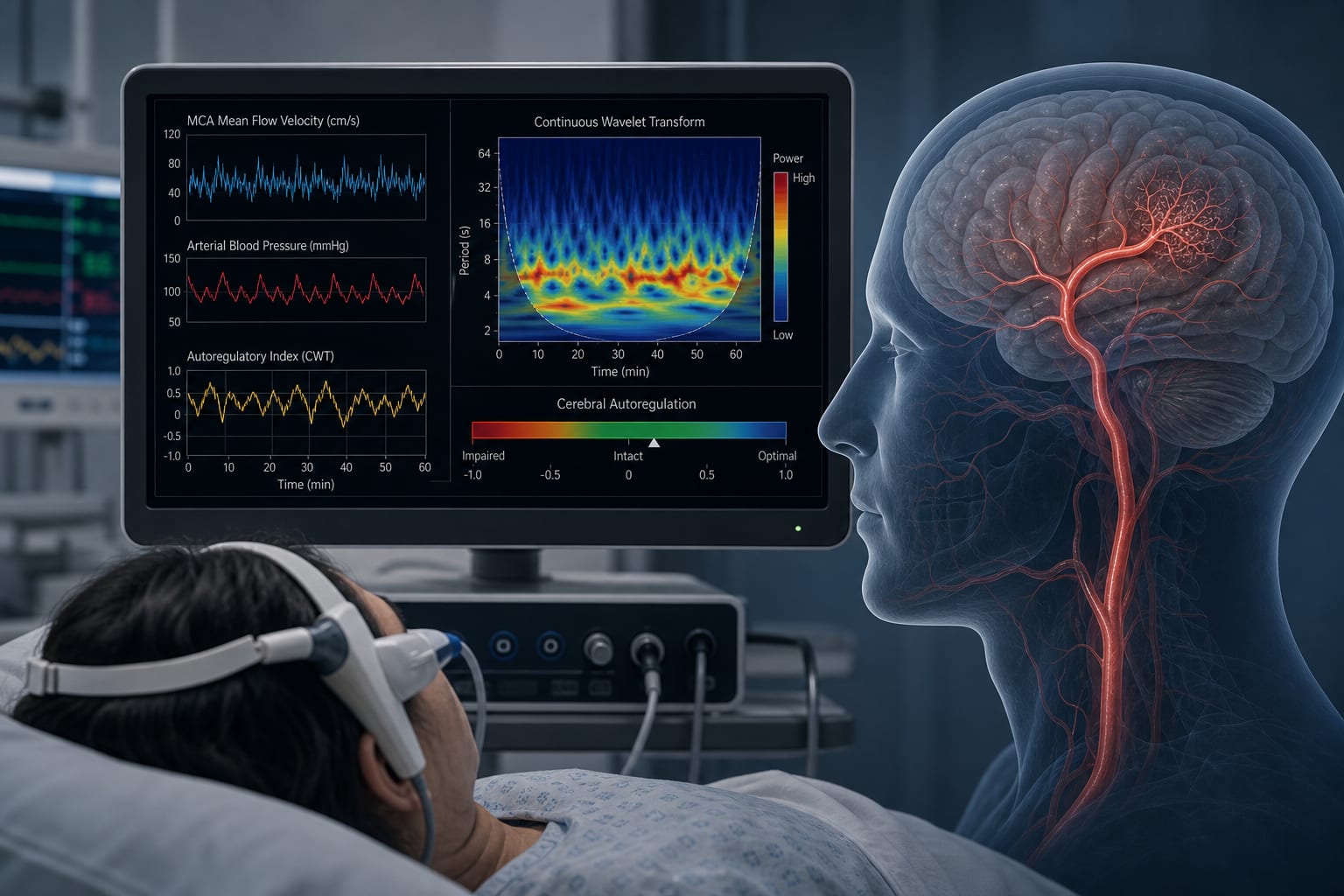
To characterize cerebral autoregulation (CA) using continuous wavelet transform (CWT) in acute ischemic stroke (AIS) patients after endovascular thrombectomy (EVT).
Approach:
Key Findings:
No significant difference in median SI between patients with unfavorable and favorable clinical outcomes (0.61 ±0.15 vs. 0.41 ±0.20, p = 0.055).
Patients without early neurological recovery had higher median SI (0.63 ±0.14 vs. 0.36 ±0.17, p = 0.005).
Median SI was inversely correlated with ASPECTS, indicating impaired CA in larger infarcts (Spearman's rho = −0.52, p = 0.043).
Interpretation:
CWT is a viable method for evaluating CA after EVT and may provide important information on early cerebral hemodynamics following arterial recanalization.
Limitations:
Small sample size (20 patients) may limit the generalizability of findings.
Study conducted at a single center, which may introduce bias.
Conclusion:
CWT may enhance understanding of cerebral autoregulation dynamics post-EVT in AIS patients.