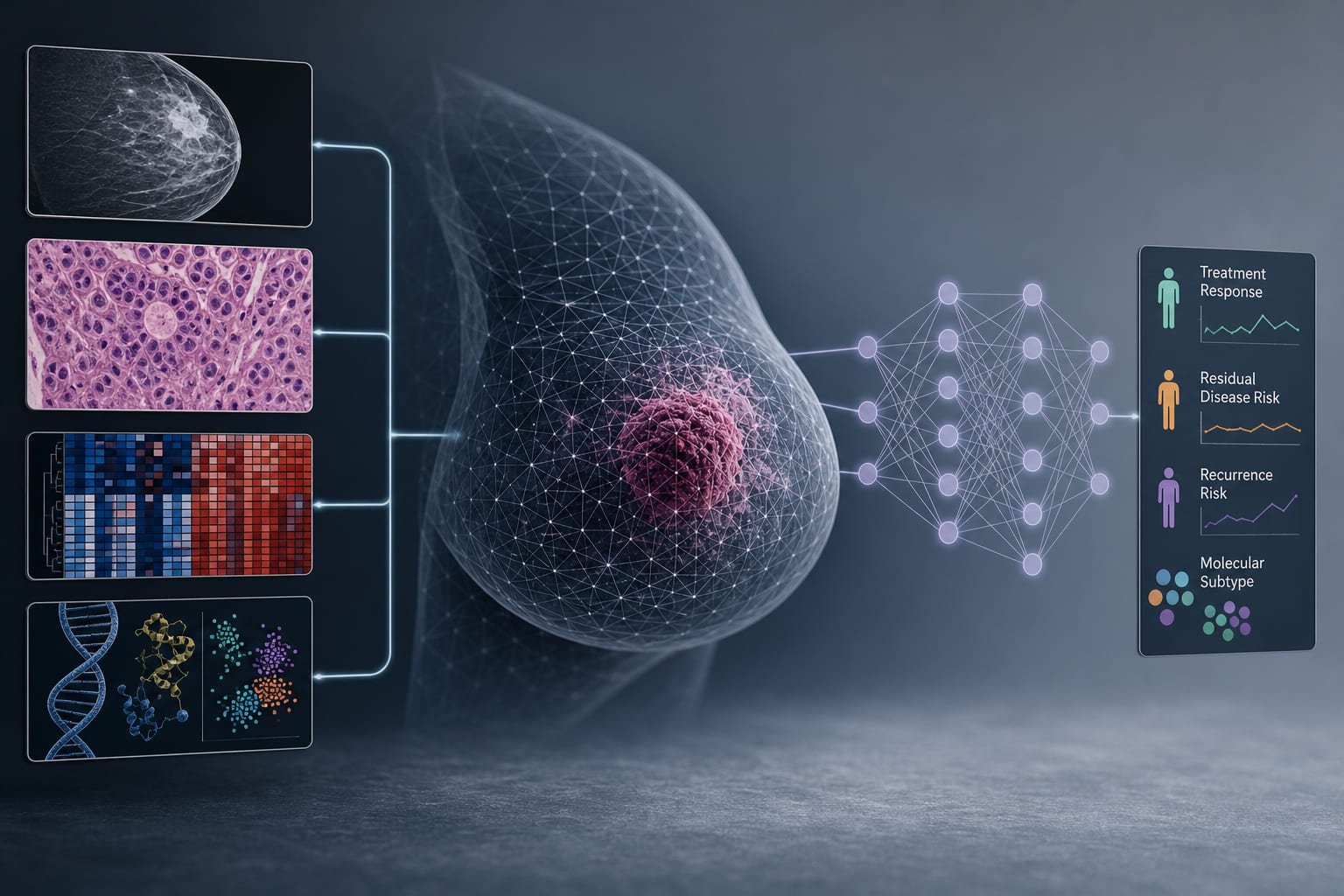
To update breast cancer reporting protocols in alignment with the latest WHO classifications and recommendations.
Approach:
Updates Overview: The College of American Pathologists (CAP) has revised its protocols for breast cancer reporting, focusing on ductal carcinoma in situ (DCIS) and invasive breast cancer.
Key Changes: Revisions include tumor characterization, grading, assessment of disease extent, and reporting of additional lesions.
Standardization Goals: The updates aim to support consistent synoptic reporting for diagnosis, staging, and treatment planning.
Key Findings:
The updated protocols reflect current classification criteria.
Standardized reporting helps capture key diagnostic and prognostic data.
Changes are required for laboratory accreditation with specific implementation timelines.
Interpretation:
The updates are intended to support consistent synoptic reporting for breast cancer diagnosis, staging, and treatment planning.
Limitations:
Laboratories must review accreditation effective dates for new protocols.
Changes extend beyond breast cancer to other cancer types, which may complicate implementation.
Conclusion:
CAP updates its Cancer Protocols quarterly to align with guidance from WHO and AJCC, providing evidence-based reporting templates.
Exagamglogene autotemcel is now indicated for patients aged 2 years and older with sickle cell disease and recurrent vaso-occlusive crises or transfusion-dependent beta thalassemia.