Applying Evidence-Based Care to Low-Risk Thyroid Cancer
-
By
-
Lia D. Delaney
-
Carolyn D. Seib
-
October 30, 2026
Objective:
The article examines the objective, findings, and clinical context described in Applying Evidence-Based Care to Low-Risk Thyroid Cancer.
Approach:
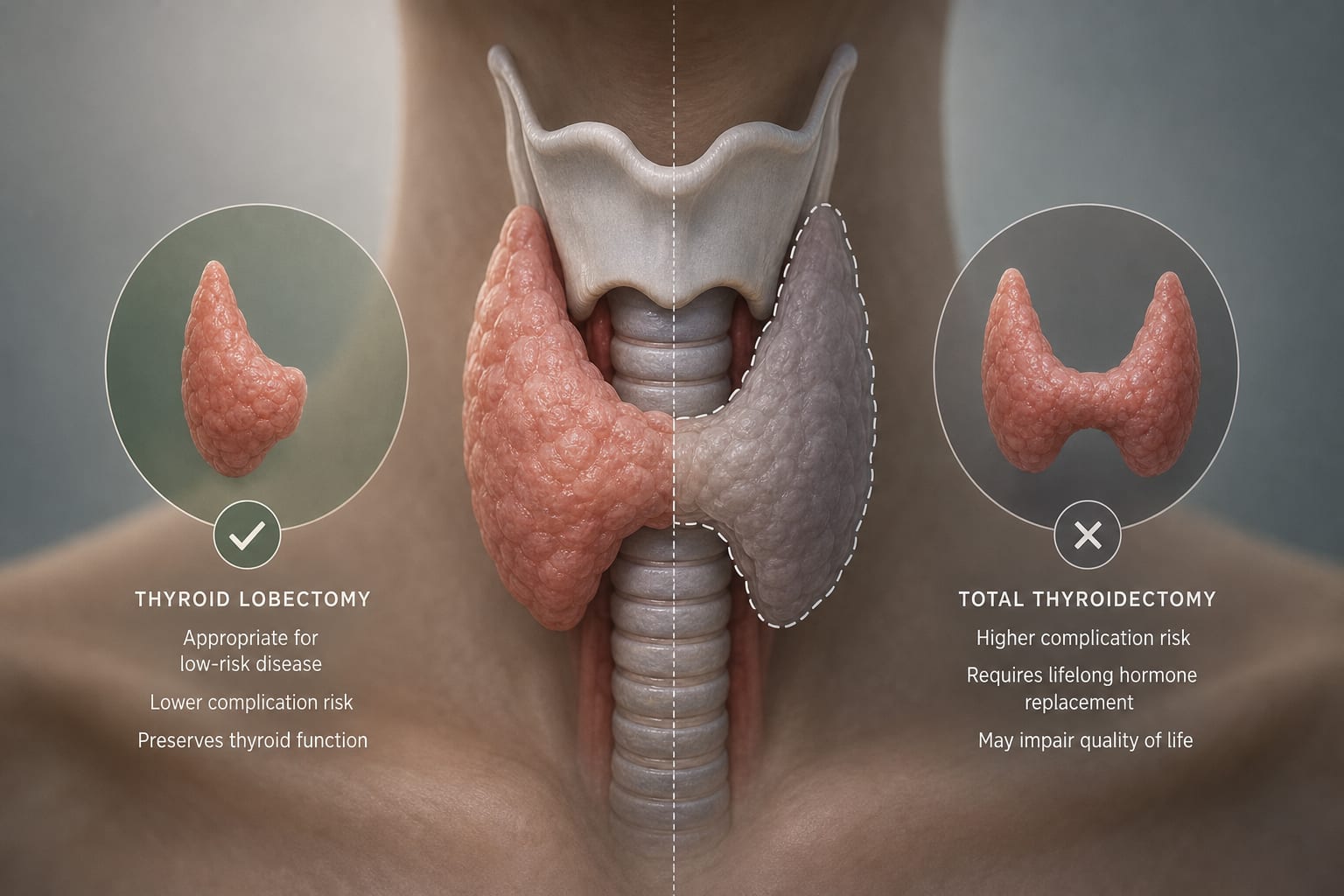
- Clinical evidence: Guidelines increasingly support thyroid lobectomy for selected patients with tumors smaller than 4 cm and no nodal metastases or other high-risk features.
- Ethnographic study: Bradley and colleagues interviewed 19 thyroid surgeons and observed 7 community and academic practices. Surgeons considered six intervention categories intended to reduce overtreatment.
Key Findings:
- Lobectomy and total thyroidectomy have comparable oncologic outcomes in appropriately selected patients; total thyroidectomy carries greater complication risk, requires lifelong thyroid hormone replacement, and is associated with poorer quality of life.
- Despite guideline changes, total thyroidectomy remains the treatment for approximately 60% to 80% of patients with low-risk thyroid cancer.
- No intervention was identified as optimal, although performance feedback was most frequently favored.
- Surgeons described thyroid cancer care as complex and individualized, often viewed interventions as more relevant to colleagues than themselves, and identified professional identity as influencing practice change.
- Practice settings varied in workflows, resources, and patient populations. Participants’ views were not linked to their observed treatment patterns.
Interpretation:
The article describes an evidence-to-practice gap that may be addressed through credible, clinically relevant peer-comparison feedback and decision-support tools developed with surgeons and adapted to local settings. Care coordination should include referring clinicians and other team members, while preserving individualized treatment choices.
Limitations:
- The study examined surgeons’ perceptions of proposed interventions, not the interventions’ effects on treatment decisions or patient outcomes.
- The relationship between individual surgeons’ views and their observed treatment patterns was not assessed.
Conclusion:
Future research should develop and test stakeholder-informed interventions in diverse practice settings, including whether they safely reduce inappropriate total thyroidectomy and are acceptable and feasible in routine care. The stated goal is to reduce variation not explained by relevant clinical or patient factors while supporting individualized decisions.
Sources:
Based on findings from:
From Evidence to Practice in Low-Risk Thyroid Cancer
Lia D. Delaney, Carolyn D. Seib. Jama Network Open, 2026.
https://jamanetwork.com/journals/jamanetworkopen/fullarticle/2856036
This content is an AI-generated, fully rewritten summary based on a published scholarly article. It does not reproduce the original text and is not a substitute for the original publication. Readers are encouraged to consult the source for full context, data, and methodology.