Early screen exposure and its association with motor affordances in the home environment of Brazilian preterm and full-term infants - Summary - MDSpire
Advertisement
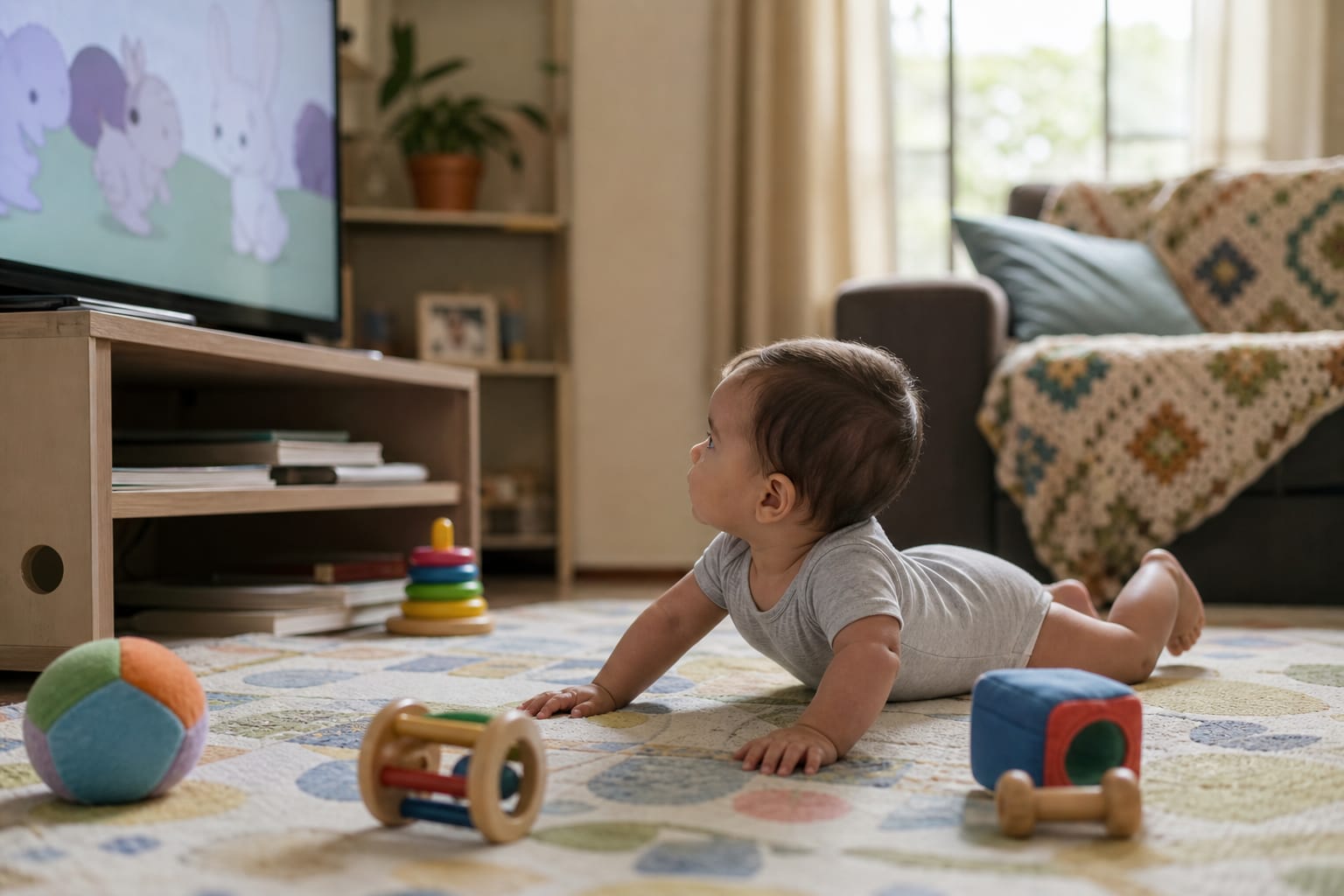
Impact of Early Screen Time on Motor Development Opportunities in Brazilian Preterm and Full-Term Infants' Home Environments
To characterize and compare screen exposure in preterm and full-term infants and investigate associations between family sociodemographic characteristics, motor development, and home environment opportunities.
Approach:
Study Design: Cross-sectional study involving parents of 80 full-term and preterm infants.
Assessment Tools: Motor development assessed using the Alberta Infant Motor Scale; home environment evaluated with the Affordances in the Home Environment for Motor Development—Infant Scale.
Data Collection: Parents completed questionnaires on sociodemographics, infant health, and screen exposure.
Key Findings:
Full-term infants had a median screen exposure of 3.5 hours/week, while preterm infants had 0 hours/week.
Parents of preterm infants watched more television (17.5 hours/week) compared to parents of full-term infants (12 hours/week).
A significant correlation was found between parental television watching and screen exposure of preterm infants (rho = 0.583; p = 0.047).
Family income was associated with the AHEMD-IS scores (rho = 0.581; p = 0.047).
Interpretation:
Limitations:
No statistically significant differences were observed between preterm and full-term infants regarding screen exposure.
The study's cross-sectional design limits causal inferences.
by Amanda dos S. Erhardt, André Luis Ferreira de Meireles, Natália Alves Menegol, Anilsa Suraya Gaspar Francisco Gulonda, Bruna Frata, Dayane Montemezzo, Luciana Sayuri Sanada