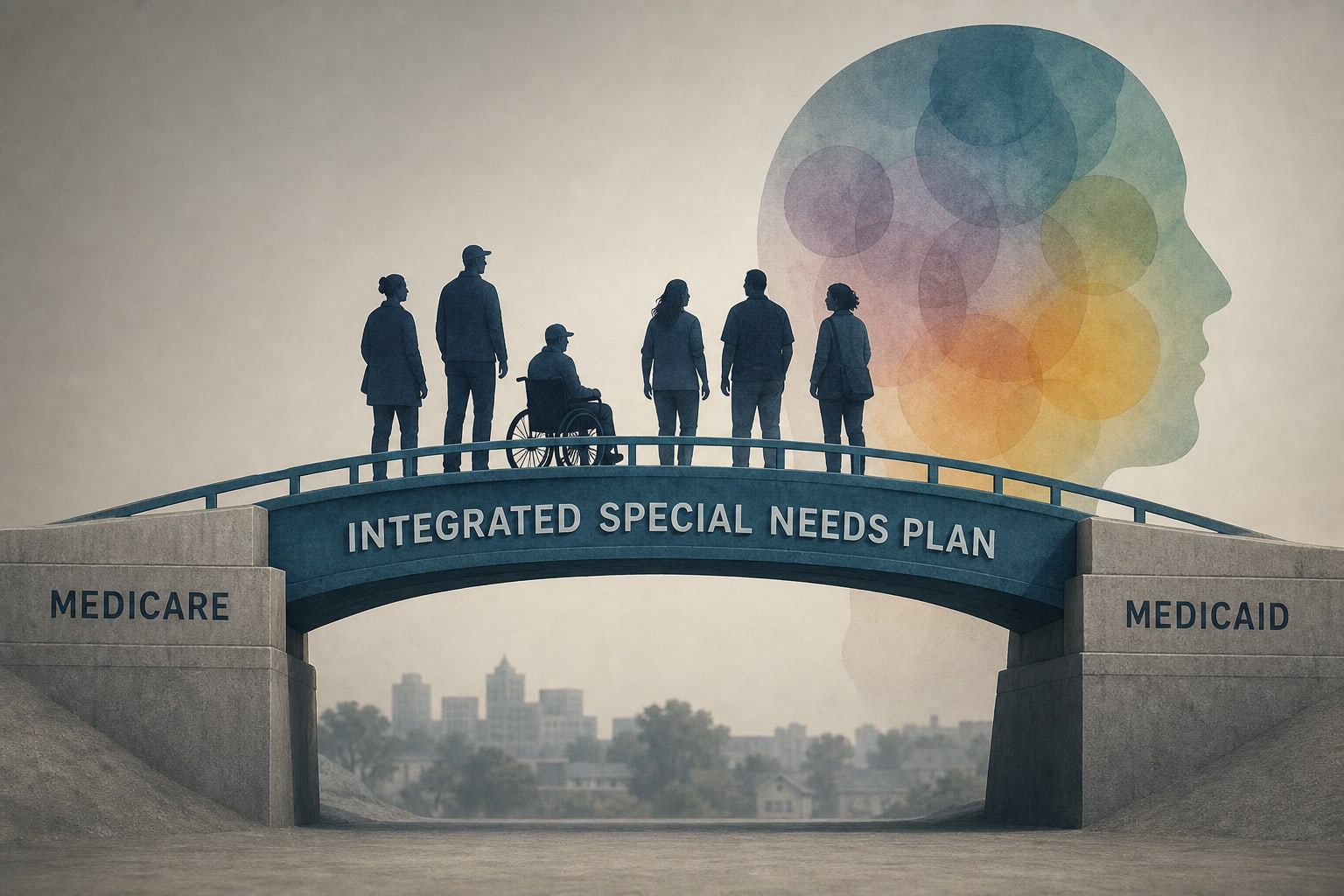
To examine enrollment and disenrollment patterns in integrated Dual-Eligible Special Needs Plans (D-SNPs) and other Medicare options among dually eligible beneficiaries with serious mental illnesses (SMI) from 2019 to 2022.
Key Findings:
Approximately 30% of dually eligible beneficiaries have SMI, compared to 5-10% in other insurance categories.
Fragmentation between Medicare and Medicaid creates access and coordination barriers for dually eligible beneficiaries.
D-SNPs, particularly integrated models like HIDE-SNPs and FIDE-SNPs, are designed to improve care coordination for dually eligible beneficiaries with SMI.
Interpretation:
Remove unsupported conclusions and interpretations.
Limitations:
The study uses deidentified secondary claims data, which may limit the depth of individual patient insights.
Findings are based on a specific timeframe (2019-2022) and may not reflect future trends.
Conclusion:
Revise to avoid unsupported claims about the importance of understanding enrollment patterns.