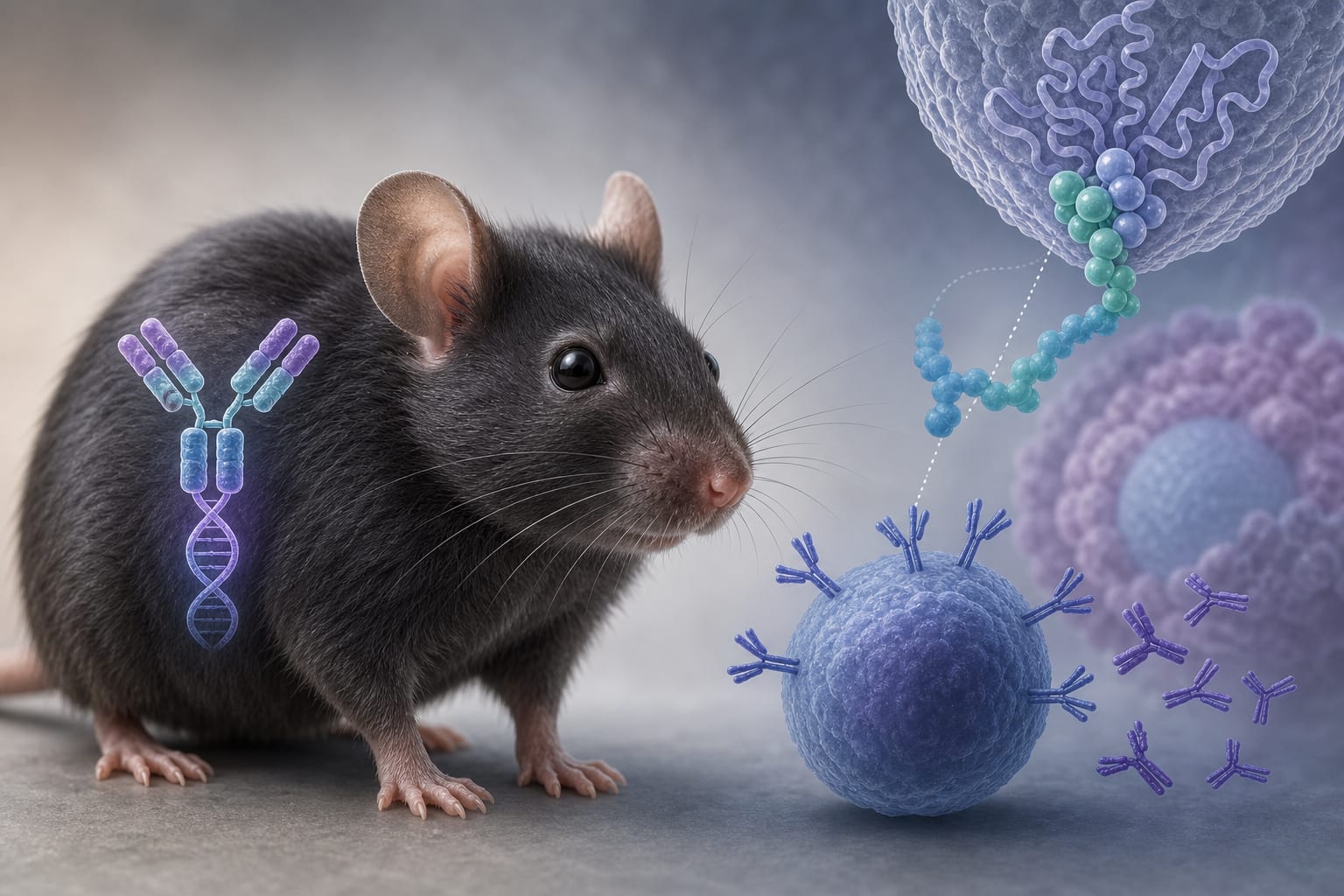
Knock-in Mice with Aquaporin-5 Heavy Chain VDJ Modification Uncover the Role of Molecular Mimicry in Initiating and Diversifying Autoreactive B-Cell Responses
By
Hyunjin Kim
Nayoon Lee
Sabin Acharya
Sungmin Kim
Youngnim Choi
July 2, 2026
Objective: To investigate how molecular mimicry shapes B-cell development and the evolution of antigen-specific B cell responses.
Approach: Model Development: Generated A5H mice, a knock-in model expressing a B-cell receptor binding to the AQP5 'E' epitope.B-cell Analysis: Examined B-cell development, anergy, and activation in response to microbial mimic peptides.Immunization Studies: Immunized A5H mice with PmE-L and assessed autoantibody production and germinal center responses.Key Findings: A5H mice showed normal B-cell development with reduced anergy-associated B cells and an expanded pool of mimic-reactive B cells. At steady state, A5H mice produced anti-PmE-L antibodies, but not anti-AQP5E autoantibodies. Immunization with PmE-L led to robust production of anti-AQP5E autoantibodies that cross-reacted with AQP4 and AQP1. Heterozygous A5H mice exhibited stronger autoantibody responses compared to homozygous A5H mice. Interpretation:
Limitations: Evidence of intramolecular epitope spreading to native AQP5 was not observed. Minimal tissue deposition of autoantibodies and salivary gland pathology. Conclusion: