Prognostic value of systemic inflammation response index in successfully recanalized acute large vessel occlusion stroke patients: a retrospective study - Summary - MDSpire
Advertisement
Prognostic value of systemic inflammation response index in successfully recanalized acute large vessel occlusion stroke patients: a retrospective study
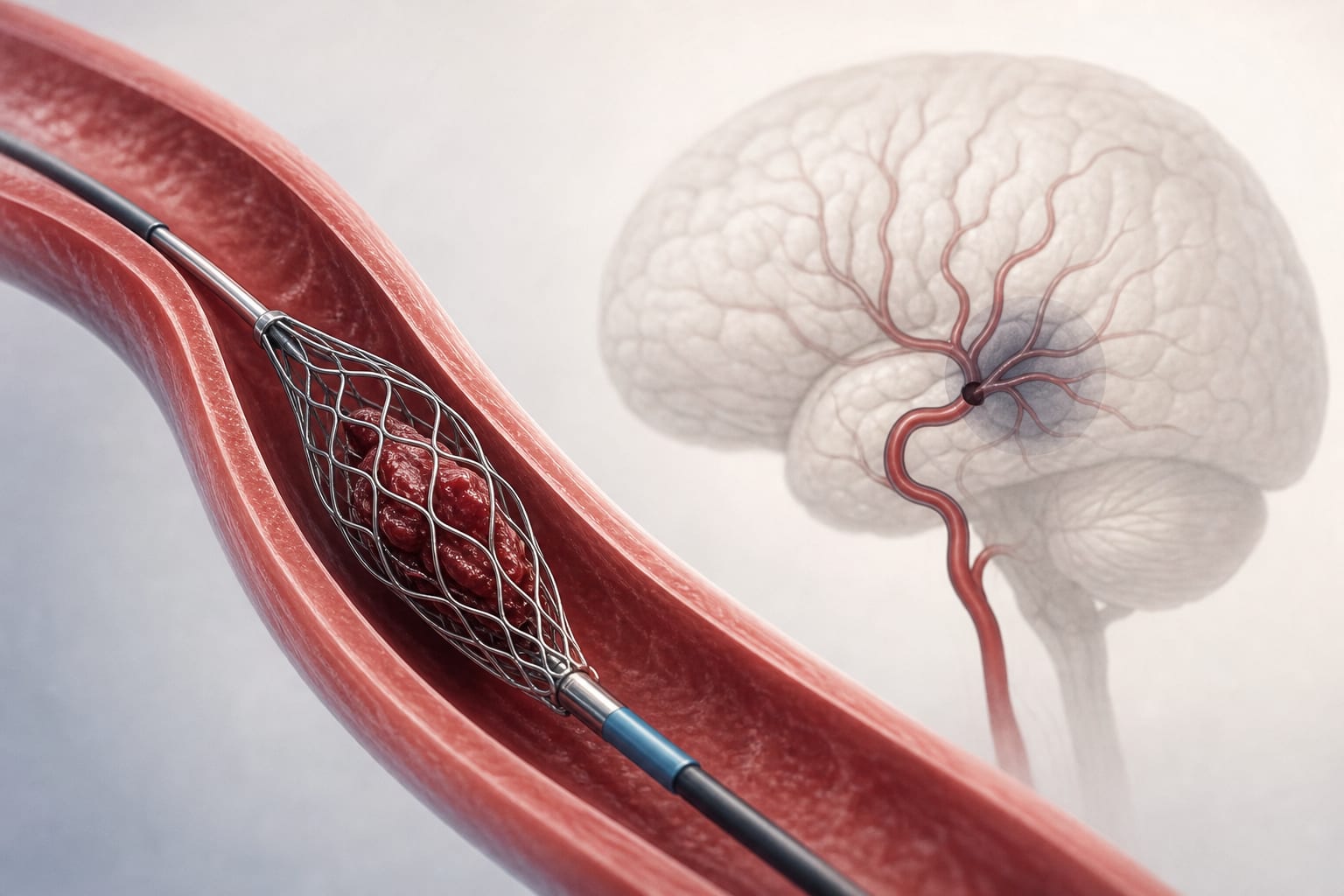
To investigate the relationship between baseline Systemic Inflammation Response Index (SIRI) and 90-day functional outcomes as well as hemorrhagic transformation in successfully recanalized ALVOS patients undergoing EVT.
Key Findings:
Mean SIRI level was significantly lower in the good outcome group (1.26 ± 1.10) compared to the poor outcome group (2.22 ± 2.42, p < 0.001).
AUC for SIRI predicting a poor outcome was 0.63 (95% CI: 0.56–0.69, P<0.001).
Incorporating SIRI into the age + NIHSS model improved prognostic accuracy (AUC increase from 0.76 to 0.79, p = 0.023).
No significant association found between SIRI levels and hemorrhagic transformation or symptomatic intracranial hemorrhage.
Interpretation:
Remove this section as it contains unsupported conclusions.
Limitations:
Retrospective design may introduce selection bias.
Single-center data may limit generalizability.
Conclusion:
Revise to eliminate unsupported claims about SIRI's role as a biomarker.