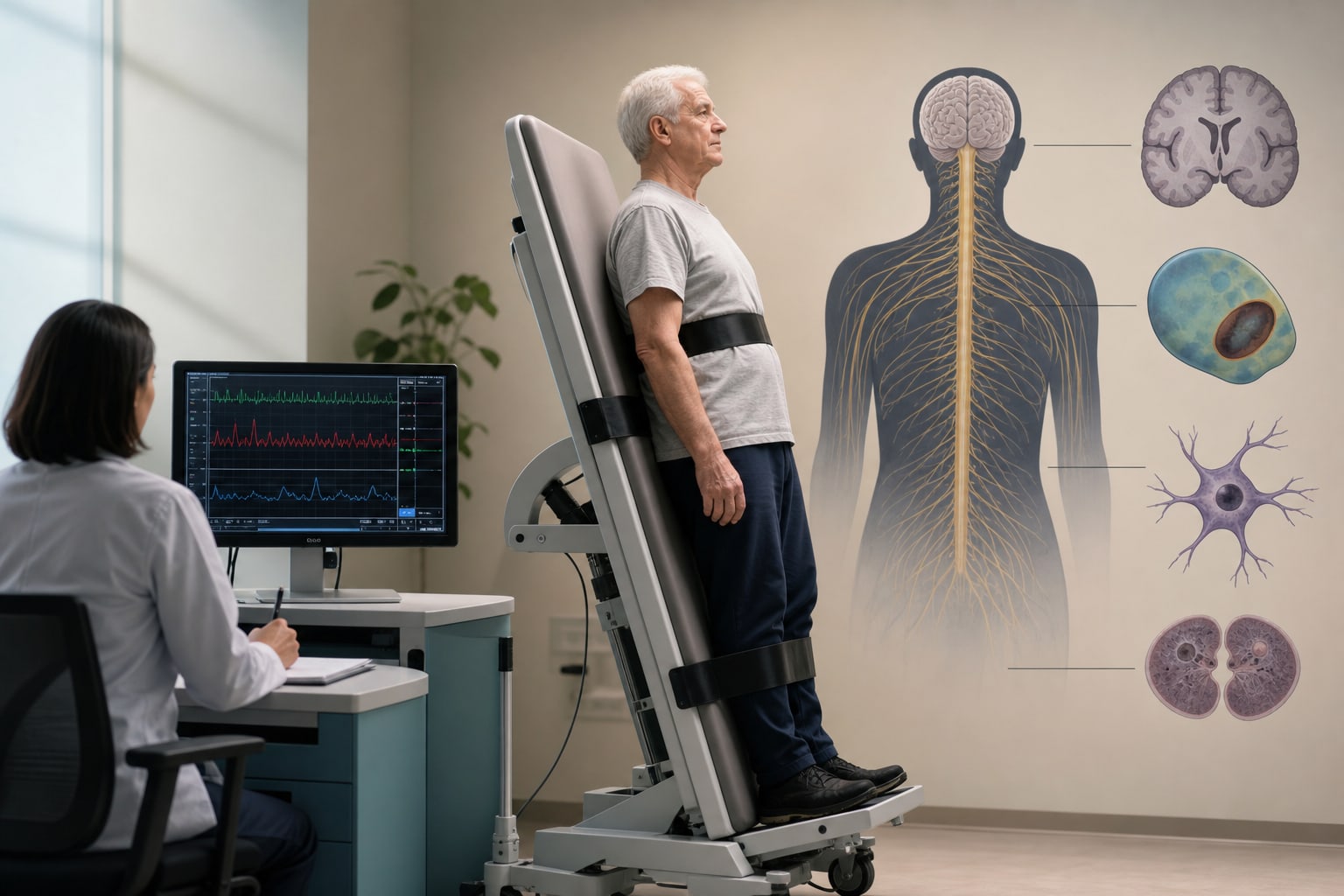
To evaluate the causes and assessment methods for orthostatic dizziness and lightheadedness in patients aged 60 and above.
Approach:
Evaluation Framework: A comprehensive, multidisciplinary approach integrating clinical history, medical and cardiovascular assessments, neurologic evaluation, and targeted diagnostic testing.
Symptom Characterization: Detailed symptom characterization focusing on the phenomenology of dizziness, temporal relationship to postural changes, and correlation with various factors.
Physical Examination: Measurement of orthostatic vital signs, including blood pressure and heart rate, to identify orthostatic hypotension and its variations.
Medical Testing: Laboratory studies and cardiac evaluations to identify reversible causes and contributors to orthostatic dizziness.
Autonomic Function Tests: Formal autonomic testing, including tilt-table testing and autonomic reflex screens.
Key Findings:
Orthostatic dizziness is common in older adults and can arise from various etiologies, including autonomic dysfunction.
Chronic orthostatic intolerance should prompt evaluation for autonomic and neurodegenerative disorders.
Polypharmacy and comorbid conditions are prevalent in this age group and contribute to orthostatic symptoms.
Delayed orthostatic hypotension is clinically relevant and may be associated with falls and syncope.
Interpretation:
A structured evaluation is essential for identifying the underlying causes of orthostatic dizziness in seniors, given the complexity of potential contributing factors.
Limitations:
Symptoms in older adults may be delayed, non-specific, or poorly reproducible.
The distinction between compensated and uncompensated orthostatic hypotension is increasingly questioned.
Conclusion:
A thorough assessment of orthostatic dizziness in seniors is crucial for effective diagnosis and management.