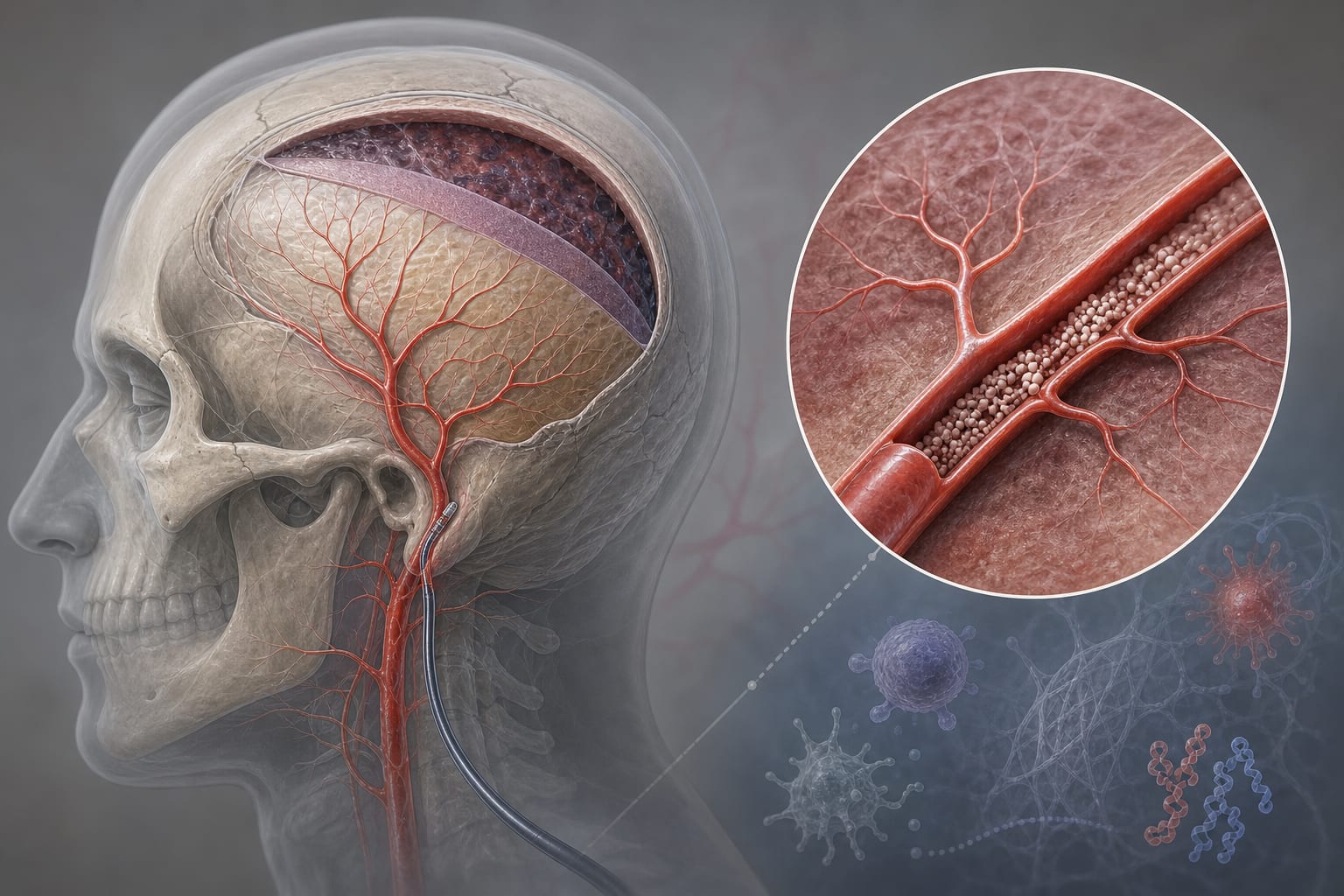
To summarize current surgical concepts and clinical evidence for middle meningeal artery embolization (MMAE) in chronic subdural hematoma (CSDH) and integrate this data with molecular and cellular mechanisms driving disease persistence and treatment response.
Approach:
Epidemiology and Management: Detail the epidemiology and standard surgical management of CSDH, discussing evidence for MMAE as adjunctive, primary, or salvage therapy.
Mechanistic Insights: Synthesize experimental and clinical data on inflammation, angiogenesis, and coagulation in the CSDH neomembrane, summarizing mechanistic hypotheses regarding MMAE's effects.
Key Findings:
Recent randomized controlled trials of MMAE have shown mixed results regarding relapse or treatment failure, with some trials indicating a reduction in these outcomes while others did not meet primary endpoints.
Heterogeneity in study design, patient selection, and outcome definitions complicates direct comparisons between studies.
Mechanistic studies suggest that MMAE may reduce microbleeding, dampen inflammation, and promote hematoma resorption.
Interpretation:
MMAE targets underlying vascular and inflammatory processes, presenting as a potential adjunct or alternative strategy for CSDH, though current evidence remains heterogeneous.
Limitations:
Current evidence is heterogeneous, with varying study designs and patient populations affecting the interpretation of results.
The precise role of MMAE in routine care is yet to be clearly defined based on existing studies.
Conclusion:
Further studies are needed to clarify the safety, efficacy, and cost-effectiveness of MMAE, with the integration of mechanistic information potentially enhancing patient selection and treatment strategies.