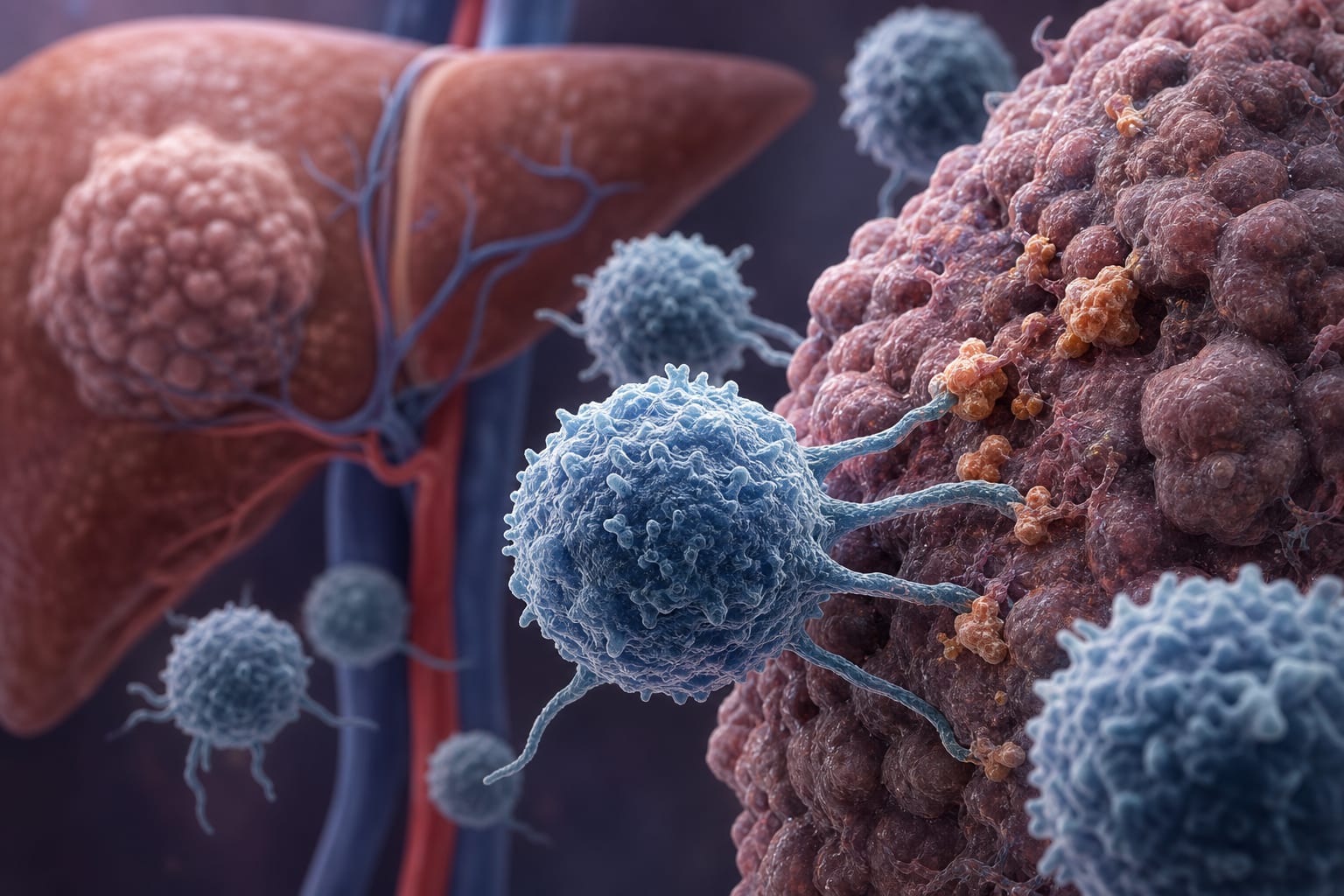
To systematically examine the mechanisms underlying tumor antigen-specific T cells (TASCs) function, recent advances in HCC research, and the clinical significance of TASCs detection.
Approach:
Review of HCC and TASCs: The review analyzes the challenges in HCC immunotherapy, including the hierarchical suppression of TASC function by the HCC immune microenvironment.
Focus on HBV-associated HCC: The definition of TASCs is expanded to include T cells recognizing HBV antigens, emphasizing their role in immune responses within HBV-associated HCC.
Combination therapy framework: A proposed framework for combination therapies targeting TASCs is presented to guide the development of more effective treatment options.
Key Findings:
HCC has high incidence and mortality rates, particularly in China, where HBV and HCV are major etiological factors.
Only 20-30% of HCC patients benefit from immune checkpoint inhibitors, highlighting the need for better understanding of TASCs regulation.
The HCC immune microenvironment systematically suppresses TASC activation and function through various mechanisms, including impaired activation and defective tumor homing.
Interpretation:
The review provides insights into the interactions between TASCs and the HCC immune microenvironment.
Limitations:
The review lacks a comprehensive comparison of the mechanisms, benefits, and limitations of current immunotherapies in HCC.
The focus on HBV-associated HCC may limit the applicability of findings to other HCC etiologies.
Conclusion:
The review aims to establish a theoretical basis for developing next-generation therapies targeting TASCs in HCC.
The goal of this clinical trial is to learn if Adaptive Radiation Therapy (ART) is safe and effective in treating patients with locally advanced pancreatic cancer.