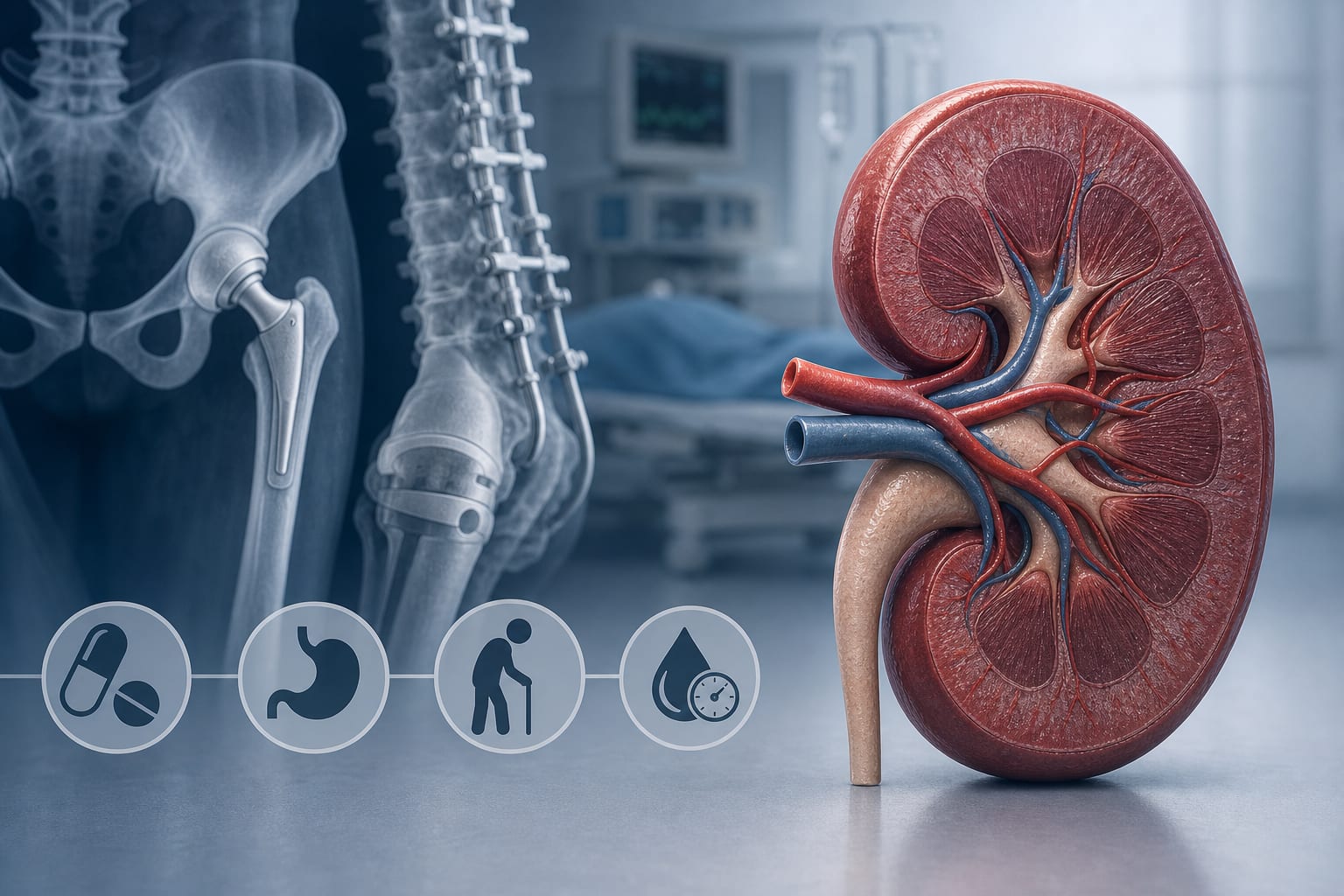
To investigate the prevalence and identify the risk factors associated with acute kidney injury (AKI) in patients undergoing orthopedic surgery.
Approach:
Study Design: A retrospective study was conducted on 2,796 patients admitted to the orthopedic ward for bone tumors, bone injuries, and spinal diseases between 2017 and 2020.
Data Analysis: Data were analyzed using chi-square, Fisher’s exact, Kruskal-Wallis tests, and logistic regression to compare groups and determine independent risk factors for AKI.
Key Findings:
AKI occurred in 97 patients, yielding an overall prevalence of 3.47%.
The incidence was highest among patients undergoing bone tumor surgery (11.36%) and lowest in those undergoing spinal surgery (2.46%).
Patients in the AKI stage 3 group had a significantly higher proportion of bone tumor surgeries and longer hospital stays compared to other groups (P < 0.001).
Independent risk factors for AKI identified were bone tumor surgery, preoperative proteinuria, elevated urea, decreased hemoglobin, and the use of proton pump inhibitors (PPIs) and non-steroidal anti-inflammatory drugs (NSAIDs).
Interpretation:
There is a significant risk of AKI following orthopedic surgery, particularly in patients undergoing bone tumor procedures, with several key modifiable risk factors identified.
Limitations:
The study is retrospective in nature, which may introduce biases.
Patient information was anonymized, limiting the ability to follow up on long-term outcomes.
Conclusion:
The study highlights the prevalence of AKI in orthopedic surgery patients and identifies modifiable risk factors.