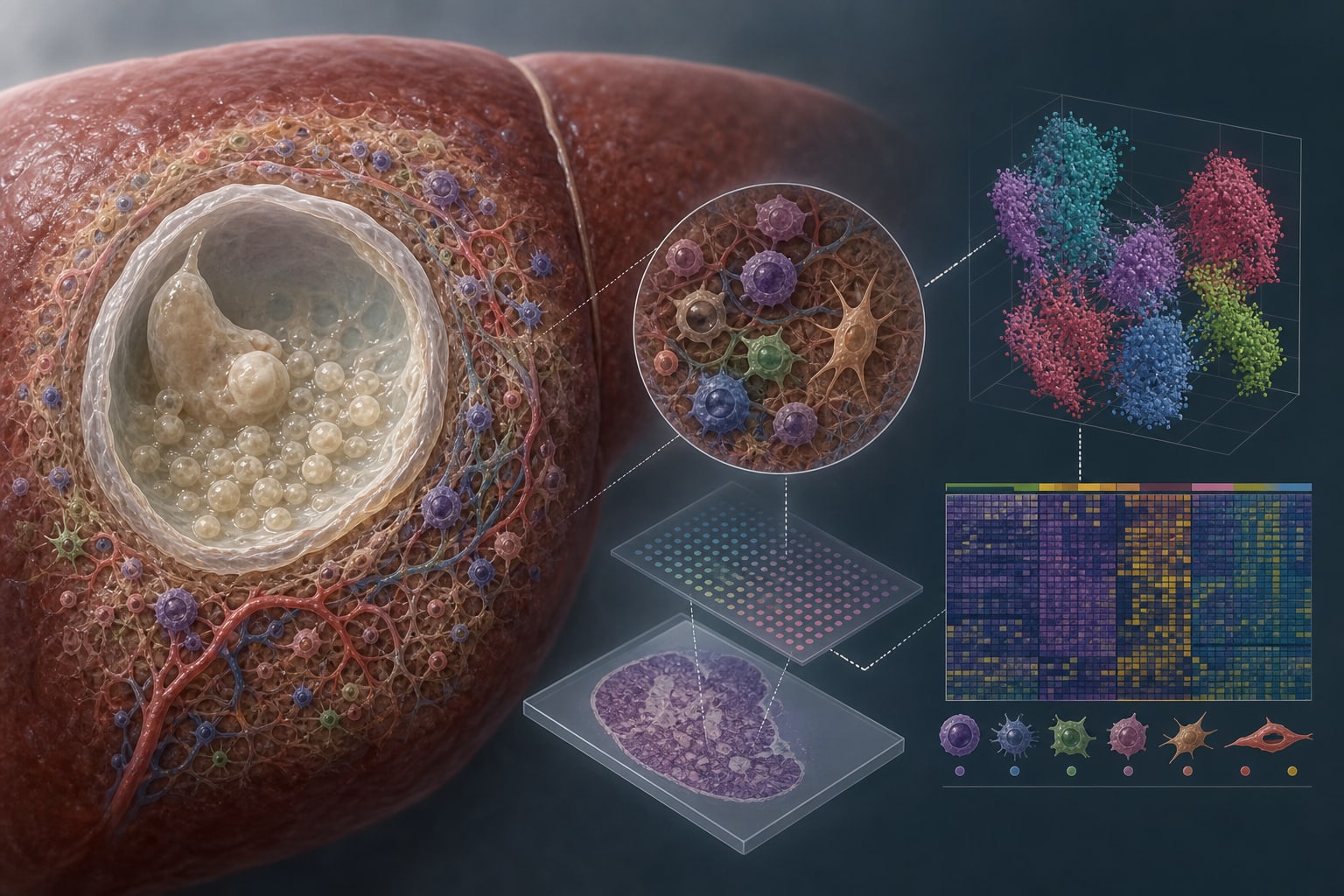
To synthesize insights from single-cell RNA sequencing and spatial transcriptomics studies of hepatic echinococcosis (HE) lesions and adjacent liver, discussing analytical considerations relevant to fibrotic and necrotic tissues.
Approach:
Key Findings:
Bulk omics have outlined global pathway perturbations in immunity, hypoxia, and extracellular matrix remodeling in HE.
Single-cell RNA sequencing (scRNA-seq) and spatial transcriptomics (ST) provide cell-resolved, niche-aware profiling of HE tissues.
Late-stage expansion of SPP1+ macrophages and exhausted T-cell programs have been implicated in HE lesions.
Interpretation:
The findings indicate that traditional bulk omics may not accurately reflect specific cellular interactions and states driving HE persistence.
Limitations:
Bulk profiling averages signals across heterogeneous lesions, limiting the resolution of discrete cell states.
Composition bias in lesions can affect the interpretation of bulk omics data.
Conclusion:
An integrative framework linking cell-state diversity to spatial context is proposed.