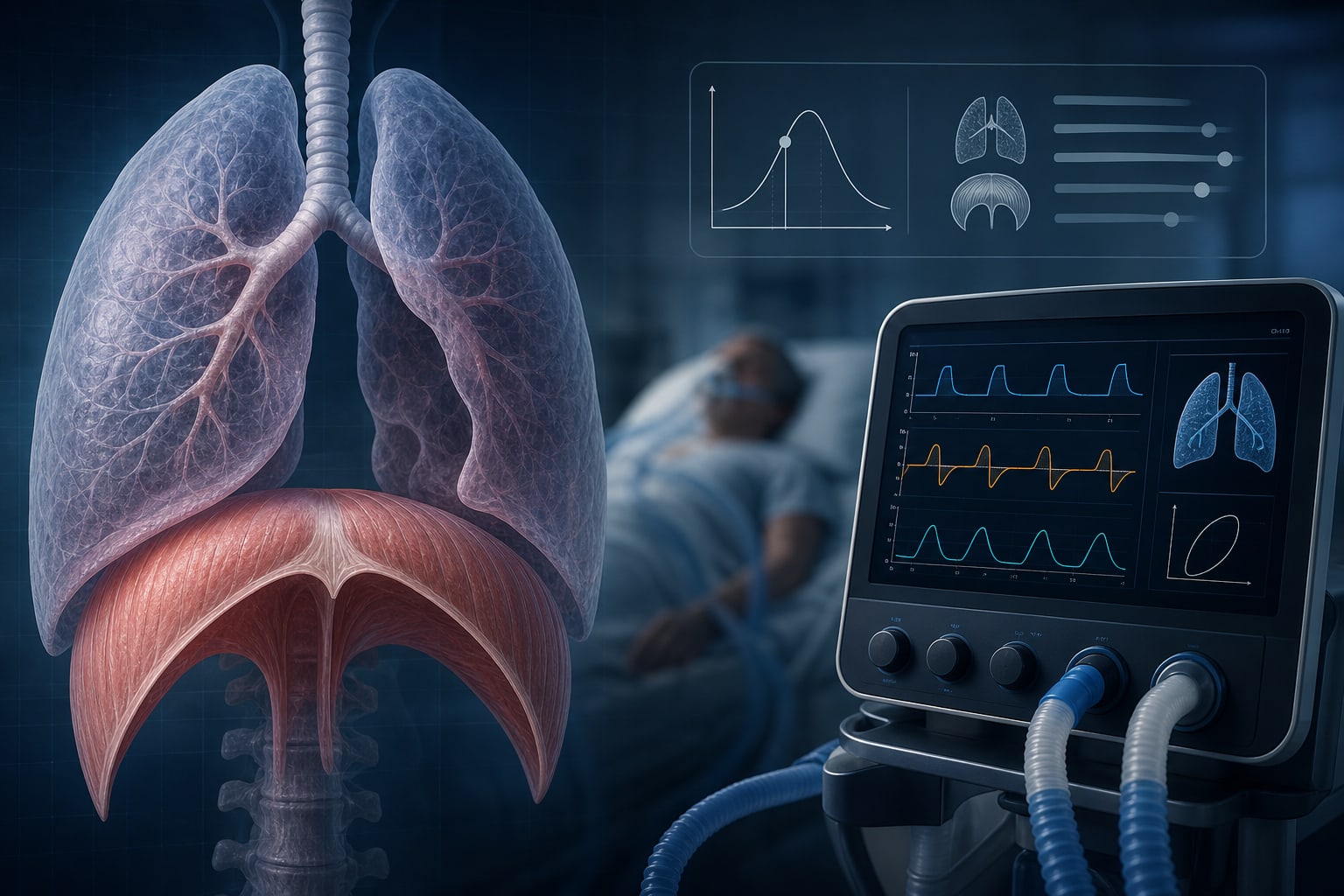
To discuss the evolution of mechanical ventilation towards personalized, physiology-guided approaches aimed at mitigating complications.
Approach:
Personalization of Mechanical Ventilation: Merola et al. review evidence on how real-time monitoring of respiratory mechanics can prevent ventilator-induced lung injury (VILI).
Impact of Inspiratory Rise Time: Tontu et al. study the effects of inspiratory rise time on mechanical power in patients with acute respiratory distress syndrome (ARDS).
Lung-Protective Strategies in Surgery: Yue et al. and Wang et al. conduct trials showing that lung-protective ventilation reduces intraoperative complications in pediatric patients.
Inspiratory Muscle Training: Andrade-Rebolledo et al. perform a meta-analysis indicating that inspiratory muscle training enhances respiratory muscle strength and weaning success.
Risk Prediction for Extubation Failure: Zeng et al. review risk prediction models for extubation failure, emphasizing the need for integrating dynamic physiological variables.
Key Findings:
Personalized mechanical ventilation can prevent ventilator-induced lung injury (VILI) and ventilator-induced diaphragmatic dysfunction (VIDD).
Shortening inspiratory rise time significantly increases mechanical power in volume-controlled modes.
Lung-protective strategies reduce intraoperative atelectasis in pediatric patients undergoing surgery.
Inspiratory muscle training enhances respiratory muscle strength and improves weaning success rates.
Risk prediction models for extubation failure require careful interpretation due to variability in patient characteristics.
Interpretation:
Mechanical ventilation is evolving towards a more individualized therapy that integrates respiratory physiology to improve patient outcomes.
Limitations:
Statistical models for predicting extubation failure may not align with individual patient characteristics, limiting their applicability.
Few studies have performed both internal and external validation of their risk prediction models.
Conclusion:
The articles collectively highlight the importance of personalized mechanical ventilation as a protective strategy in clinical practice.