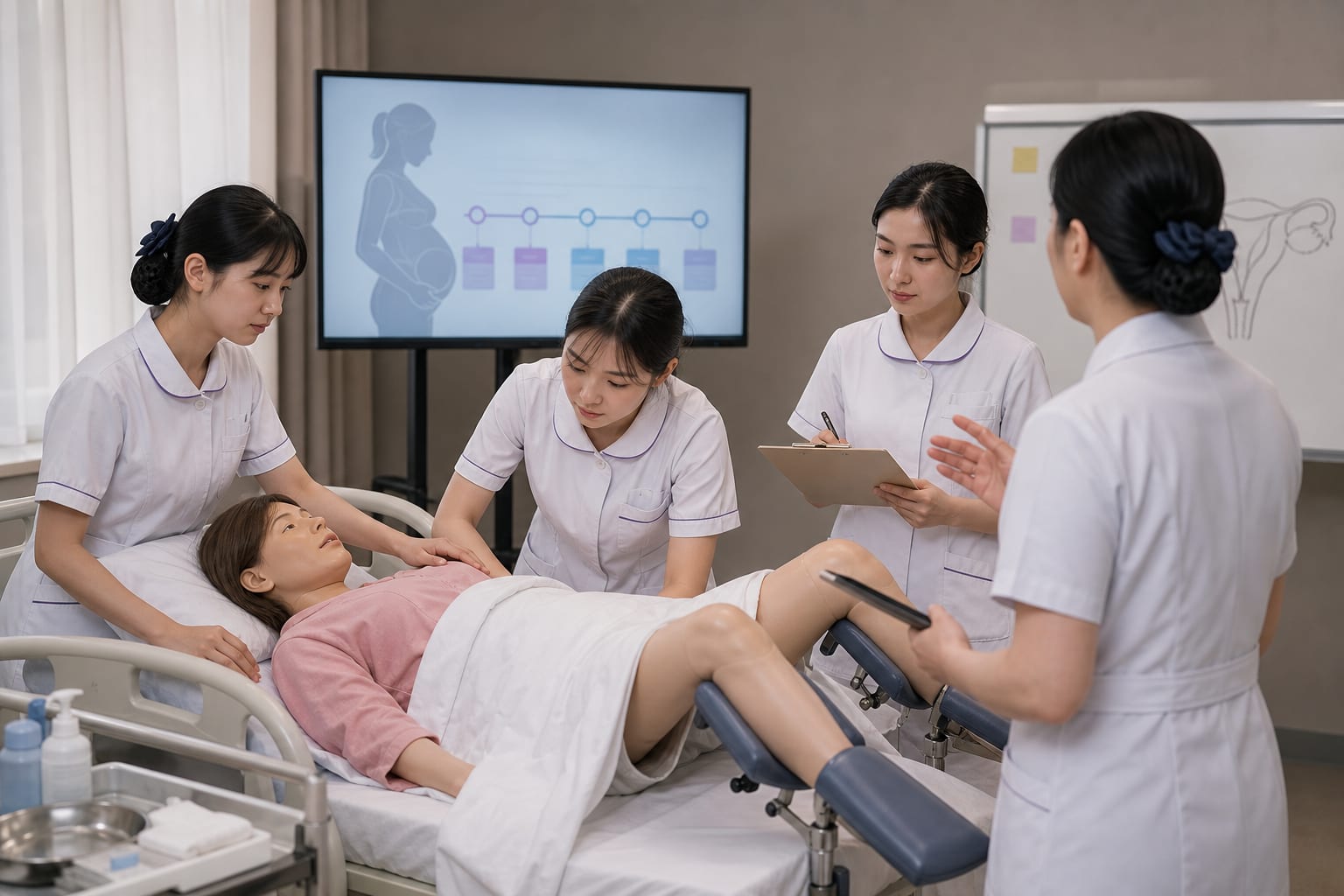
Effects of unfolding case-based simulation in obstetrics and gynecology internships on caring ability and caring behaviors: a quasi-experimental study - Summary - MDSpire
To evaluate the effect of unfolding case-based simulation on nursing students' caring ability and behaviors specifically during OBGYN internships.
Key Findings:
The intervention group had significantly higher end-of-rotation CAI and CBI scores compared to the control group (P < 0.001), indicating a strong effect of the intervention.
The intervention group achieved higher specialty assessment scores and overall teaching satisfaction than the control group (P < 0.001), suggesting improved educational outcomes.
Interpretation:
Adding unfolding case-based simulation to conventional OBGYN preceptorship was associated with substantial short-term improvements in nursing students’ caring ability and behaviors.
Limitations:
The study was conducted at a single center, limiting generalizability; further multicenter studies are needed to assess the sustainability of the observed gains.
Further studies are needed to assess the transferability of these gains to real clinical practice.
Conclusion:
The study suggests that integrating unfolding case-based simulation into OBGYN internships can enhance nursing students' caring skills and behaviors, potentially influencing nursing education practices.
A nationwide birth cohort found lower odds of short sleep at 1 year among infants breastfed during the first 6 months of life, regardless of formula supplementation.
Children exposed to higher-dose prenatal vitamin D scored modestly higher on verbal and visual memory tests at age 10 years, although overall intelligence and most cognitive measures did not differ significantly.