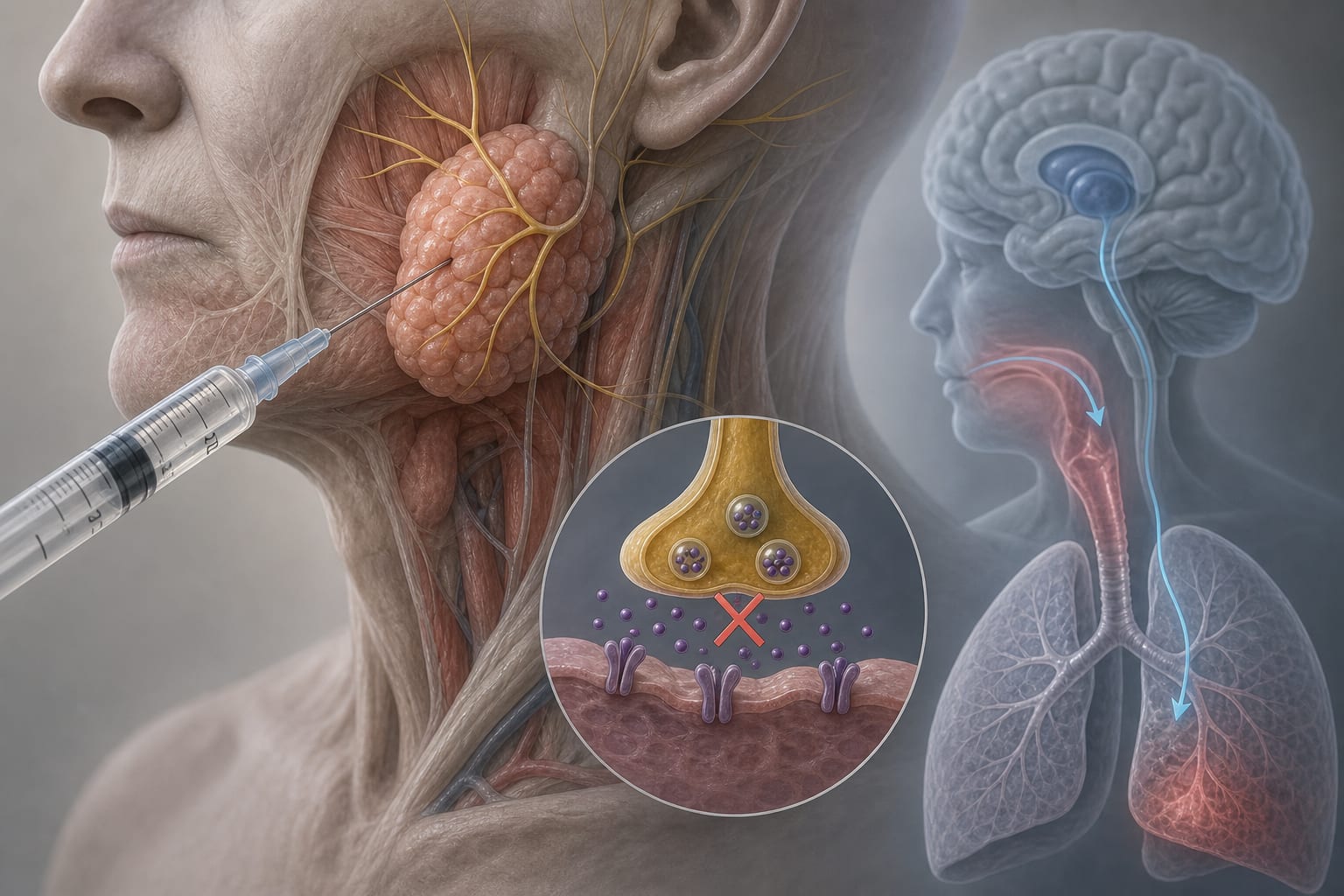
To evaluate the current state of research on the use of BoNT-A for managing sialorrhea and its potential to reduce aspiration pneumonia (AP) risk in adults.
Approach:
Literature Review: A comprehensive review of existing literature was conducted, focusing on the efficacy of BoNT-A in treating sialorrhea in both pediatric and adult populations.
Study Assessment: Studies were assessed for findings on the impact of BoNT-A on drooling and related complications, including the risk of AP.
Key Findings:
BoNT-A effectively reduces sialorrhea in pediatric patients with neurological conditions.
Evidence linking BoNT-A to reduced AP risk is limited.
In adults, BoNT-A has been beneficial for managing sialorrhea associated with conditions like Parkinson's disease, but studies specifically exploring its impact on AP risk are lacking.
Interpretation:
Current evidence supports the efficacy of BoNT-A in managing neurological sialorrhea across both adult and pediatric populations, but there is a critical gap in research regarding its effect on AP risk in adults.
Limitations:
Limited studies directly investigating the impact of BoNT-A on AP risk in adults with neurological diseases.
Conclusion:
While BoNT-A is effective in managing sialorrhea, the direct impact on AP risk in adults remains inadequately explored.