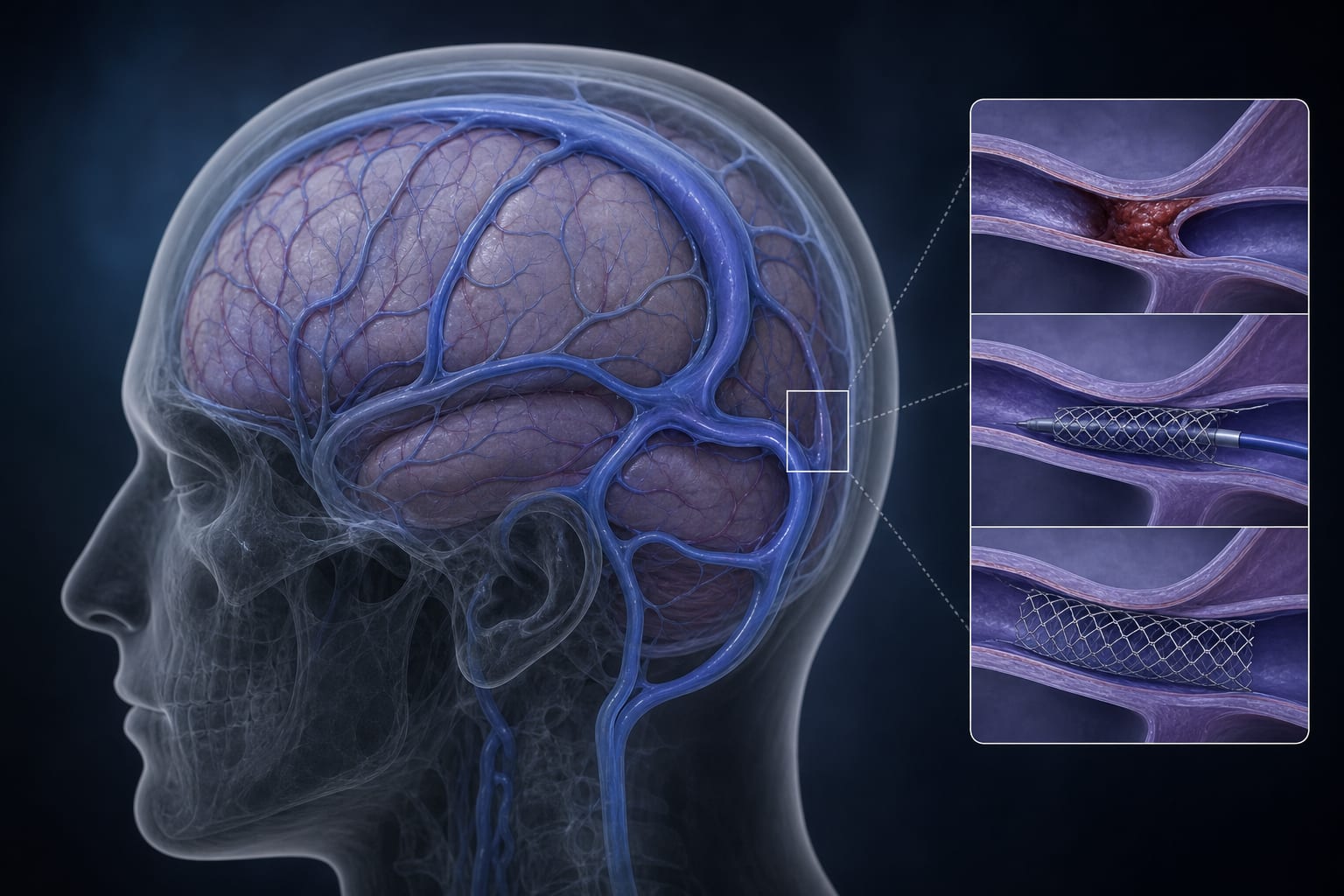
To provide a contemporary overview of the pathophysiology, clinical presentation, diagnostic evaluation, and treatment strategies for major cerebral venous disorders.
Approach:
Key Findings:
Cerebral venous disorders are increasingly recognized due to improved imaging techniques and endovascular therapies.
Controversies exist regarding diagnostic thresholds and the clinical significance of venous stenosis.
A multidisciplinary and physiology-guided approach is essential for optimizing patient selection and outcomes.
Interpretation:
Ongoing investigation is needed to address knowledge gaps and inform future research in cerebral venous disorders.
Limitations:
Controversies regarding optimal hemodynamic criteria for intervention.
Uncertainty about the long-term durability of endovascular treatment.
Conclusion:
As diagnostic capabilities and therapeutic options evolve, a comprehensive approach is necessary for managing cerebral venous disorders.