Exploration of the longitudinal clinical course and potential prognostic factors in Parkinson’s disease: 2.5-year observational study in Japan - Summary - MDSpire
Advertisement
Exploration of the longitudinal clinical course and potential prognostic factors in Parkinson’s disease: 2.5-year observational study in Japan
To explore the longitudinal clinical course of Parkinson’s disease (PD) symptoms in patients receiving standard therapy, including L-dopa, in Japan and to identify potential factors associated with clinically relevant worsening.
Key Findings:
The study population predominantly had mild to moderate PD, with a mean age of 66.4 years and mean disease duration of 6.22 years.
Most patients were receiving L-dopa (88.7%), with a mean daily dose of 477.0 mg.
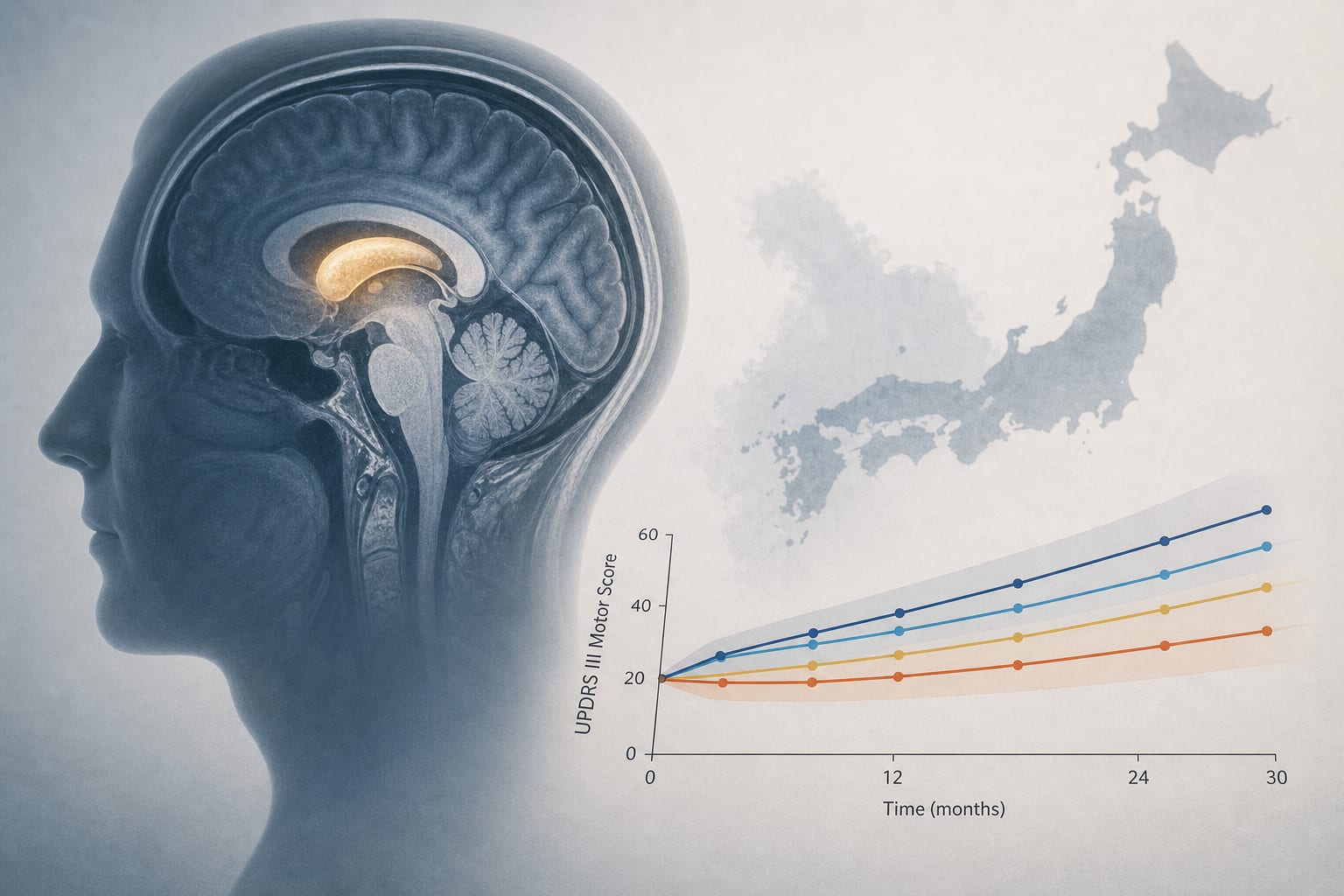
The mean UPDRS III score improved by 3.3 points at the 6-month visit and remained stable for up to 2.5 years.
Baseline motor severity, time from PD onset to referral, and orthostatic hypotension were associated with clinically relevant worsening.
Interpretation:
Timely referral to specialized care and assessment of autonomic symptoms, particularly orthostatic hypotension, may help identify patients at higher risk of clinically relevant worsening in routine PD care.
Limitations:
The study was conducted at a single center, which may limit the generalizability of the findings.
Genetic mutations were analyzed only in selected patients with rapid motor worsening and not systematically in the entire cohort.
Conclusion:
The findings suggest the importance of monitoring specific clinical indicators, such as baseline motor severity and orthostatic hypotension, to identify patients at risk of worsening in PD.