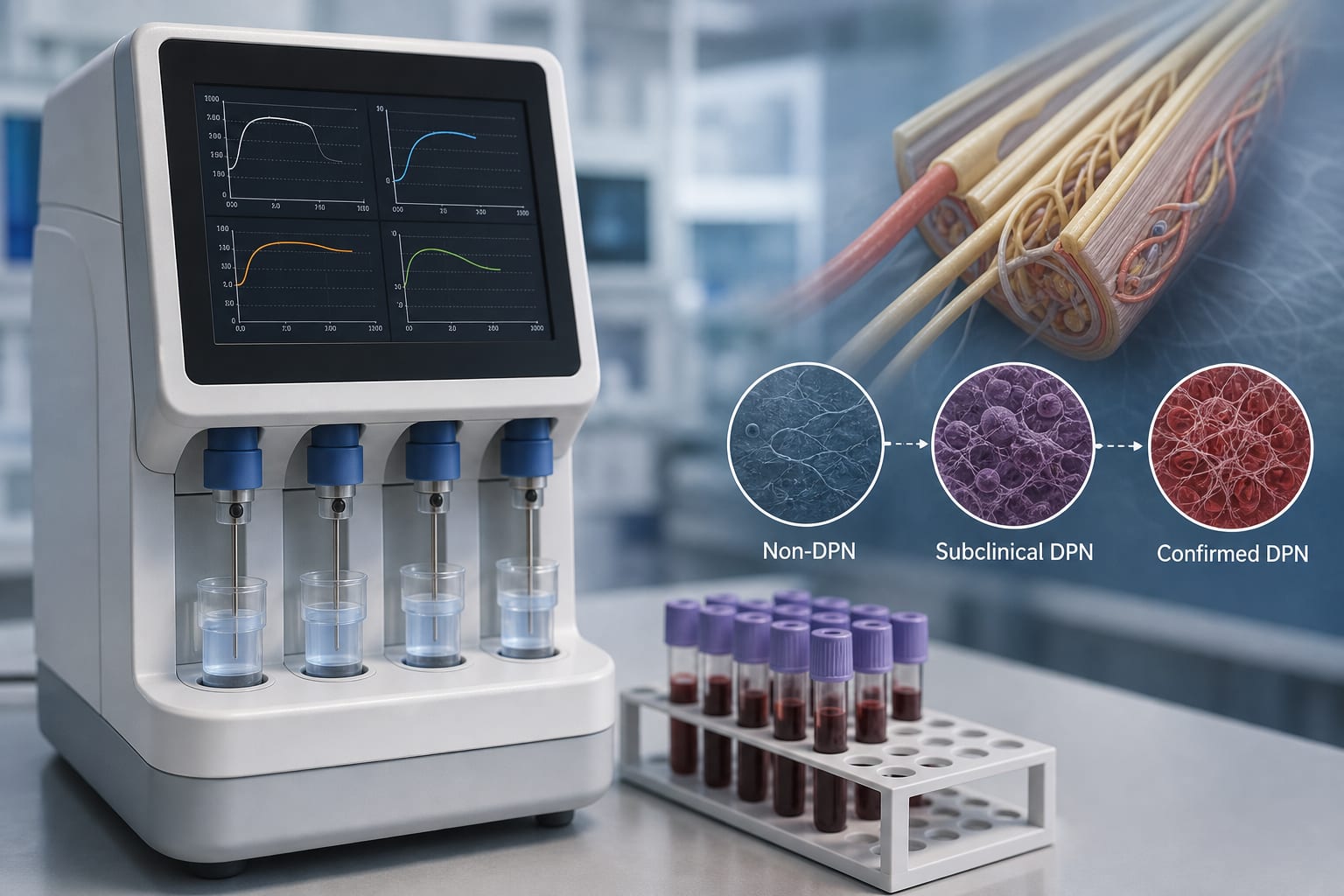
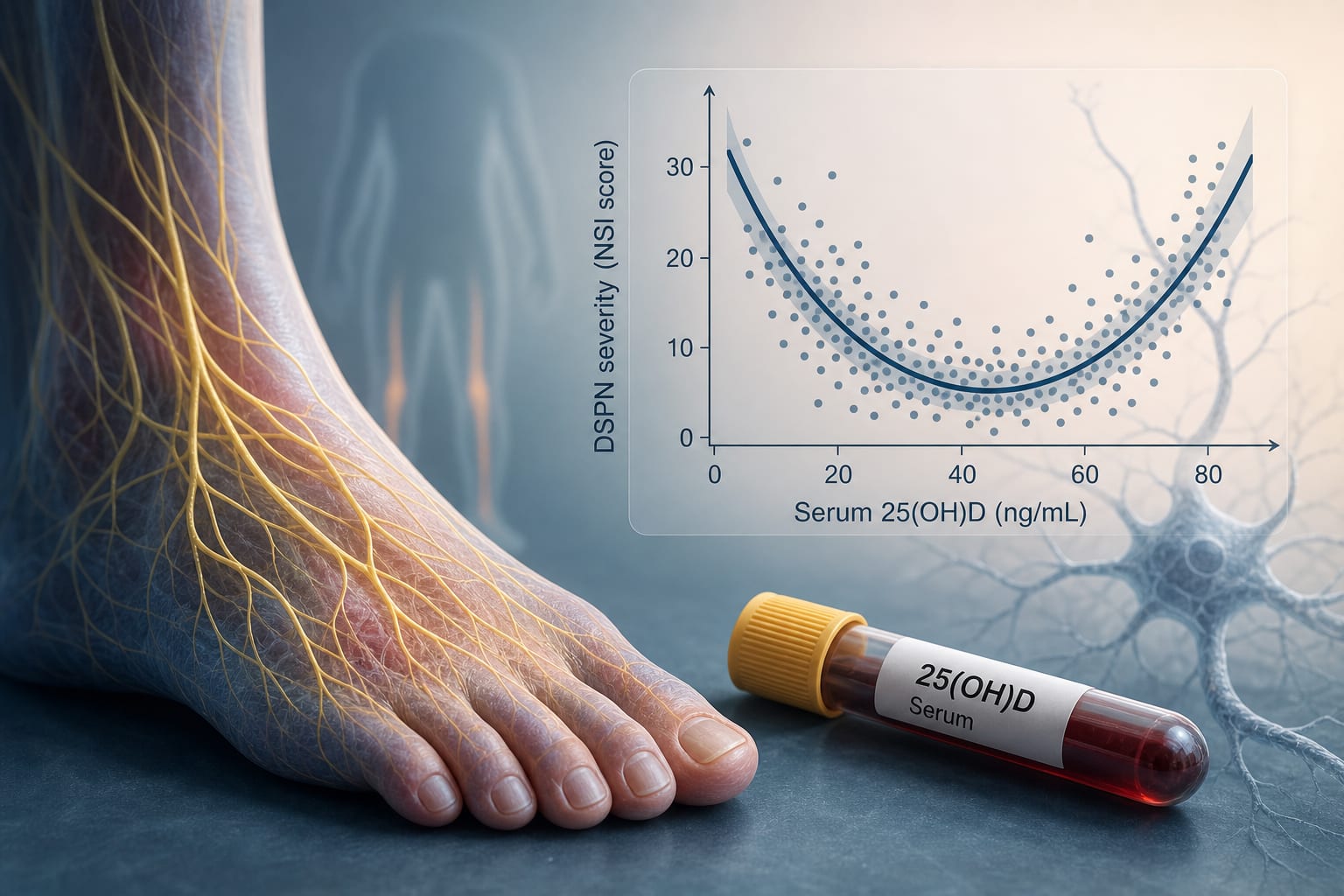
To evaluate comprehensive whole-blood viscoelastic profiles using the Sonoclot analyzer across distinct clinical stages of diabetic peripheral neuropathy (DPN).
Approach:
Study Design: Cross-sectional study enrolling 289 hospitalized patients with type 2 diabetes mellitus (T2DM).
Classification: Participants classified into non-DPN, subclinical DPN (sDPN), and confirmed DPN groups based on the Toronto Clinical Neuropathy Score (TCNS) and nerve conduction studies.
Data Analysis: Sonoclot-derived parameters were assessed; multivariable logistic regression, restricted cubic spline (RCS) analysis, and receiver operating characteristic (ROC) curve analysis were performed.
Key Findings:
32.2% of participants diagnosed with sDPN and 24.2% with confirmed DPN.
CR levels did not differ significantly between non-DPN and sDPN groups, but were markedly elevated in confirmed DPN.
CR remained independently associated with DPN after adjusting for confounding factors (odds ratio 1.154, 95% CI 1.075–1.239).
ROC analysis identified an optimal CR cutoff value of 31.1 (AUC = 0.729), with sensitivity of 47.1% and specificity of 98.9%.
Interpretation:
Sonoclot-derived CR is independently associated with clinically confirmed DPN.
Limitations:
Cross-sectional design limits causal inference.
Moderate sensitivity of CR suggests limited utility as a standalone screening marker.
Conclusion:
Longitudinal studies are required to clarify the temporal nature of the association between CR levels and DPN.